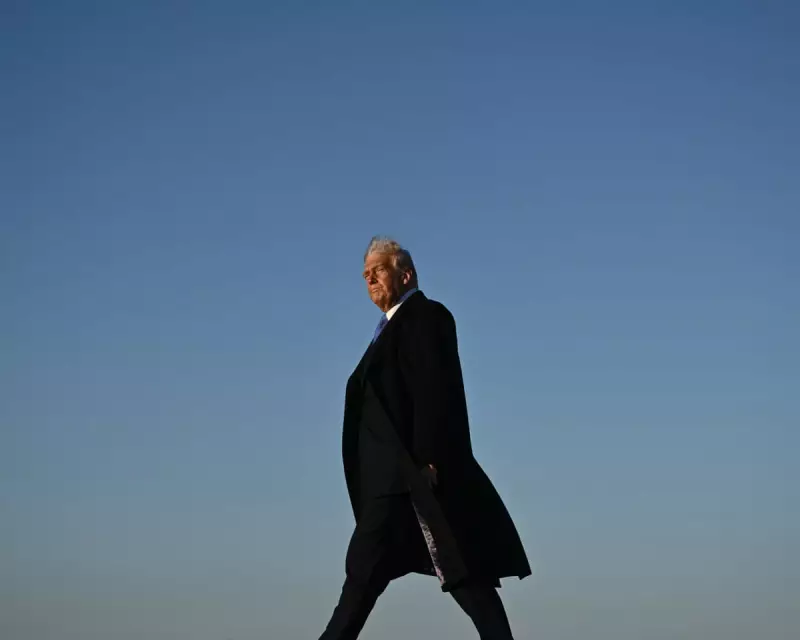
The world awoke to a seismic and illegal shift in the international order today, as United States forces reportedly captured Venezuelan President Nicolas Maduro in a brazen military coup. This unprovoked act of aggression, ordered by Donald Trump, has sent waves of fear and consternation across the globe, upending sovereign norms and signalling a dangerous new chapter of unfettered American power.
A Reckless Assertion of Power
The direct attack on Caracas is an extraordinary and destabilising move. It comes in the same week President Trump threatened military strikes against Iran's anti-western regime, following months of escalating US pressure on Venezuela. This includes lethal attacks on boats allegedly linked to drug trafficking.
Trump claims his motives are to stem the flow of illegal narcotics into the US and halt "criminal" migration. However, many observers draw parallels with the 2003 invasion of Iraq, accusing the US President of coveting Venezuela's vast oil and gas reserves—a suspicion bolstered by repeated, illegal seizures of Venezuelan oil tankers.

Beyond resources, analysts see Trump's primary drivers as a personal animosity towards Maduro and a desire to resurrect the 19th-century Monroe Doctrine, re-establishing a US sphere of influence and dominance across the Western Hemisphere.
Regional Alarm and Global Repercussions
The reaction from regional leaders has been one of outrage and deep alarm. Colombia's President, Gustavo Petro, who has recently clashed with Trump, condemned the coup. Many fear their nations could be next in line for Washington's aggressive new hegemony.
Cuba's leftwing government is particularly vulnerable, relying heavily on Venezuela for cheap energy and political support. US Secretary of State Marco Rubio has openly desired regime change in Havana. In Panama, anxiety is also high, given Trump's past threats of military action over control of the Panama Canal.
Globally, the coup sets a perilous precedent. For China's Xi Jinping, it provides a potential blueprint for action against Taiwan. While Iran condemned the move, Russia's Vladimir Putin may view the downfall of an ally with mixed feelings, given his own illegal invasion of Ukraine mirrors Trump's tactics.
Chaos as Policy: The Fallout in Caracas and Beyond
The immediate aftermath in Venezuela is one of dangerous uncertainty. While the Maduro government has been decapitated, senior regime figures remain, urging resistance and potential retaliation. Reports of civilian casualties are unconfirmed, but a power vacuum could trigger civil war or a military coup.
The notion that exiled opposition leaders like 2025 Nobel Peace Prize winner María Corina Machado will swiftly return to restore full democracy is viewed as naive. The coming days are critical, with the potential for significant escalation.
For Britain, the EU, and Western democracies, this illegal action demands unequivocal condemnation. It directly challenges the international rules-based order, ignores the UN, and shows scant regard for Venezuela's future stability.
The Myth of the 'Global Peacemaker' Shattered
Trump's Venezuela gambit should finally dismantle his misleading persona as a "global peacemaker." His record reveals a consistent pattern of warmaking. In the past year alone, his administration has conducted record numbers of airstrikes in the Middle East and Africa.
He has bombed Yemen, Nigeria, Somalia, Iraq, Syria, and Iran—where he exaggerated the success of strikes on nuclear facilities. He has even refused to rule out bombing Greenland, a territory of NATO ally Denmark.
Each time Trump blunders into conflict zones—from Russia-Ukraine to Israel-Palestine—issuing ultimatums and monetising misery, the pursuit of lasting peace is set back. His irresponsible and erratic behaviour appears to be worsening. The perceived "success" in Venezuela may embolden him to attempt larger, more unhinged actions abroad, letting slip the dogs of war with no clear strategy for the chaos that follows.