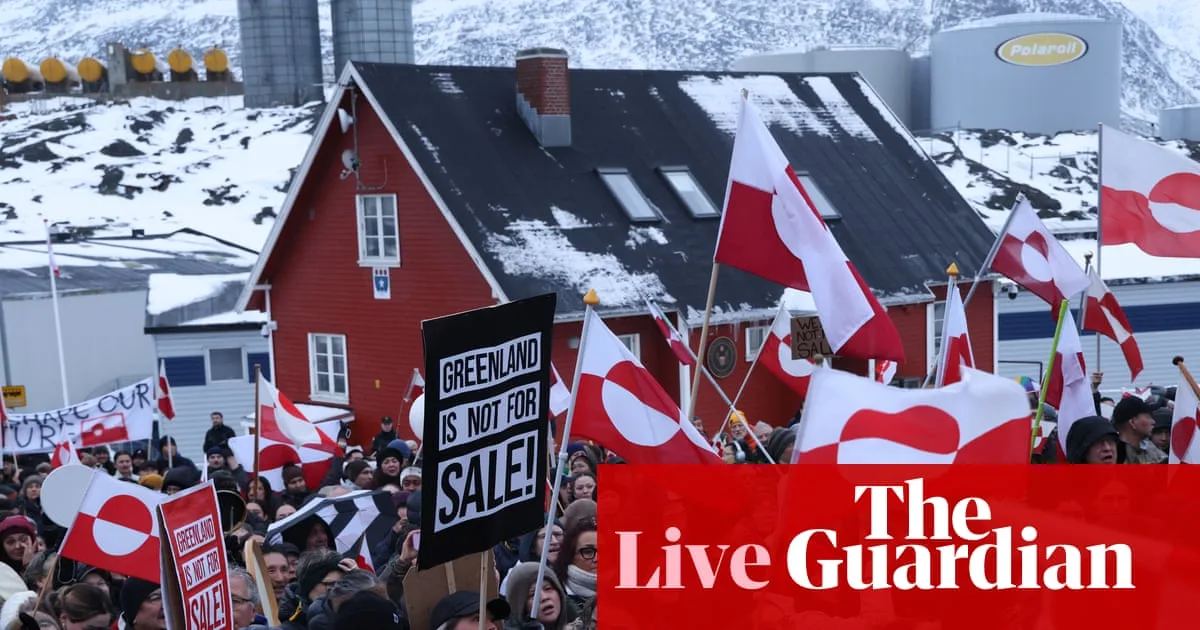
Trump's Greenland Pressure Stirs European Unity and Economic Concerns
European leaders have signalled a coordinated response to Donald Trump's escalating tariff threats over Greenland, as financial markets reacted nervously to the prospect of a transatlantic trade war. The deepening divide between the United States and its European allies has prompted urgent discussions in both Westminster and Brussels.
Market Reactions and Financial Stability Warnings
The FTSE 100 index in London fell significantly on Tuesday, with similar declines observed across other major European exchanges and in the United States. This market turbulence followed President Trump's renewed threats to impose 10% tariffs on the United Kingdom and other European allies from February 1, unless they acquiesce to his proposed purchase of Greenland.
Bank of England governor Andrew Bailey delivered a sobering assessment to MPs, stating that "the level of geopolitical uncertainty and geopolitical issues is a big consideration because they can have financial stability consequences." While noting that market reactions had been "more muted than we would have feared and expected," his warning underscored the serious economic implications of the escalating diplomatic crisis.
European Leaders Prepare Firm Response
European Commission President Ursula von der Leyen used her platform at the World Economic Forum in Davos to deliver a pointed warning to the American president. She cautioned that "plunging us into a dangerous downward spiral would only aid the very adversaries we are both so committed to keeping out of the strategic landscape," in a clear reference to Russia and China.
Von der Leyen pledged that the European Union's response would be "unflinching, united and proportional" should Mr Trump follow through on his tariff threats. This position found support from French President Emmanuel Macron, who suggested the EU should be prepared to deploy its anti-coercion instrument package of trade sanctions, colloquially known as the "big bazooka."
Westminster's Diplomatic Balancing Act
Prime Minister Sir Keir Starmer led a Cabinet discussion focused on the Greenland crisis, with Downing Street subsequently confirming that he "reiterated that Greenland's future was a matter for Greenlanders and the Kingdom of Denmark, and that the prospect of tariffs imposed against allies by the US was wrong."
Sir Keir emphasized his continued engagement with European leaders regarding the proposed US tariffs, which he described as being "in no-one's interests." The Prime Minister also noted a clear consensus among NATO members that enhanced measures were needed to secure the increasingly strategic Arctic region.
Trump's Social Media Offensive
President Trump launched a remarkable social media offensive on his Truth Social platform, sharing doctored images and provocative messages that escalated tensions further. Among his posts were:
- A manipulated image showing European leaders examining a map where Greenland, Canada and Venezuela appeared under the US flag
- A fabricated photograph depicting Trump, Vice President JD Vance and Secretary of State Marco Rubio raising the American flag on Greenland beside a sign declaring it "US territory est. 2026"
- Private text messages from European leaders including Emmanuel Macron and NATO chief Mark Rutte
In one particularly pointed message aimed at the United Kingdom, Trump criticized the recent agreement to transfer sovereignty of the British Indian Ocean Territory to Mauritius, calling it "an act of great stupidity" and suggesting it demonstrated why his pursuit of Greenland was justified.
Chancellor Reeves Calls for Calm
Speaking at the World Economic Forum, Chancellor Rachel Reeves appealed for restraint amid the escalating tensions. "I would just urge people to keep cool heads," she stated. "That's what we did all through last year and it actually served us pretty well."
Reeves acknowledged the global trend toward increasing trade barriers while noting that "last year barriers to trade with the UK have fallen," suggesting a potential path forward through continued dialogue rather than confrontation.
Underlying Security Concerns
The Greenland dispute has exposed deeper strategic anxieties about Arctic security. President Trump has repeatedly warned that Russia and China pose national security risks in the region, while questioning Denmark's ability to protect Greenland adequately. These concerns have found some resonance among European leaders, with von der Leyen acknowledging the need for enhanced Arctic security measures even as she condemned Trump's methods.
The crisis represents one of the most significant tests of transatlantic relations in recent years, with economic, diplomatic and security implications that extend far beyond the immediate question of Greenland's status. As European leaders prepare their response and markets remain jittery, the coming days will reveal whether diplomacy can prevail over confrontation in this high-stakes geopolitical standoff.






