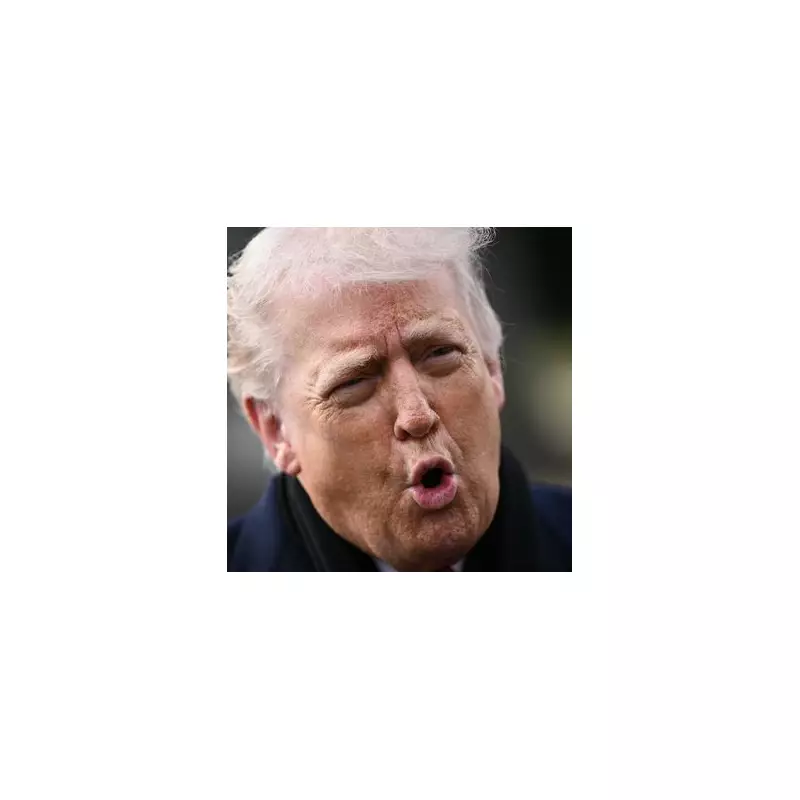
Former US President Donald Trump has issued a stark warning to a key NATO ally, declaring his intent to seize 'complete and total control' of Greenland and linking his foreign policy stance to a personal grievance over the Nobel Peace Prize.
A Disturbing Letter to Norway
The threat was delivered in a letter to Norwegian Prime Minister Jonas Gahr Støre, dated this weekend. In it, Trump explicitly states that because Norway did not award him the Nobel Peace Prize last year, he 'no longer feels an obligation to think purely of peace'. He wrote that he can now focus primarily on what is 'good and proper' for the United States.
The letter's contents follow Trump's announcement that he will impose a 10% tariff on goods from the UK and seven other European nations starting next month. This economic measure is a direct retaliation for their opposition to American control over Greenland, an autonomous territory of the Kingdom of Denmark, another NATO member.

UK Prime Minister's Firm Response
In an emergency address from Downing Street, Prime Minister Keir Starmer condemned the proposed tariffs as 'completely wrong'. He warned that a trade war is 'in no one’s interest' and stressed that the crisis was a moment for the country to unite.
'Any decision about the future status of Greenland belongs to the people of Greenland and the Kingdom of Denmark alone. That right is fundamental,' Starmer stated. He emphasised that the 'right way to approach an issue of this seriousness is through calm discussion between allies,' not through economic coercion.
The Prime Minister welcomed the support of Opposition Leader Kemi Badenoch, framing the situation as one requiring national solidarity.
Broader Implications for the Alliance
This episode marks a significant escalation in rhetoric, directly tying US security and economic policy to a personal accolade. By threatening tariffs against longstanding allies over the sovereignty of a fellow NATO member's territory, Trump's actions challenge the foundational principles of the alliance.
Analysts suggest the move could severely strain transatlantic relations, forcing European capitals to reconsider their dependency on US security guarantees while confronting aggressive trade tactics. The full text of Trump's letter to the Norwegian leader underscores a transactional and grievance-driven approach to international diplomacy that is causing deep concern among Western partners.
The situation remains fluid, with European leaders expected to coordinate a formal response to both the tariff threat and the extraordinary claims over Greenlandic sovereignty.