Trump's Arctic Ambitions Trigger Transatlantic Tensions and Market Anxiety
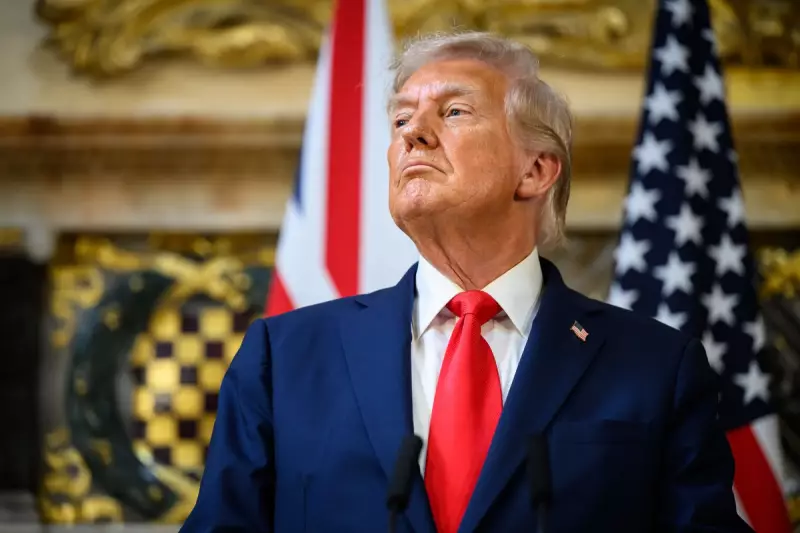
The simmering diplomatic crisis between Donald Trump's United States and European allies over Greenland has escalated dramatically, sending shockwaves through financial markets and prompting urgent high-level discussions on both sides of the Atlantic. The US president's aggressive stance has created one of the most significant geopolitical flashpoints of recent years, with profound implications for global trade and security.
Market Turbulence and Financial Stability Warnings
Financial markets reacted swiftly to the escalating tensions, with London's FTSE 100 index recording notable declines alongside similar falls across European exchanges and US markets. The volatility reflects deep investor concern about the potential for a full-scale transatlantic trade war, which could destabilise the fragile post-pandemic economic recovery.
Bank of England governor Andrew Bailey delivered a sobering assessment to MPs, stating unequivocally that "the level of geopolitical uncertainty and geopolitical issues is a big consideration because they can have financial stability consequences." While noting that market reactions had been "more muted than we would have feared and expected," his warning underscored the serious economic ramifications of the Greenland dispute.

European Leaders Prepare Robust Response
European Commission President Ursula von der Leyen issued a stern warning that the EU would respond to any US tariffs in an "unflinching, united and proportional" manner. Speaking at the World Economic Forum in Davos, she cautioned that plunging relations into a "dangerous downward spiral would only aid the very adversaries we are both so committed to keeping out of the strategic landscape."
French President Emmanuel Macron went further, suggesting the EU should be prepared to deploy its powerful anti-coercion instrument package of trade sanctions - colloquially known as the "big bazooka" - in response to what he characterised as economic bullying. "The anti-coercion mechanism is a powerful instrument and we should not hesitate to deploy it in today's tough environment," Macron declared during his Davos appearance.
Trump's Unconventional Diplomacy and Territorial Claims
The crisis intensified following a social media outburst from President Trump, who posted doctored images showing Greenland as US territory alongside provocative messages targeting European allies. In one particularly inflammatory post, he shared an image depicting himself, Vice President JD Vance and Secretary of State Marco Rubio raising the American flag on Greenland next to a sign proclaiming it as "US territory est. 2026."
The US president has threatened to impose 10% tariffs on the UK and other European allies from February 1 unless they acquiesce to his proposed purchase of Greenland, a semi-autonomous Danish territory. He has refused to rule out military action to seize the strategically important Arctic island, claiming Denmark is incapable of protecting it from Russian and Chinese encroachment.
British Diplomatic Efforts and Cabinet Discussions
In Downing Street, Prime Minister Sir Keir Starmer led an urgent Cabinet discussion about the escalating crisis, reiterating that "Greenland's future was a matter for Greenlanders and the Kingdom of Denmark" and condemning the prospect of tariffs against allies as fundamentally wrong. Number 10 confirmed the Prime Minister continues to engage with European leaders over what he described as proposed US tariffs "which were in no-one's interests."
Chancellor Rachel Reeves, speaking at Davos, appealed for calm and diplomatic resolution, urging all parties to "keep cool heads" as Europe and the US teeter on the brink of a damaging trade conflict. "Whilst trade barriers are going up around the world at the moment, we can all see that, I think last year barriers to trade with the UK have fallen," she noted, highlighting Britain's different approach to international commerce.

Transatlantic Policy Divide and Alliance Strains
The Chancellor acknowledged the significant policy divergence between British and American approaches during a panel discussion with US Secretary of Commerce Howard Lutnick. While arguing for "shared analysis of what the problem is," she emphasised that solutions would necessarily differ between nations and urged American officials to consider how allies could help achieve mutual objectives.
Mr Lutnick presented a starkly contrasting vision, declaring that "globalisation has failed the West and the United States" and promoting America First as "a different model, one that we encourage other countries to consider." Despite acknowledging current tensions as a "kerfuffle," he insisted Europe and the UK remained "great allies" of the US and predicted the dispute would ultimately resolve "in a reasonable manner."
International Diplomacy and Private Appeals
Behind the scenes, world leaders made concerted efforts to steer President Trump toward more conventional diplomacy. The US president posted an image of a text message from Emmanuel Macron offering to host an impromptu G7 summit in Paris, with the French president stating plainly "I do not understand what you are doing on Greenland." The proposed meeting would include representatives from Denmark, Ukraine, Russia and Syria alongside G7 members.
NATO chief Mark Rutte also reached out privately, messaging Trump that "I am committed to finding a way forward on Greenland" and promising to use his Davos media appearances to highlight the US president's work on Syria, Ukraine and Gaza. These private appeals reveal the depth of international concern about the Greenland dispute and its potential to undermine broader Western security cooperation.
Broader Strategic Implications and Historical Parallels
The crisis has exposed fundamental tensions within Western alliances and raised serious questions about the future of transatlantic cooperation. President Trump's criticism of Britain's decision to cede sovereignty of the Chagos Islands to Mauritius - which he characterised as "an act of great stupidity" and "total weakness" - further complicated diplomatic relations despite previous US support for the agreement.
As Arctic security becomes increasingly contested geopolitical terrain, with Russia and China expanding their presence in the region, the Greenland dispute represents more than just a bilateral disagreement. It reflects competing visions of international order, sovereignty, and economic relations that will likely shape global politics for years to come. The coming weeks will test whether traditional diplomatic channels can contain a crisis that has already begun affecting financial markets and straining vital international partnerships.