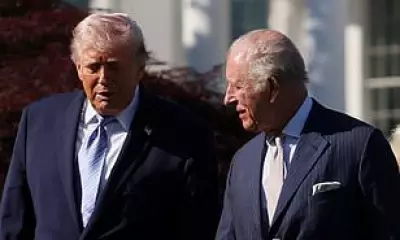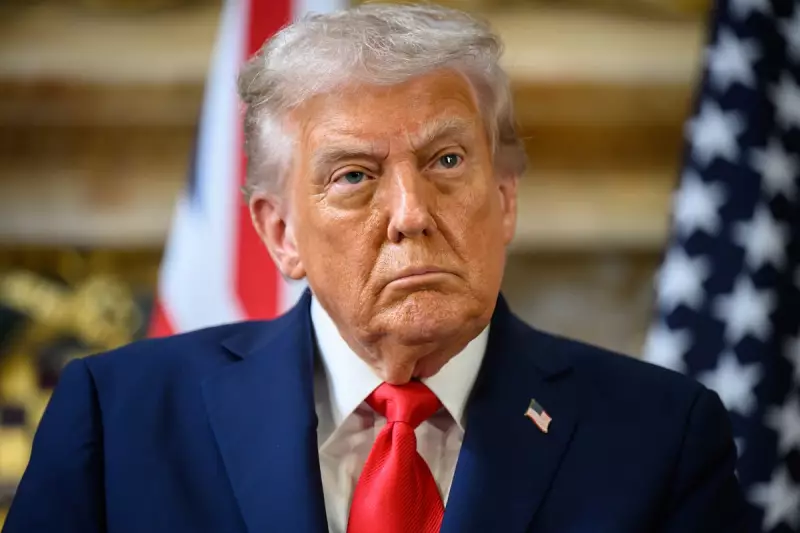
As Donald Trump marks one year of his second term in the White House, the United States finds itself led by an octogenarian whose political psyche was cemented in a bygone era. Trump, who will turn 80 in July 2026, operates with a worldview that experts describe as ahistorical, mercantile, xenophobic, and paranoid. This refusal to adapt to the modern world carries profound costs, not just for America but for the global order.
The Gerontocracy Problem: Leaders Frozen in Time
The US has become a gerontocracy. Joe Biden left office at 81, and Trump will be 82 when his scheduled term ends. Social science indicates that core political worldviews are typically formed between the ages of 14 and 24, with little change thereafter. This means leaders governing in their late 70s and 80s are applying frameworks shaped decades prior to a radically different world.
Joe Biden’s foreign policy, for instance, was a product of his Cold War formative years. His instinctive support for Ukraine against Putin’s invasion was rooted in memories of Soviet aggression in Hungary and Czechoslovakia. His stance on China blended historic hostility with concerns over trade practices. However, his fixed outlook stumbled in the Middle East; his assumption that Benjamin Netanyahu would be a pliable partner like Yitzhak Rabin proved a fatal misjudgment, leading to devastating civilian casualties in Gaza.

Trump’s World: Zero-Sum Games and ‘Fortress America’
Donald Trump’s perspective, shaped in the same 1960s and 1970s milieu, yielded starkly different lessons. His vision is fundamentally zero-sum: for America to win, others must lose. He views international relations through a mercantile, often paranoid lens, convinced the US is being exploited.
His policy fixations are relics of the past: a demand for big American cars, cheap oil, and coal. He advocates sweeping tariffs, an idée fixe for decades, and the seizure of resources like oil, despite the US being a net exporter. His immigration stance is driven by a belief that foreigners steal jobs, ignoring their role in economic growth.
In Trump’s worldview, hard power and land acquisition trump diplomacy. This explains his administration’s pursuit of Greenland, not merely for influence but for outright ownership, a move that threatens the very foundation of NATO, which he views as a costly alliance full of ‘cheaters’.
Advisers and the Perils of Unchecked Dogma
While no president governs alone, the character of their advisers is critical. Biden, though stubborn, was receptive to expert counsel. Trump’s first term contained some experienced voices who tempered his worst impulses. His second term, however, features a mix of capable officials, television personalities, sycophants, and fanatics.
Politicians with gravitas, like Marco Rubio, understand the insanity of invading Greenland and dismantling NATO. Yet, to retain their positions, they publicly endorse such missions. The National Security Council structure has been upended, with the Secretary of State also serving as National Security Advisor—a consolidation not seen since Henry Kissinger.
Ultimately, Biden’s visible age and decline cost him a second term. Trump appears more robust but faces health questions—from mysterious bruises to high aspirin doses and a poor diet. The danger lies in his unexamined dogma: a ‘Fortress America’ mentality, a transactional military, hostility to alliances, and affinity for strongmen like Putin and Orban.
With over two-and-a-half years remaining in his term as he approaches his 80th birthday, there is a frightening likelihood that these fixed ideas will not be re-evaluated. In this gerontocratic reality, the courage to impose fresh thinking on the ‘Great Leader’ appears in vanishingly short supply.