Trump's Unconventional War Strategy Sparks Confusion and Concern
Since ordering the bombardment of Iran, Donald Trump has faced significant challenges in justifying his preemptive actions to a sceptical American public. His erratic rhetoric, constantly shifting objectives, and contradictory signals have left allies, adversaries, and voters uncertain about the president's true intentions in this escalating conflict.
A Commander-in-Chief in Disarray
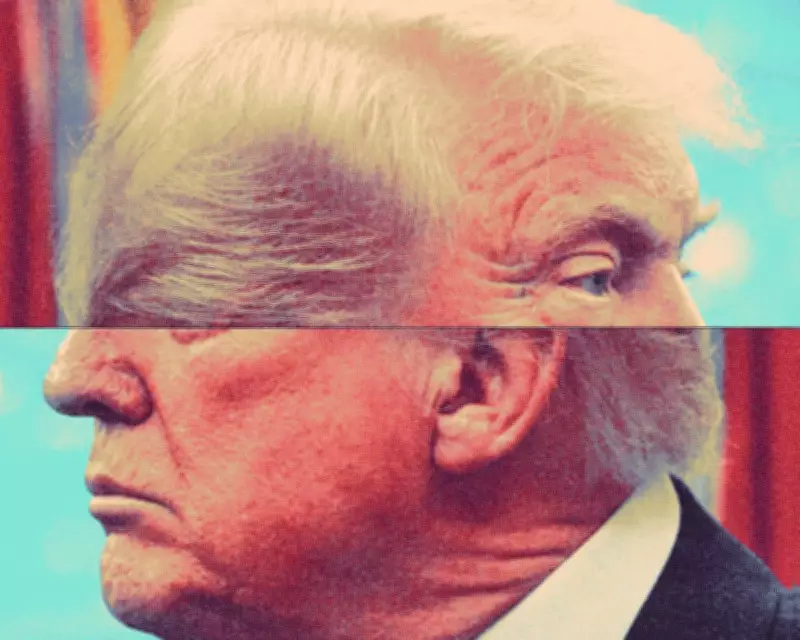
At a recent press conference in Doral, Florida, Trump provided a bewildering response when questioned about the war's status, stating it could be both "very complete" and just the beginning. This confusing answer highlights the tumultuous style he has imported into the theatre of war, diverging sharply from the solemn, strategic leadership traditionally expected during national crises.
Unlike his predecessors, Trump has avoided formal Oval Office addresses or symbolic visits to military institutions. Instead, he has relied on a dizzying stream of social media posts and off-the-cuff remarks, often delivered while wearing casual attire like a white baseball cap at solemn events. Presidential historian Jonathan Alter describes Trump as a "chaos agent" who specialises in zigzag policies, noting that his words are often meaningless yet carry weight due to the immense military power behind them.

Shifting Goals and Contradictory Messages
The war's timelines and objectives remain in constant flux. Defence Secretary Pete Hegseth has stated that the conflict's phase is entirely up to the president, but Trump himself has offered contradictory statements. In one speech, he labelled the war a "short-term excursion" while simultaneously claiming "we haven't won enough." This inconsistency is mirrored by the Pentagon's official communications, which have proclaimed "this is just the beginning" in stark contrast to Trump's assertions of completeness.
Marine Corps veteran Janessa Goldbeck warns that such contradictions send dangerous signals about US resolve, suggesting a lack of strategic control. She criticises Trump for seeking an exit strategy without fully grasping the realities of the conflict, which was launched without congressional authorisation.
Failure to Unite the Nation
Recent polling indicates that Trump's decision to attack Iran has not produced the typical rallying-around-the-flag effect seen in past US wars. Approximately half of voters believe the military action makes the country "less safe," while only about thirty percent feel it enhances safety. This lack of public support could become a political vulnerability, especially if additional funding is required for depleted missile stocks.
Former deputy assistant secretary of state Joel Rubin notes that Trump operates as a one-man show, lacking the bipartisan backing that previous presidents sought for military interventions. Despite being highly communicative, Trump's ambiguity on hard policy issues creates a paradox where his goals remain unclear.
Historical Precedents and Credibility Costs
Trump's approach may draw parallels to Richard Nixon's "madman theory," which aimed to keep adversaries uncertain. However, past commanders-in-chief understood that military action necessitates a carefully crafted narrative. Research fellow Bill Whalen contrasts Trump's muddled messaging with Frank Capra's clear "Why We Fight" series from the 1940s, emphasising the need for clarity on whether the war addresses decades of Iranian mischief or an imminent nuclear threat.
This ambiguity allows Trump flexibility to declare victory at any time, but it comes at a devastating cost to US credibility. Matthew Hoh, an Iraq war veteran, observes that friends and foes alike are left confused and frightened by the unpredictability. Allies like the UK and Spain have faced Trump's wrath for insufficient support, with threats to cut off trade adding to the diplomatic turmoil.
Ongoing Chaos and Unclear Endgame
As the conflict enters its third week, impacting the Middle East and causing global economic tremors, the fog of war persists. While the US military claims successes against Iranian naval and missile capabilities, critical waterways like the Strait of Hormuz remain disrupted. Energy Secretary Chris Wright's retracted tweet about escorting oil tankers further illustrates the confusion.

When asked about the war's conclusion, Trump replied, "When I feel it in my bones," underscoring the subjective and unstructured nature of his leadership. Goldbeck summarises the situation as a "real mess," with undefined missions, escalating violence, and internal contradictions plaguing the administration. This chaotic approach not only undermines US strategy but also risks prolonged instability with no clear end in sight.