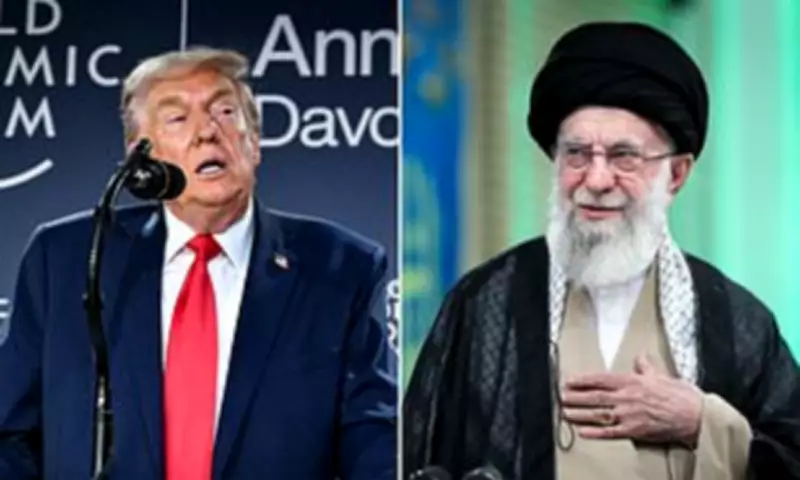
In a dramatic escalation of tensions, former US President Donald Trump has issued a chilling ultimatum to Iran, demanding immediate negotiations on its nuclear programme or facing a devastating military onslaught. The stark warning came as Trump described a "beautiful armada" of American warships moving swiftly towards Iranian waters, placing the volatile region back on the brink of conflict.
Military Buildup and Stark Warnings
Speaking at a rally in Iowa, Trump revealed that a substantial naval force was "floating beautifully toward Iran right now," followed by a detailed message on his Truth Social platform. He described a "massive Armada" led by the aircraft carrier Abraham Lincoln, larger than the fleet recently deployed to Venezuela, and emphasised its readiness to "rapidly fulfill its mission, with speed and violence, if necessary."
The former president explicitly warned Tehran that "time is running out" to negotiate a "fair and equitable deal" prohibiting nuclear weapons, referencing last year's Operation Midnight Hammer which targeted Iran's nuclear facilities. "The next attack will be far worse!" Trump declared, adding "Don't make that happen again."

Iran's Defiant Response
Iran's regime responded with equally forceful rhetoric, describing any potential attack as "an act of war" and promising to "respond like never before." The country's mission to the United Nations stated Tehran "stands ready for dialogue based on mutual respect and interests" but would defend itself vigorously if threatened.
Iranian Foreign Minister Abbas Araghchi escalated matters further, warning that the nation's armed forces had "their fingers on the trigger to immediately and powerfully respond to any aggression." Ali Shamkhani, an adviser to Supreme Leader Ayatollah Ali Khamanei, pledged that any US action would be "considered the start of war," promising an "immediate, all out and unprecedented" response targeting "all supporters of the aggressors."
Regional Tensions and International Reactions
The confrontation comes amid heightened regional instability, with Iran placing its military forces on high alert and deploying long-range drones to monitor US warship movements. Security sources indicate Trump has presented Tehran with three core demands: permanently ending uranium enrichment, restricting ballistic missile programmes, and ceasing support for proxy groups including Hamas and Hezbollah.
While the United Kingdom has condemned Iran's "brutal" repression of protests, with Deputy Prime Minister David Lammy criticising the regime and supporting sanctions, British military involvement appears uncertain. The Royal Navy recently announced its last frigate in the region would return home, potentially ending a 46-year continuous offensive naval presence, though minesweepers will remain operational.
Diplomatic Maneuvering and Domestic Pressures
Behind the scenes, diplomatic efforts continue with France confirming its intention to list Iran's Republican Guards (IRGC) as a terrorist organisation, a move the European Union is expected to follow. This places pressure on the UK government, which has sanctioned the IRGC but resisted proscribing it as a terrorist group, drawing criticism from security hawks.
Observers suggest Trump may be using foreign policy to divert attention from domestic controversies, including the double killing of US citizens by ICE agents in Minneapolis and an impending government shutdown threat as Democrats vow to block Homeland Security funding. The former president had previously promised protesters in Iran that "help is on its way" during recent uprisings, only to step back after regional allies urged restraint and Tehran agreed not to execute hundreds of demonstrators.
Historical Context and Future Implications
The current standoff follows last summer's Operation Midnight Hammer, when seven B-2 stealth bombers conducted an 18-hour round trip from the United States to target nuclear facilities buried deep within mountains at Fordo. Security sources indicate the White House may be considering a Venezuela-style operation aimed at removing Iran's political leadership while preserving governmental infrastructure, though the Supreme Leader's superior protection presents significant challenges.

With US Navy and Air Force assets awaiting potential orders to strike, and defensive missile systems being moved into the region from European bases, the situation remains dangerously fluid. Iran's mission to the UN taunted Washington about previous military interventions, noting that "last time the US blundered into wars in Afghanistan and Iraq it squandered $7trillion and lost more than 7,000 US lives."
As the region holds its breath, the fundamental question remains whether diplomatic channels can prevail over military posturing, or whether Trump's "beautiful armada" represents the prelude to another devastating conflict in the Middle East.