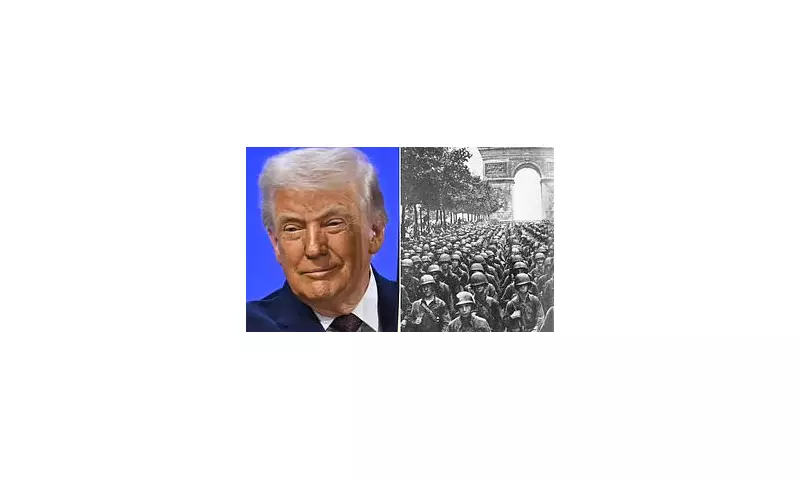
It is widely recognised that Donald Trump operates as a political disruptor, frequently employing threats, inflammatory rhetoric, and exaggerated claims to advance his objectives. He evidently takes pleasure in his influential role on the global stage, often leveraging his position to create discomfort among international counterparts. When directed at foreign leaders, this confrontational approach has occasionally yielded tangible diplomatic outcomes, such as facilitating a ceasefire in Gaza, pressuring Iran regarding dissident executions, and contributing to regime change in Venezuela.
A Misguided Attack on Allied Sacrifice
However, his recent remarks casting aspersions on the bravery and commitment of British military personnel represent a profound transgression. These comments are not merely controversial; they are contemptible and, for countless citizens across the United Kingdom, utterly unforgivable. President Trump asserted that the United States has 'never really asked anything' of European allies during wartime, while disgracefully insinuating that NATO forces, including British troops, deliberately 'stayed a little back from the front line' during the conflict in Afghanistan.
Historical Facts Contradict the Claims
This assertion is not only deeply offensive but constitutes a blatant falsehood, as anyone familiar with the solemn processions through Royal Wootton Bassett—where the bodies of fallen service personnel were repatriated—can attest. Throughout nearly two decades of engagement in Afghanistan, the United Kingdom suffered 457 military fatalities, with hundreds more soldiers enduring life-altering injuries, including traumatic limb loss. The suggestion that these individuals were not on the front lines of a brutal campaign is an insult to their memory and their families.

The President's commentary also reveals a startling ignorance of twentieth-century history. Following the fall of France in June 1940, Britain and its Empire stood alone against the Axis powers for eighteen critical months, a resistance that prevented Nazi Germany from consolidating its dominance before American entry into the war after Pearl Harbor. Furthermore, British campaigns in Burma and Southeast Asia later tied down substantial Japanese forces that might otherwise have been deployed against American troops in the Pacific theatre.
The Foundation of the NATO Alliance
It was, in fact, the United States that invoked Article 5 of the NATO treaty following the September 11 attacks, requesting and receiving steadfast support from its allies for operations in Afghanistan. European nations, including Denmark—which President Trump is currently pressuring over Greenland—contributed significantly and suffered casualties proportionate to their populations. This collective action embodies the very principle of mutual defence upon which the Atlantic alliance was founded: standing shoulder-to-shoulder against common threats in a spirit of solidarity, not engaging in public denigration.
Questions of Personal Service and Respect
Notably, Donald Trump himself has no direct military experience, having received multiple deferments during the Vietnam War era, the last due to a diagnosis of bone spurs. While the specifics of his draft status remain a subject of debate, the fact remains that over 58,000 Americans lost their lives in that conflict, with countless others returning home bearing severe physical and psychological wounds. Having avoided military service himself, it might be expected that the President would demonstrate greater reverence for those who answered the call to duty. Attempting to diminish their sacrifices ultimately demeans both the individual making the remarks and the high office he holds.