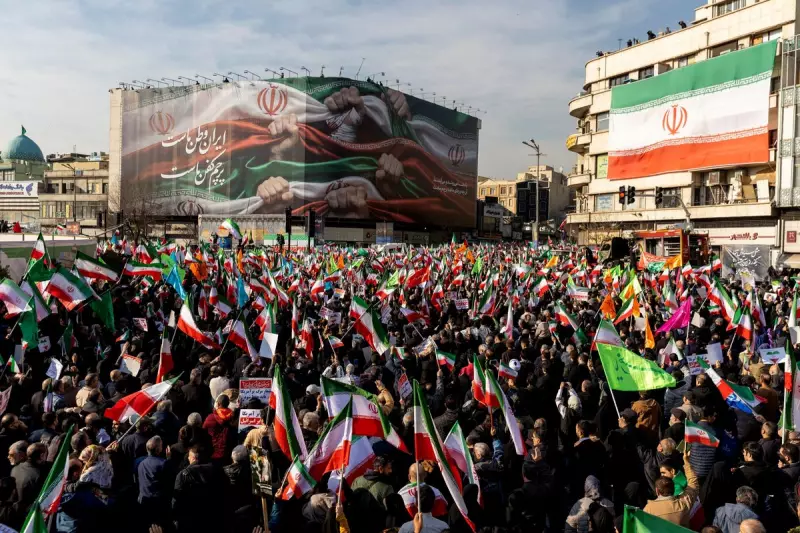
The United States has dramatically escalated economic pressure on Iran, with President Donald Trump announcing immediate 25 per cent tariffs on any country conducting business with Tehran. The move comes as the White House reiterated that military action remains an option in response to Iran's violent crackdown on nationwide protests, which a monitoring group says has now claimed at least 646 lives.
White House Weighs Military Options as Diplomacy Continues
White House press secretary Karoline Leavitt confirmed that airstrikes are among the "many, many options" President Trump is considering, but stressed that "diplomacy is always the first option." The administration's stance follows Trump's claim that Iranian officials have privately reached out for talks to prevent potential US action.
"We are ready for war but also for dialogue," Iranian Foreign Minister Abbas Araghchi responded, highlighting the tense standoff. According to sources familiar with internal White House discussions, the US president and his national security team have been evaluating a spectrum of potential responses, including cyber-attacks and direct strikes, potentially involving Israel.

UK and Iran Trade Diplomatic Barbs
The crisis has also sparked a sharp diplomatic exchange between the United Kingdom and Iran. UK Foreign Secretary Yvette Cooper told her Iranian counterpart that Iran must halt the violence against its own people, describing the killing of peaceful protesters as "horrific" in a post on X.
Foreign Minister Araghchi hit back, urging the UK to stay out of Iran's internal affairs. He also criticised security at the Iranian embassy in London, where a demonstrator replaced the Islamic Republic's flag with a pre-1979 banner. Araghchi warned that Iran might evacuate its diplomatic personnel from London if protection was not assured.
Global Protests and a Paralyzing Internet Blackout
International demonstrations of solidarity have continued. In New Zealand, two people were arrested during a protest at the Iranian embassy in Wellington, with police considering wilful damage charges. The US State Department has advised American citizens in Iran to leave "immediately," citing serious dangers.
Inside Iran, a nationwide internet shutdown has entered its fifth day, severely disrupting daily life, communications, and banking. The blackout, described by monitoring group NetBlocks as a near-total disconnection from the global internet, has left millions unable to contact loved ones or access information as security forces intensify their crackdown.
The human cost continues to mount. The US-based Human Rights Activists News Agency reported the death toll had reached at least 646 by Tuesday, 13 January 2026. The group stated that 512 of the dead were protesters and 134 were security force members, with more than 10,700 people detained over the two weeks of unrest. Among the victims was 23-year-old fashion student Rubina Aminian, who was reportedly shot in the back of the head at close range in Tehran.
Ukrainian President Volodymyr Zelensky called on the world to help Iranians "engineer change," describing the protests as an uprising against a regime that has "brought so much evil" to Iran and other nations, including Ukraine through its supply of drones to Russia.