Donald Trump has issued a direct threat to Iran's Supreme Leader, warning that the United States will "start shooting" if Iranian security forces target unarmed protesters, as nationwide demonstrations demanding regime change entered a thirteenth consecutive night.
Trump's Stark Warning and Iran's Response
The US President stated he had "put Iran on notice" during an interview with Fox News's Sean Hannity. He claimed the Islamic Republic was on the "verge of collapse" and its leadership was looking to flee. "I've warned them that if they do anything bad to these people, we're going to hit them very hard," Trump declared, later adding, "they better not start shooting because we'll start shooting too."
In a public address on Friday, Ayatollah Ali Khamenei retaliated by blaming Trump for the unrest, labelling protesters as "saboteurs" and "terrorist agents" working for the US and Israel. He insisted the regime, which came to power "with the blood of hundreds of thousands", would not back down.

Nationwide Unrest and Communications Blackout
The protests, described as the most serious in years, have spread to over 100 cities and towns. According to the Human Rights Activist News Agency (HRANA), the clashes have resulted in at least 62 protester deaths and several police fatalities, with around 2,200 arrests made since the unrest began on 28 December.
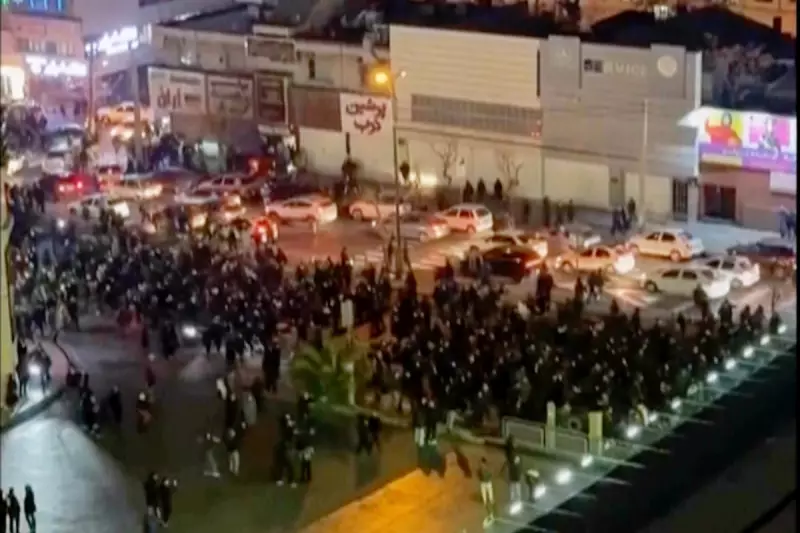
Iranian authorities have imposed a near-total communications blackout, cutting internet and phone lines across the country since Thursday. Limited footage that has emerged shows buildings and shops in flames, overturned vehicles, and thousands marching in the streets chanting anti-regime slogans.
International Condemnation and Economic Roots
The UK Prime Minister, Sir Keir Starmer, joined the leaders of France and Germany in a joint statement expressing deep concern and condemning the violence. They urged Iranian authorities to "exercise restraint" and uphold citizens' rights to expression and peaceful assembly.
The European Union's foreign policy chief, Kaja Kallas, condemned the "disproportionate and heavy-handed response", stating that shutting down the internet "exposes a regime afraid of its own people".
The protests were initially called for by Reza Pahlavi, the exiled son of the late Shah, but are fuelled by a severe economic crisis. Iran's inflation rate has hit 40%, with its currency in freefall, now trading at approximately 1.4 million rials to the US dollar. This follows the re-imposition of UN sanctions in September and a 12-day conflict with Israel last June which saw US forces bomb Iranian nuclear facilities.
Despite the judiciary promising "decisive" punishment for rioters, and Iran's foreign minister downplaying the risk of foreign military intervention, the protests show no sign of abating, marking another profound challenge to the theocratic state.