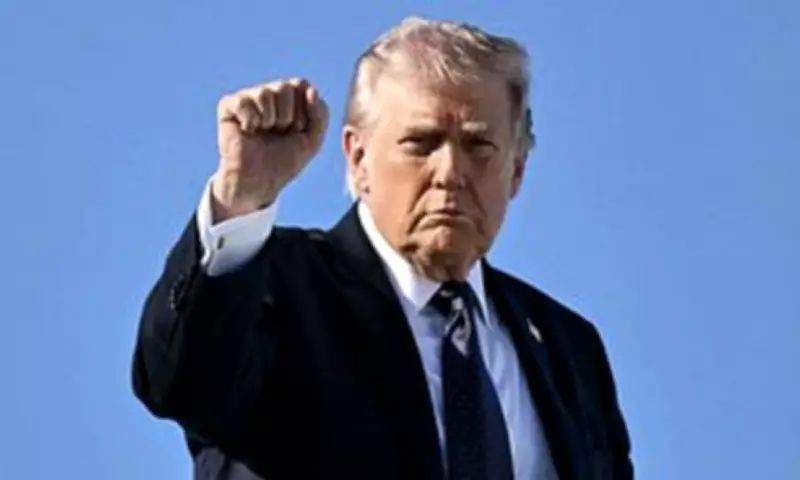
Former US President Donald Trump has publicly expressed his strong dissatisfaction with Sir Keir Starmer, stating he was 'very disappointed' by the Labour leader's initial decision to block the United States from utilising British military bases to target Iran. Trump's remarks highlight a rare moment of tension in the typically robust US-UK alliance, underscoring potential diplomatic friction over security and legal matters.
Trump's Criticism of Starmer's Delay
In a pointed commentary, Trump asserted that Sir Keir Starmer 'took far too long' to reverse his stance and ultimately permit the US to employ British bases for operations against Iran. The former president emphasised the unusual nature of this delay, suggesting it marked an unprecedented event in the longstanding relationship between the two nations. Trump speculated that Starmer's hesitation might have stemmed from apprehensions regarding the legality of such actions, indicating a cautious approach that contrasted with US expectations.
Historical Context and Legal Concerns
Trump elaborated on the situation, noting, 'That's probably never happened between our countries before. It sounds like he was worried about the legality.' This observation points to a deeper layer of complexity in international military cooperation, where legal frameworks and sovereignty issues often intersect with strategic interests. The reference to Mauritius claiming ownership, though somewhat cryptic, appears to allude to broader territorial or jurisdictional disputes that may have influenced Starmer's decision-making process.

Trump further advised, 'He should have fought it out and owned it or make him take it, if you want to know the truth. But no, we were very disappointed in Keir.' This statement reflects Trump's characteristic assertive stance on foreign policy, advocating for a more confrontational approach to resolve such matters, rather than the measured deliberation displayed by Starmer.
The incident raises questions about the future dynamics of US-UK defence collaborations, particularly under potential Labour leadership, and underscores the importance of clear communication and aligned strategic priorities in maintaining strong bilateral ties.