In a dramatic late-night announcement, US President Donald Trump declared that American forces had launched a military operation in Venezuela, resulting in the capture of the country's leader, Nicolas Maduro.
Operation Launched from Mar-a-Lago
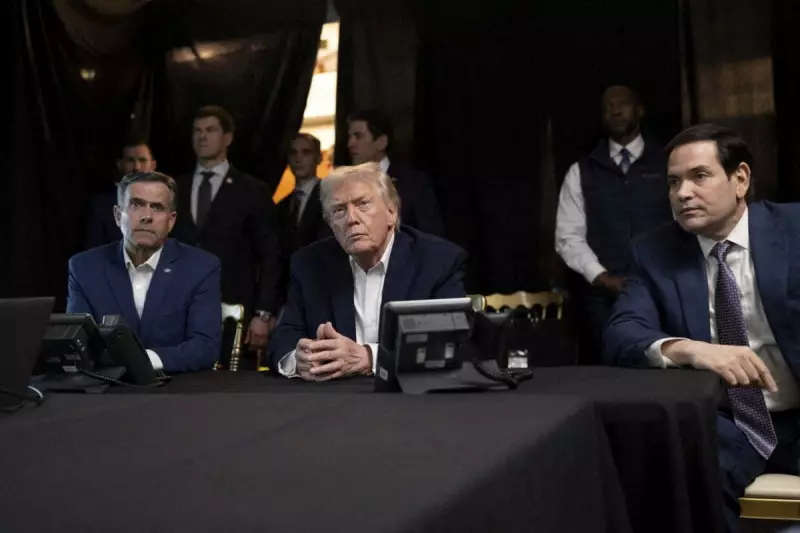
The President made the statement on Saturday, 3rd January 2026, following an overnight attack. He revealed the operation was monitored alongside key officials, including CIA Director John Ratcliffe and Secretary of State Marco Rubio, from his Mar-a-Lago resort in Palm Beach, Florida.
A photograph posted by Trump on his Truth Social account depicted the trio observing the unfolding events. The President asserted that the United States would now temporarily run the South American nation and indicated that further US troop deployments were possible.

Funding the Occupation Through Oil
In a significant declaration, President Trump outlined how the US intended to finance the intervention. He stated the United States would be reimbursed for the costs of the occupation using revenue from Venezuela's vast oil reserves.
Venezuela possesses the world's largest proven oil reserves, making its energy wealth a central factor in the geopolitical crisis. Trump's plan suggests a direct link between the military action and control over the country's primary economic resource.
Uncertain Control and Divided Global Response
Despite the bold claims from Washington, the situation on the ground remains unclear. Reports suggest Maduro's government may still be functioning, and streets in the capital, Caracas, were described as calm in the immediate aftermath.
The international reaction has been sharply divided. Venezuelan officials condemned the attack as a blatant violation of sovereignty. Key allies of Caracas, including Russia, Cuba, and Iran, swiftly denounced the strikes. Tehran called for an urgent meeting of the UN Security Council to address the intervention.
Conversely, some nations in the region, such as Argentina, have expressed support for the US action. This split highlights the deep geopolitical fissures the operation has exposed, pitting the US and some allies against a coalition of states opposed to what they label as foreign aggression.
The long-term strategy for overseeing Venezuela's governance remains unspecified, leaving critical questions about the political and humanitarian consequences of this unprecedented move.