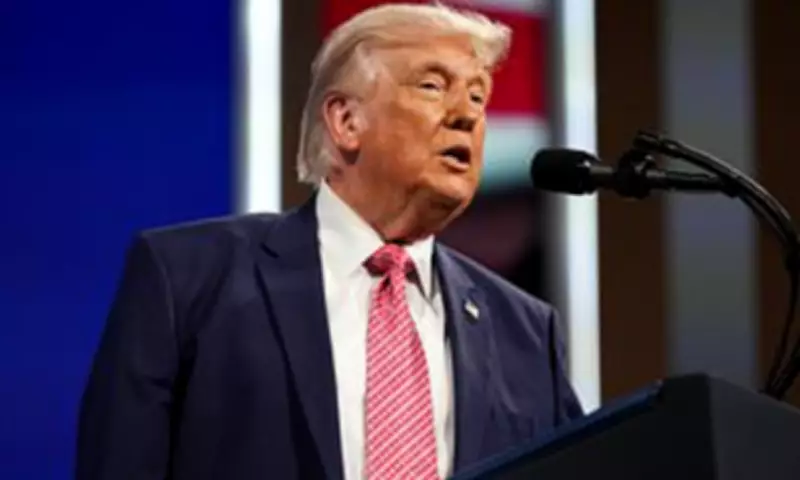
In a stark escalation of rhetoric, former US President Donald Trump issued a late Thursday warning that American military forces "hasn't even started destroying what's left in Iran." The provocative statement came alongside a specific threat to target and demolish the nation's critical infrastructure, including bridges and electric power facilities.
Explicit Threats Against Civilian Infrastructure
Trump detailed his intentions in a social media post, writing "Bridges next, then Electric Power Plants," marking his latest in a series of threats against Iranian infrastructure. This follows a televised address on Wednesday where he cautioned that the conflict could intensify if Iran does not capitulate to Washington's demands, with potential strikes on energy and oil infrastructure explicitly mentioned.
Legal Experts Raise War Crime Concerns
The threats have triggered significant alarm among international legal scholars. Dozens of experts in the United States signed an open letter released earlier on Thursday, asserting that US strikes on Iran's civilian infrastructure could amount to war crimes. The letter references the 1949 Geneva Conventions, which establish fundamental humanitarian standards for warfare.

These conventions, along with additional protocols, strictly prohibit attacks on sites deemed essential for civilian survival. They mandate that parties to a military conflict must clearly distinguish between civilian objects and military objectives, explicitly forbidding assaults on civilian infrastructure.
"Bring Them Back to the Stone Ages"
In his Wednesday speech, Trump vowed, "We are going to hit them extremely hard over the next two to three weeks. We are going to bring them back to the Stone Ages, where they belong." Despite claiming that Washington was nearing the completion of its objectives in Iran, the former president offered no concrete timeline for ending the hostilities, continuing a pattern of shifting timelines and war aims that has characterized his approach.
Context of the Ongoing Conflict
The current war ignited on February 28 with coordinated US and Israeli attacks on Iran. Tehran retaliated by launching assaults on Israel and Gulf states hosting US military bases. Subsequent joint US-Israeli strikes within Iran and Israeli operations in Lebanon have resulted in thousands of fatalities and displaced millions of people from their homes.
The conflict has also exerted substantial pressure on global markets, driving up oil prices and creating economic instability. Trump's contradictory messages and bellicose threats have done little to alleviate international concerns surrounding what represents the largest US military engagement since the 2003 invasion of Iraq.
The situation remains volatile, with the explicit targeting of civilian infrastructure raising profound legal and humanitarian questions as the conflict shows no signs of abating.