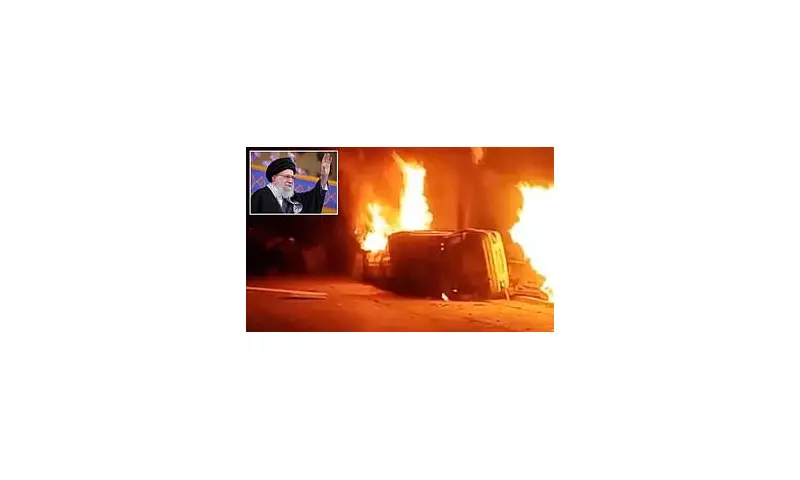
Former US President Donald Trump has issued a stark warning to Iran's leadership, threatening to hit the Islamic Republic 'very hard' if its security forces continue their violent suppression of widespread protests now entering a second week.
Nationwide Unrest and a Stark US Warning
The protests, which began with merchants in Tehran before spreading across the nation, have become the most significant challenge to the regime in three years. As of this morning, demonstrations have been reported in over 220 towns and cities across 26 of Iran's 31 provinces. The unrest has led to nearly 1,000 arrests and the deaths of at least 20 people, including one member of the security forces.
Speaking aboard Air Force One, Trump stated, 'We're watching it very closely. If they start killing people like they have in the past, I think they're going to get hit very hard by the United States.' He vowed to take action if any more protesters die.

Khamenei's Reported 'Plan B' for Moscow
The threat from Trump appears to have alarmed Iran's Supreme Leader, Ayatollah Ali Khamenei. According to intelligence sources cited by The Times, the 86-year-old autocrat has a contingency plan to flee to Moscow should his security apparatus fail to quell the uprising.
The reported 'plan B' involves Khamenei escaping with up to 20 aides and family members, including his son and presumed heir, Mojtaba. The intelligence source indicated that groundwork for the escape, including 'gathering assets, properties abroad and cash to facilitate their safe passage,' has already been laid.
This comes as Khamenei's regime is still reeling from a 12-day war with Israel in June, which saw US airstrikes on Iranian nuclear sites, and the decimation of its regional 'Axis of Resistance.'
Economic Collapse Fuels Public Fury
The protests, while initially focused on economic hardship, have rapidly evolved into anti-government rallies. The Iranian rial is in freefall, trading at around 1.4 million to $1, driven by intense economic pressure including UN sanctions reimposed in September. Annual inflation runs at approximately 40%, crippling household budgets.
Recent government moves, such as introducing a new pricing tier for subsidised gasoline, have further inflamed public anger. This discontent builds on years of simmering resentment, notably following the 2022 death of Mahsa Amini in police custody.
Iran's foreign influence is also waning. Its network of allied militias and governments is under severe strain:
- Hamas has been crushed in Gaza.
- Hezbollah's leadership has been targeted.
- Syrian President Bashar al-Assad was overthrown in December 2024.
- Houthi rebels in Yemen face sustained airstrikes.
On the nuclear front, Iran recently claimed it had halted uranium enrichment at all sites, a gesture towards potential negotiations. However, the International Atomic Energy Agency has warned Tehran could potentially build up to 10 nuclear bombs if it weaponises its programme. While US intelligence believes Iran has not started a weapons programme, it acknowledges activities that position it to do so.
The current crisis is a stark contrast to the 2015 nuclear deal, which briefly eased tensions. Trump's unilateral withdrawal from that accord in 2018 set the stage for the current escalation, which intensified further after Hamas's attack on Israel in October 2023.