
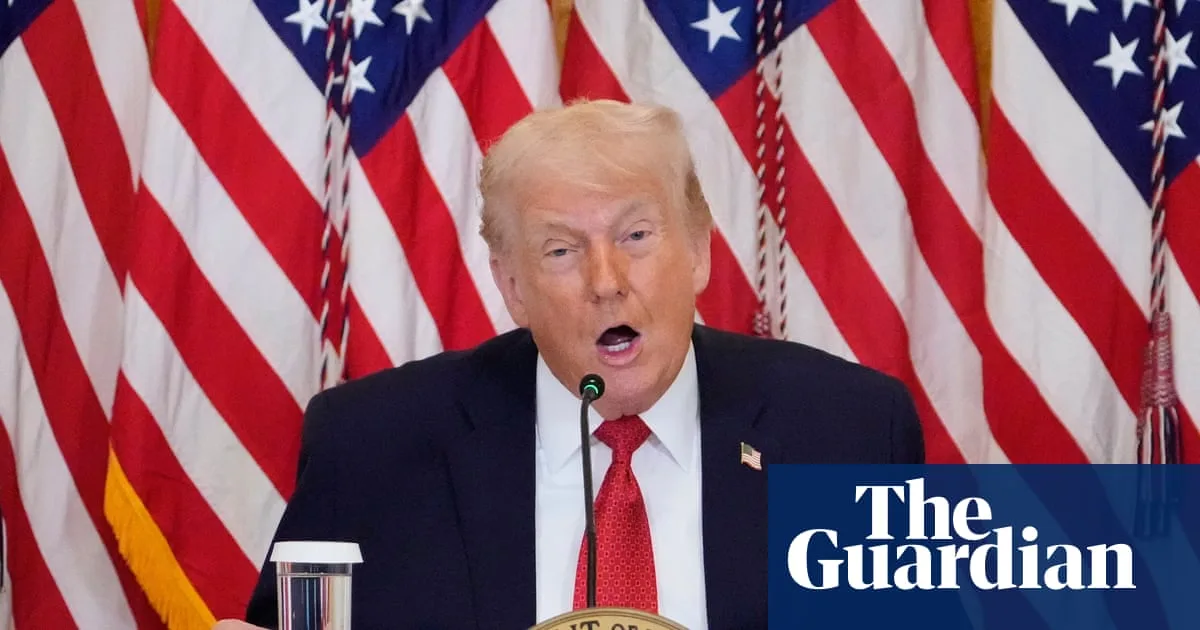
Donald Trump has threatened to impose tariffs on countries that do not "go along" with his plan to annex Greenland, intensifying pressure on European allies who have resisted his ambition to acquire the Arctic territory. Speaking at a healthcare event in the White House, the US president said he might use trade penalties against nations that refuse to support his proposal, which he framed as a national security necessity.
The threat follows a week in which Nato allies deployed troops to the largely autonomous territory, part of the Danish kingdom. Trump's special envoy to Greenland, Jeff Landry, insisted a deal for Washington to take over the island "should and will be made", adding that the president was "serious" about the acquisition. Landry said Secretary of State Marco Rubio and Vice-President JD Vance would be responsible for finalising an agreement.
A bipartisan delegation of 11 US lawmakers travelled to Copenhagen in a show of solidarity with Denmark and Greenland against Trump's threats. The group, including Republican senators Thom Tillis and Lisa Murkowski and Democrat senator Chris Coons, met Danish Prime Minister Mette Frederiksen and Greenlandic leader Jens-Frederik Nielsen. Murkowski said Greenland should be viewed as "an ally, not an asset", while Coons characterised the Washington rhetoric as having "a lot of noise but not much substance".
Denmark has agreed to provide support for Greenland's emergency preparedness, a move welcomed by Greenland's fisheries minister Peter Borg. Meanwhile, residents of Nuuk, the capital, have reportedly expressed fear of US intervention, with some monitoring the skies and seas themselves amid concerns about evacuation or capture. Trump also linked his tariff threat to previous pressure on France and Germany over drug pricing, recalling a warning to French President Emmanuel Macron about raising prescription drug costs.




