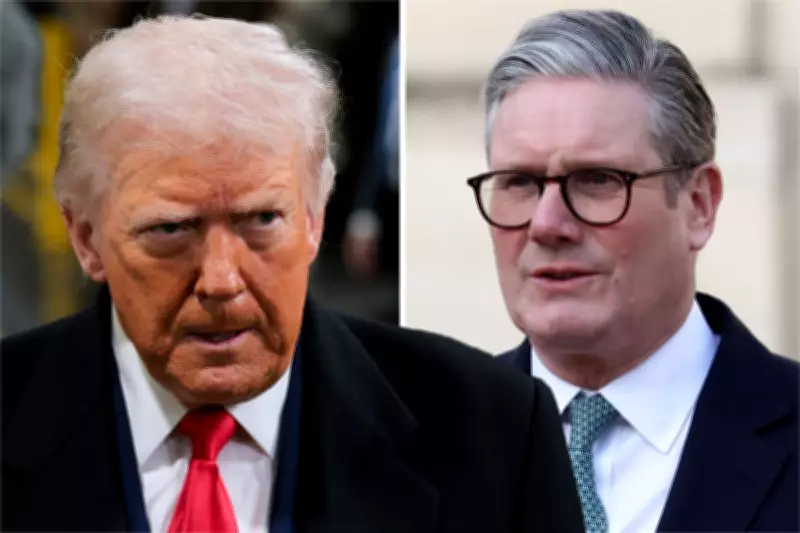
The End of the 'Trump Whisperer' Era: Starmer Falls Out of Favour
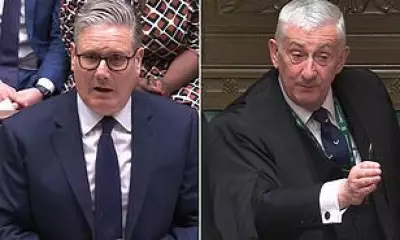
It was not long ago that Sir Keir Starmer was celebrated on the global stage as a masterful "Trump whisperer," admired by international allies for his improbable ability to forge a strong rapport with the famously unpredictable US president. However, the special relationship between the UK prime minister and Donald Trump has now definitively collapsed, as revealed in a series of candid interviews given by the president over the past forty-eight hours.
Iran Dispute Marks the Final Straw
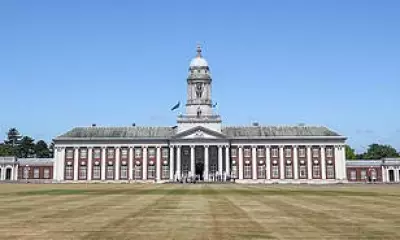
In conversations with the Daily Telegraph and The Sun, President Trump openly criticised Sir Keir's refusal to permit attacks on Iran to be launched from Royal Air Force bases, alongside the United Kingdom's decision not to participate in the military raids. The president's remarks included pointed descriptions such as "disappointing" and "far too late," indicating a tone of regret rather than his typical aggressive bluster. Most tellingly, Trump reflected almost wistfully that the relationship was "not what it was," strongly implying that the damage may be irreparable.
This breakdown is much more than a simple disagreement over Iran; it symbolises the evaporation of Sir Keir's once-significant restraining influence on the American leader. The prime minister is now relegated to the growing list of world leaders who regularly incur the wrath of the current Oval Office occupant, with substantial consequences for British trade and global influence.

Underlying Causes of the Diplomatic Rupture
The collapse of this relationship is multifaceted, rooted in a series of accumulating grievances. Initially, President Trump had been willing to overlook ideological differences with Starmer, partly out of respect for his political acumen but largely due to his affection for the United Kingdom, the birthplace of his Scottish mother and home to the royal family he admires. Early diplomatic successes were driven by Trump's desire to ensure his state visit was a monumental success and a lasting part of his legacy.
A key strategy had involved leveraging King Charles's planned visit to the United States for the 250th anniversary of the Declaration of Independence. The hope was that this would enable Starmer to persuade the president to adopt more amenable positions on critical issues, such as transferring the Chagos Islands to Mauritius, adopting reasonable stances regarding Ukraine and the Middle East, and exempting Britain from the trade tariffs imposed on other nations.
However, several factors poisoned this once-positive dynamic:- The Chagos Islands handover, which Trump now views as a security threat, claiming he was "lied to" about the deal.
- Starmer's refusal to support Trump's territorial claims on Greenland.
- The imposition of US trade tariffs on the UK, rendering the carefully negotiated trade deal increasingly worthless.
- The controversial appointment of Peter Mandelson as ambassador to the US, against the wishes of the Trump White House, given Mandelson's associations with figures like Jeffrey Epstein and China.
Domestic and Ideological Strains
The deterioration also relates to Sir Keir's declining domestic popularity and authority. The Trump administration had initially tempered its support for Nigel Farage, but it is now acutely aware that Starmer's tenure as prime minister appears to be numbered. Additionally, issues surrounding free speech have become profoundly corrosive. Last month, far-right activist Tommy Robinson was welcomed at the State Department as a "freedom fighter," highlighting a growing trend where Trump allies in the UK provide names of individuals to be denied visas or sanctioned as alleged "enemies of free speech."
It is now evident that massaging the ego of the quixotic president has its limits. While Sir Keir has acted reasonably throughout, this approach has backfired in the White House. The disagreement over Greenland might have seemed like the beginning of the end, but in reality, the relationship had already been on rocky ground.

Consequences and Future Prospects
For Prime Minister Starmer, the loss of his ability to effectively engage with President Trump strips away the cornerstone of what had made his premiership a success. He is no longer the crucial bridge between Trump and other Western allies; instead, he is just another floundering international leader on the White House's naughty list. Unless he is willing to become a puppet to Trump's whims, as Nigel Farage has, there seems to be no viable path to reconciliation.
The one remaining hope lies in King Charles's scheduled visit on July 4th, which could potentially provide a healing moment. However, by that time, it is possible that a different prime minister will be attempting to build a new relationship with the president, underscoring the precarious and fleeting nature of political alliances in today's volatile global landscape.