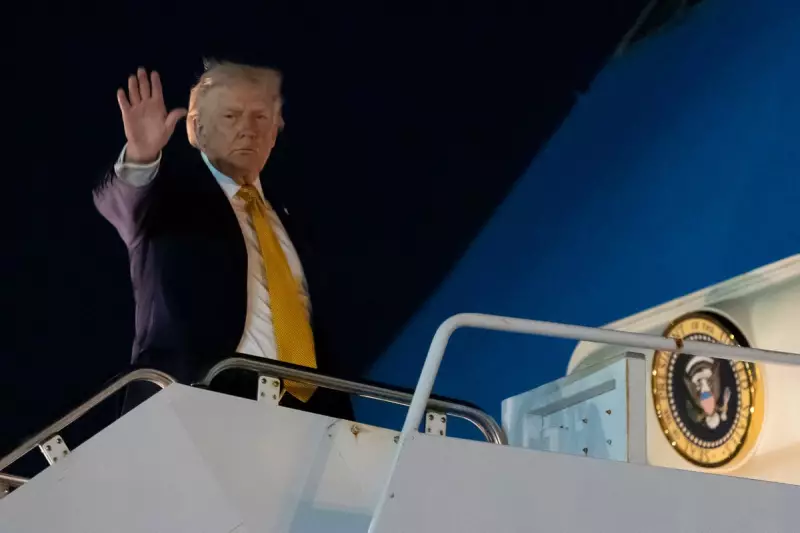
President Donald Trump has publicly dismissed claims from the Kremlin that Ukraine targeted Russian President Vladimir Putin's private residence in a drone strike, following an investigation by United States officials.
US Investigation Contradicts Russian Allegations
The controversy began after Russian Foreign Minister Sergey Lavrov asserted that Ukrainian forces had launched drones aimed at Mr Putin's state residence in the Novgorod region. He claimed that Russian air defence systems successfully intercepted the attack.
This allegation came shortly after Ukrainian President Volodymyr Zelensky travelled to Florida for discussions with President Trump about a potential peace plan for the ongoing conflict.

From Anger to Dismissal: Trump's Shift
Initially, President Trump reacted with what he described as 'considerable concern' and 'anger' over the Russian accusations, stating he had discussed the matter directly with President Putin.
However, the situation evolved after US intelligence and officials conducted their own assessment. On Monday 05 January 2026, President Trump announced that their conclusion was clear: while some activity occurred in the vicinity, President Putin's residence was not the intended target of any drone attack.
This finding led Trump to outright reject the Kremlin's narrative, stating he 'doesn't believe' the version of events presented by Moscow.
Implications for Diplomacy and the Conflict
The swift denial from the US President marks a significant moment in the complex diplomatic landscape. It directly challenges a key propaganda point from Moscow and aligns US intelligence assessments against Russian claims.
The incident underscores the fragile nature of peace talks and the high stakes involved in public accusations between the warring parties and their international allies. The US dismissal of the attack claim may be seen as an effort to de-escalate tensions following President Zelensky's high-profile visit.