Trump's War Powers Notification Reveals Uncertainty Over Iran Conflict Duration
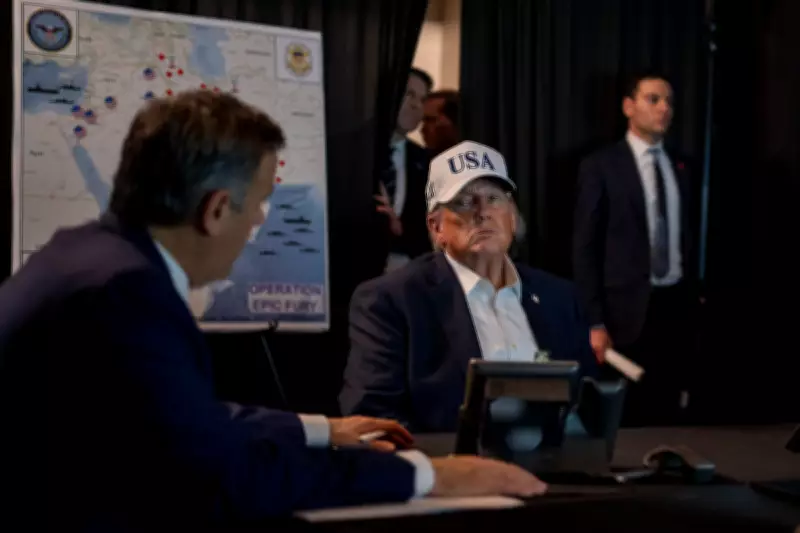
President Donald Trump has formally admitted to Congress that it is currently "not possible at this time to know" how long the United States military campaign against Iran might continue. This revelation came in an official notification sent to lawmakers on Monday, detailing the ongoing operation dubbed Operation Epic Fury that commenced on February 28.
Official Communication and Social Media Alarm
In his carefully worded letter to Congress, Trump explained that while the United States desires a swift and lasting peace, determining the full scope and duration of necessary military operations remains impossible at this juncture. "Although the United States desires a quick and enduring peace, it is not possible at this time to know the full scope and duration of military operations that may be necessary," the president wrote.
Following this official communication, Trump caused significant concern with a separate post on his Truth Social platform Monday evening. In that message, he declared that "wars can be fought forever" and boasted about America's munitions stockpiles being at unprecedented levels.

Legal Requirements and Justification
The presidential notification was submitted under the War Powers Act, which mandates that the executive branch inform Congress within 48 hours of deploying American troops into hostilities. This legislation also requires troop withdrawal within 60 days unless Congress authorizes continued military action, with a potential 30-day extension available.
Trump justified the military intervention by describing the threat from Iran as having become "untenable" for the United States. He emphasized that the mission was designed to minimize civilian casualties while deterring future attacks and neutralizing what he termed Iran's malign activities.
Contradictory Timelines and Mounting Casualties
The president has offered conflicting estimates regarding the conflict's duration. Just one day before his congressional notification, Trump suggested the bombing campaign might last "four to five weeks" during a Sunday statement. This inconsistency adds to the uncertainty surrounding the operation's timeline.
Human cost estimates continue to rise, with the Red Crescent reporting at least 787 fatalities in Iran from the strikes. The non-profit organization Human Rights Activists in Iran indicates that 176 children are among the dead. American forces have suffered six service member deaths and 18 serious injuries according to the latest available information.
Conservative Criticism and Presidential Response
Trump faces growing dissent from within his political base, with prominent conservative voices expressing serious reservations about the military campaign. Megyn Kelly, the conservative podcast host, has voiced "serious doubts" about whether the operation justifies American casualties, while commentator Tucker Carlson has labeled the bombing campaign "absolutely disgusting and evil."
In response to this criticism, Trump asserted during an interview with The Inner Circle newsletter that his MAGA supporters remain firmly behind him. "I think that MAGA is Trump — MAGA's not the other two," he stated, referring to Kelly and Carlson. "MAGA wants to see our country thrive and be safe. And MAGA loves what I'm doing — every aspect of it..."
Military Resources and Strategic Implications
In his Truth Social post, Trump emphasized America's military preparedness, claiming the United States possesses "a virtually unlimited supply" of medium and upper-medium grade weapons. He suggested these stockpiles could sustain prolonged conflict, stating that wars could be fought successfully "forever" using just these supplies, which he described as superior to other nations' finest arms.

The president reiterated his primary concern about preventing Iran from obtaining nuclear weapons, calling this objective "predominant" in his decision-making process. This stance underscores the administration's position that a nuclear-armed Iran would present what Trump has previously described as an "intolerable threat" to American security interests.