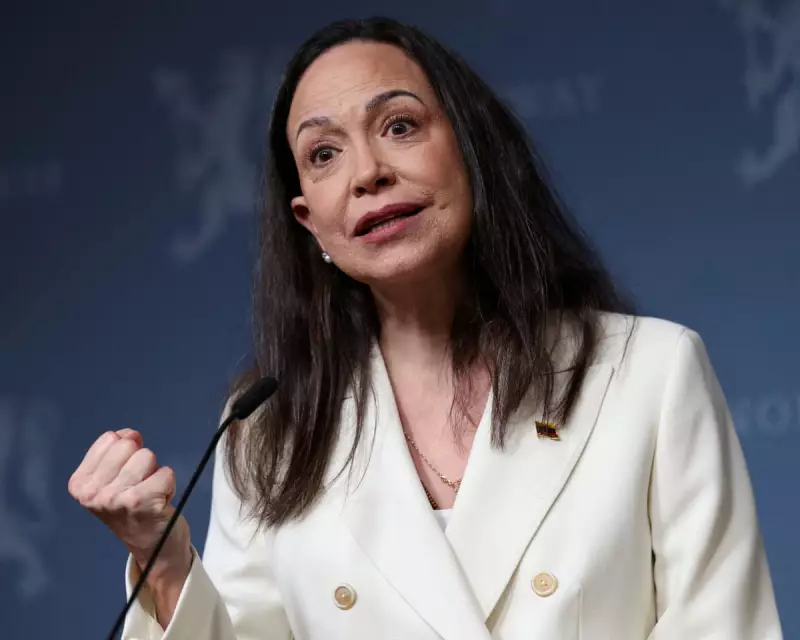
In a dramatic move reshaping Venezuela's political landscape, former US President Donald Trump is set to host opposition figure and Nobel laureate María Corina Machado at the White House. The high-stakes meeting, scheduled for Thursday, follows the seismic US capture of former Venezuelan leader Nicolás Maduro and a surprising American pivot towards recognising his former deputy.
A Fractured Path to Power
The invitation to Machado comes after weeks of uncertainty regarding her role. Following a pre-dawn raid by an elite US military team on 3 January, which seized Maduro and transported him to a New York jail, many anticipated Machado would swiftly assume leadership. However, the Trump administration has largely sidelined her, opting instead to recognise Delcy Rodríguez, Maduro's former vice-president, as Venezuela's interim leader.
This diplomatic manoeuvre is deepening, with Venezuela's ambassador to the UK, Félix Plasencia, a close Rodríguez ally, also due in Washington on Thursday. His visit, the first official one in years, is reportedly aimed at reopening the Venezuelan embassy and solidifying ties.

The Nobel Prize Gambit and Shifting Alliances
Machado's ability to sway Trump may hinge on an unusual offering: her Nobel Peace Prize. The 58-year-old former legislator, awarded the prize in 2025 for promoting democracy, recently suggested she wished to "share" the honour with Trump. The Nobel Institute swiftly rejected the idea, stating the prize is non-transferable, though Trump called the notion a "great honour."
Sources suggest this episode damaged Machado's standing. A White House insider told the Washington Post, "If she had turned it down and said: 'I can't accept it because it's Donald Trump's,' she'd be the president of Venezuela today." Trump has publicly questioned her domestic support, calling her a "nice woman" but lacking the necessary "respect" to govern.
Oil, Prisoners, and a New Political Reality
Meanwhile, Trump's working relationship with Acting President Rodríguez is advancing tangible deals. Last week, he announced an agreement to provide up to 50 million barrels of Venezuelan crude to the US and signed an order to safeguard the nation's oil revenues in US-controlled accounts.
Rodríguez, who initially condemned Maduro's capture—an operation Venezuelan officials say killed at least 100 people—has pivoted to collaborate with Washington. Under her interim government, political prisoners have begun to be released, including several US citizens, in what she terms an "opening up to a new political moment." However, NGOs estimate as many as 1,000 detainees remain.
In a recent phone call, Trump praised Rodríguez as a "terrific person," while she described discussions on a bilateral agenda as "courteous." Machado, however, argues Rodríguez remains US-sanctioned and in a "very critical position because nobody trusts her."
From an undisclosed location, Machado has repeatedly praised Trump as a "champion of freedom" and thanked him for "historical actions" against Maduro's "narco-terrorist regime." When asked if she should lead Venezuela, her response was unequivocal: "Absolutely, yes." The White House meeting will now test whether her vision, and her Nobel medal, can alter the course of a transition she once seemed destined to lead.