

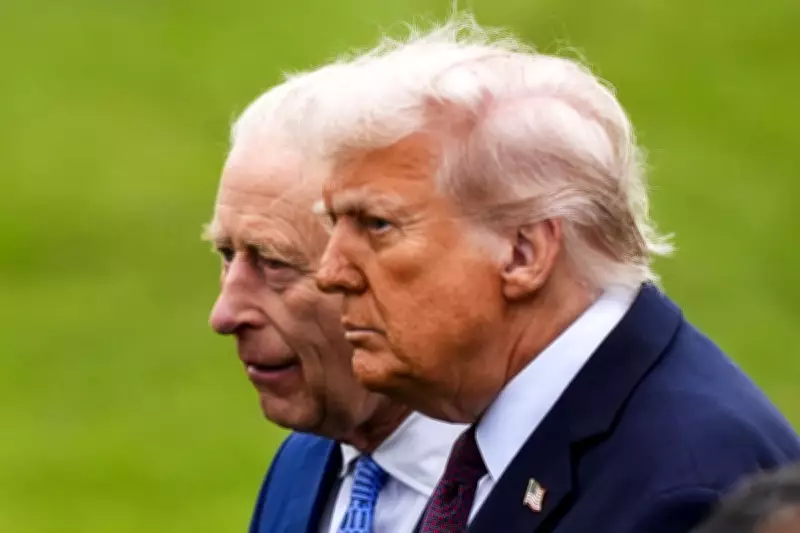
Donald Trump has disclosed the topics he intends to raise with King Charles during the upcoming royal state visit to the United States, revealing he plans to discuss 'everything' including the Iran war, Nato, and Britain's digital services tax. The comments come just days before the King and Queen are due to arrive for a four-day visit marking the 250th anniversary of American independence.
Trump's Agenda for the Royal Meeting
In an interview with Reuters, the US president confirmed he would address the contentious issue of Nato, which he has repeatedly criticised throughout the conflict. He also plans to raise the UK's digital services tax on American social media firms, threatening a 'big tariff' unless the levy is dropped. The tax targets companies with global digital revenues exceeding £500 million and over £25 million from UK users, raising more than £800 million in 2024–25 according to a Treasury review.
Trump stated: 'I'm going to talk about everything.' Beyond the meeting, the royal couple will attend a White House banquet, and the King has been invited to address a joint session of Congress. They will also visit Virginia and New York.

Fresh Diplomatic Strains
The announcement comes amid escalating tensions over the Falkland Islands, with reports suggesting the US could review its position on Britain's claim as punishment for Prime Minister Sir Keir Starmer's lack of support for military action against Iran. This latest dispute surfaces as the King and Queen prepare for their visit.
Trump has previously described the King as a 'great man', contrasting sharply with his view of Starmer, whom he has derided as weak and indecisive. He had earlier suggested the royal trip could 'absolutely' mend relations with the UK.
Hegseth's Rebuke and Strait of Hormuz Crisis
US Defence Secretary Pete Hegseth dismissed British and French efforts to secure the Strait of Hormuz as 'silly', urging Europe to have 'less fancy conferences and get in a boat'. He argued America deserves 'allies who are loyal' and that the partnership is 'not a one-way street'. The strait, a critical oil and gas supply route, became a flashpoint after US and Israeli strikes on Iran, with Tehran effectively closing the lane. Despite an uneasy ceasefire, blockades by both sides have brought shipping to a near standstill, fuelling a global energy crisis.
Hopes for talks have emerged, with US envoys Steve Witkoff and Jared Kushner sent to Pakistan to 'hear the Iranians out'. Iranian Foreign Minister Abbas Araghchi is in Islamabad, though no direct meeting is planned. White House press secretary Karoline Leavitt expressed hope for productive conversations, adding that Vice President JD Vance and Secretary of State Marco Rubio are on standby to travel if necessary.






