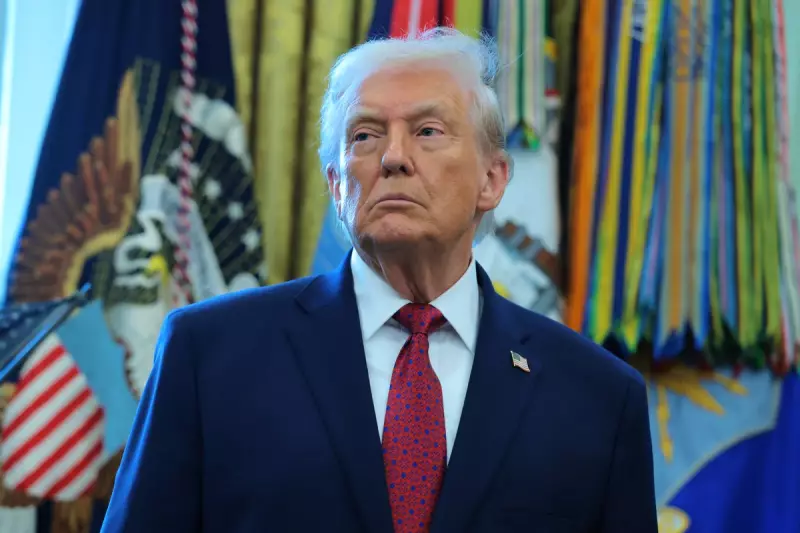
Former US President Donald Trump has reignited a long-standing claim, stating he predicted the September 11th terrorist attacks and that the tragedy could have been prevented if his warnings had been heeded.
The Claim Made Aboard Air Force One
Trump made the assertion while speaking to reporters on Air Force One on Monday, 5th January 2026. He pointed to his book, "The America We Deserve," published in the year 2000, as containing prescient warnings about the threat posed by Osama Bin Laden. Trump suggested that had US officials acted on his advice, the catastrophic events of 9/11 might never have occurred.
What the Book Actually Said
However, independent fact-checking organisations have consistently scrutinised this claim. A review of the text shows that while the book did discuss the potential for a major terrorist attack on American soil, its mention of Bin Laden was fleeting. The al-Qaeda leader is referenced as one among several "shadowy figures" presenting security challenges, with no specific, actionable warning detailing him as the architect of an imminent, large-scale plot.

The publication did not identify al-Qaeda by name nor outline the method of attack that would later unfold. By the turn of the millennium, concerns about Bin Laden were already in the public domain, and US intelligence agencies were actively monitoring his network's activities.
Context and Historical Record
The claim sits within a broader context of pre-9/11 intelligence. Numerous government reports and commissions have documented that while there were general indications of a growing threat from terrorist groups, the precise time, location, and method of the 2001 attacks were not known. Trump's book reflected a widespread anxiety about terrorism at the time, rather than presenting a unique or detailed forecast that was subsequently overlooked by authorities.
This latest statement from the former president continues a pattern of him citing his early literary work as evidence of his foreign policy foresight, a point that remains contested by historians and journalists examining the record.