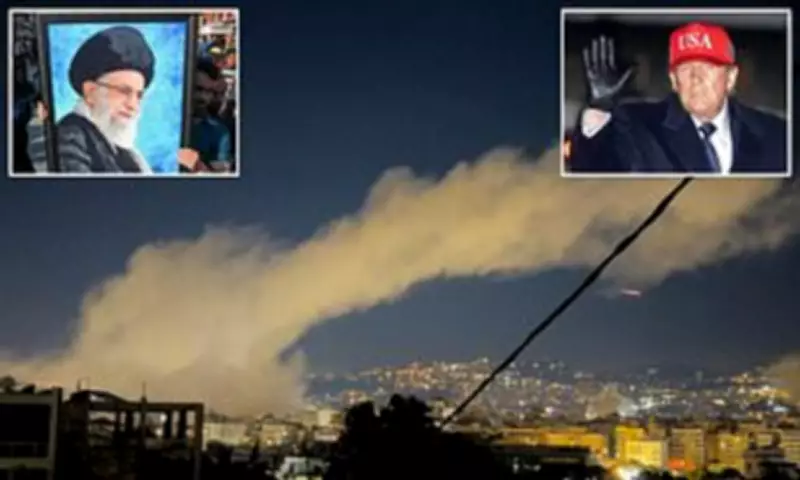
Trump Boasts of Preemptive Strike on Iranian Leader as Regional Conflict Intensifies
Former President Donald Trump declared on Sunday night that he had taken out Iran's Supreme Leader Ayatollah Ali Khamenei 'before he got me', as Israeli military forces conducted strikes against targets in southern Lebanon. Trump's comments followed a coordinated military campaign that eliminated Iran's top leadership and retaliatory actions which resulted in the deaths of three US service members.
Escalating Military Campaign and Civilian Evacuations
Israeli forces expanded their offensive, with Prime Minister Benjamin Netanyahu announcing strikes 'in the heart of Tehran with increasing strength'. Concurrently, the Israeli Defense Forces urged residents in nearly 50 villages across eastern and southern Lebanon to evacuate immediately, anticipating further retaliation after Hezbollah launched missiles into Israel.
The Iranian regime has reported that more than 200 people have been killed since the initial strikes that eliminated Khamenei and other senior officials. Roads in southern Lebanon and Beirut's suburbs experienced severe gridlock early Monday as civilians fled the escalating violence.

Trump's Strategic Calculations and Timeline Predictions
In multiple media appearances, Trump revealed that the US-Israeli attacks had been so effective that they had eliminated most potential successors to Khamenei. 'The attack was so successful it knocked out most of the candidates,' Trump told ABC News. 'It's not going to be anybody that we were thinking of because they are all dead. Second or third place is dead.'
The former president outlined his expectations for the conflict's duration, telling The Daily Mail that the fighting could continue for approximately four weeks. 'It's always been a four-week process. We figured it will be four weeks or so. It's always been about a four-week process so - as strong as it is, it's a big country, it'll take four weeks - or less,' he explained.
Regional Expansion and Military Logistics Concerns
The conflict has expanded beyond Iran and Lebanon, with reports indicating Iranian strikes in Bahrain, Qatar, and the United Arab Emirates on Monday morning. While Iran claims to be targeting only US military assets, US Central Command has dismissed these assertions as false.
Military analysts have raised concerns about the sustainability of US operations, noting that American missile stockpiles - including air defense interceptors and Tomahawk cruise missiles - are being depleted rapidly. Kelly Grieco of the Stimson Center think tank warned, 'One of the challenges is you can deplete these really quickly. We're using them faster than we can replace them.'
Political and Strategic Implications
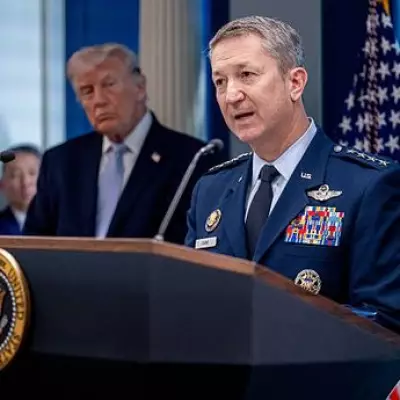
Trump addressed the American public via Truth Social, vowing to 'avenge' the fallen troops and issuing an ultimatum to Iranian forces. 'These intolerable threats will not continue any longer. I once again urge the Revolutionary Guard, the Iranian military police, to lay down your arms and receive full immunity or face certain death,' he declared.
The former president also called upon the Iranian people to overthrow their government, stating, 'Be brave, be bold, be heroic and take back your country.' He framed the conflict as essential for long-term security, arguing that the operation was necessary 'to ensure that Americans will never have to face a radical, bloodthirsty terrorist regime armed with nuclear weapons.'
International Diplomacy and Future Prospects
Trump revealed he had spoken with leaders from multiple Middle Eastern nations including Bahrain, Saudi Arabia, the United Arab Emirates, Qatar, and Jordan. When questioned about Saudi Arabia's potential involvement, he responded, 'they're fighting, they're fighting too.'
Despite the escalating violence, Trump expressed optimism about Iran's political future, suggesting that 'a lot of very positive things could happen' following the conclusion of military operations. He indicated plans to meet with families of deceased service members and possibly attend the dignified transfer of remains at Dover Air Force Base.

The conflict has drawn condemnation from Lebanese President Joseph Aoun, who criticized Hezbollah's actions for 'exposing our country to risks once more' by involving Lebanon in regional proxy wars. The situation continues to develop as military operations intensify across multiple fronts in the Middle East.