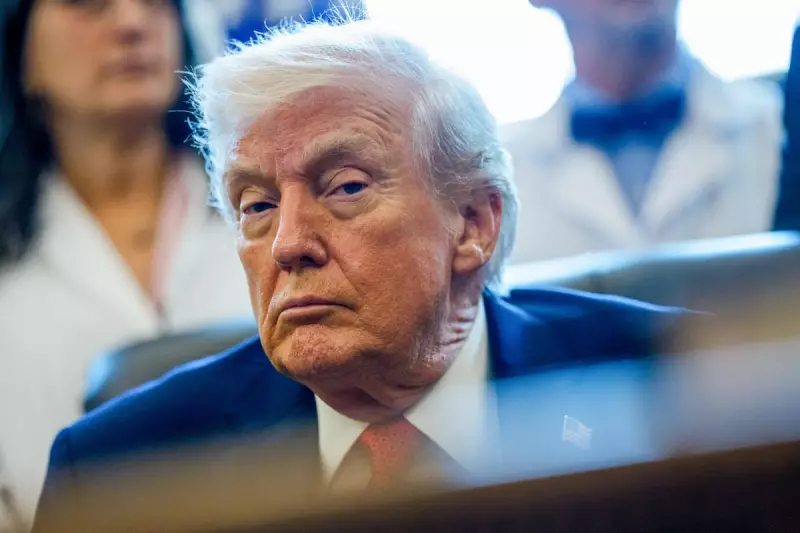
Former US President Donald Trump has made a series of stark declarations about the limits of presidential power, stating he does not feel bound by international law and that only his personal sense of morality acts as a constraint.
'My Own Morality' as the Sole Check on Power
In a revealing interview with the New York Times, Trump outlined a vision of executive authority with few external constraints. "It's the only thing that can stop me," he said, referring to his own moral compass. While he conceded that his administration should adhere to international law, he immediately qualified this by questioning the definition of the term itself.
The comments come as his administration explores "a range of options" regarding a potential acquisition of Greenland. Trump emphasised the psychological importance of ownership over leasing or treaties, stating it provides elements unattainable through mere documentation.

Dismissing Precedent in Venezuela and Beyond
Trump also brushed aside concerns that the US-led effort to oust Venezuelan President Nicolás Maduro could set a dangerous global precedent. He justified the action by repeating claims that Maduro had sent gang members into the United States, a threat he argued was unique and not faced by China or Russia from their neighbours.
When questioned about the possibility of China seizing Taiwan following such logic, Trump expressed confidence that President Xi Jinping would not take such action while he was in office. "I would be very unhappy if he did that," Trump stated, adding he believed it might be reconsidered under a different US president.
Arms Control and Domestic Unrest
The interview also covered the impending expiration of the last major arms control treaty between the US and Russia. Trump appeared unconcerned about its lapse, suggesting a better agreement could be forged that includes China and other nations.
These foreign policy remarks emerge amidst significant domestic tension. The interview was published following the fatal shooting of a woman in Minneapolis by Immigration and Customs Enforcement (ICE) officers, an event which has triggered intense protests. Simultaneously, relations with European allies are strained over the potential US move on Greenland.
Trump's candid reflections to the New York Times present a doctrine of power rooted in personal judgement, challenging conventional diplomatic and legal frameworks that have long guided international relations.