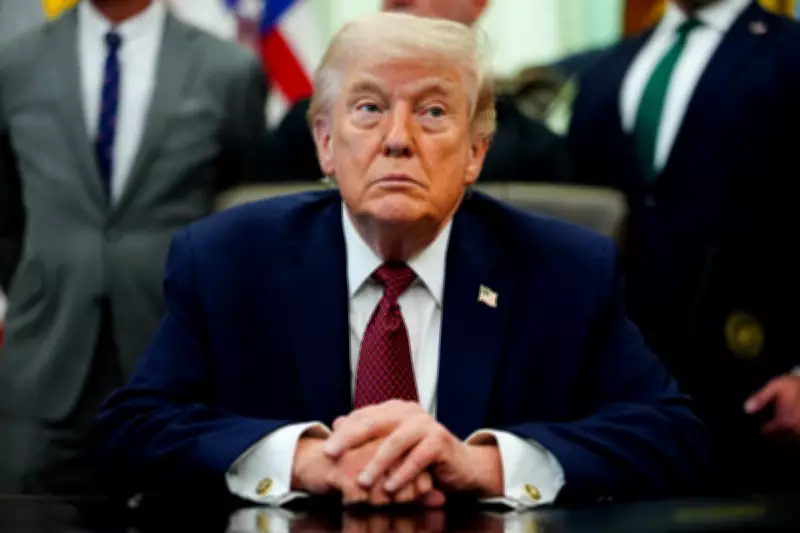
Trump Extends Ceasefire but Vows to Maintain Blockade of Iranian Ports
US President Donald Trump has promised to extend the fragile ceasefire between the United States and Iran, while simultaneously blasting Tehran in a series of Truth Social posts after it backed away from proposed peace talks. The announcement came just hours before the temporary truce was due to expire, with Trump ordering the US military to continue blockading Iranian ports until Tehran's leaders present a unified proposal.
The president declared that the ceasefire would be extended until Iran submits its proposal and discussions conclude. However, Iranian officials have refused to send negotiators to talks in Pakistan until Trump lifts the blockade of the strategically vital Strait of Hormuz, according to Middle Eastern officials speaking to Politico.
Strait of Hormuz Standoff Intensifies
Later on Tuesday, Trump asserted that Iran actually wants the Strait of Hormuz open for commerce, claiming their public position is merely an attempt to save face. "They only say they want it closed because I have it totally BLOCKADED (CLOSED!), so they merely want to 'save face'," the president wrote on his social media platform.

In another post, Trump emphasized that the crucial oil passageway remains "totally controlled by the US, with no Ships allowed to go to Iranian Ports." The blockade has significant implications for global energy markets, as the Strait of Hormuz serves as a transit route for approximately one-fifth of the world's oil supply.
Iranian Response and Military Posturing
Iranian hard-liners rallied in Tehran as potential talks with the United States broke down, with members of Iran's paramilitary Revolutionary Guard displaying a ballistic missile on a mobile launcher during the event. Footage aired by Iranian state television showed men carrying assault rifles riding atop a missile resembling a Qadr ballistic missile, capable of releasing cluster munitions similar to those used against Israel during the conflict.
Mahdi Mohammadi, an adviser to Iranian parliamentary Speaker Mohammad Bagher Ghalibaf, dismissed the ceasefire extension as meaningless. "Trump's ceasefire extension means nothing. The losing side cannot dictate terms," Mohammadi wrote on social media platform X. "The continuation of the siege is no different from bombardment and must be met with a military response."
International Reactions and Analysis
United Nations Secretary-General António Guterres welcomed the ceasefire extension, calling it "an important step toward de-escalation and creating critical space for diplomacy and confidence-building between Iran and the United States." His spokesman encouraged all parties to build on this momentum and engage constructively in negotiations.
Meanwhile, analysts suggest the conflict may be heading toward a frozen state rather than comprehensive resolution. Jessica Genauer and Benedict Moleta write that with shaky ceasefires in place and little progress on talks addressing complex underlying issues, the most likely scenario involves an unresolved war continuing at low intensity below the threshold of full-scale combat.
Economic Considerations and Media Conflict
Trump is reportedly considering extending the Jones Act waiver, which allows foreign-flagged cargo ships to transport fuel and goods between domestic US ports. The initial 60-day waiver beginning March 17 aimed to help tame surging fuel prices caused by the Iran conflict by increasing shipments from the US Gulf Coast to other coastal markets.
The president also launched a tirade against The Wall Street Journal for its coverage of the conflict, claiming the publication has "lost its way" following an op-ed titled "The Iranians Take Trump for a Sucker." Trump insisted that Iran doesn't consider him a sucker, nor does anyone else familiar with the situation.
Pope Leo added a religious dimension to the discourse, cautioning against using religion to justify violence in what appeared to be a thinly-veiled rebuke of the ongoing conflict. "God's holy Name must not be profaned by the desire for domination, arrogance, or discrimination," the pontiff stated. "Above all, it must never be invoked to justify death-dealing choices and actions."