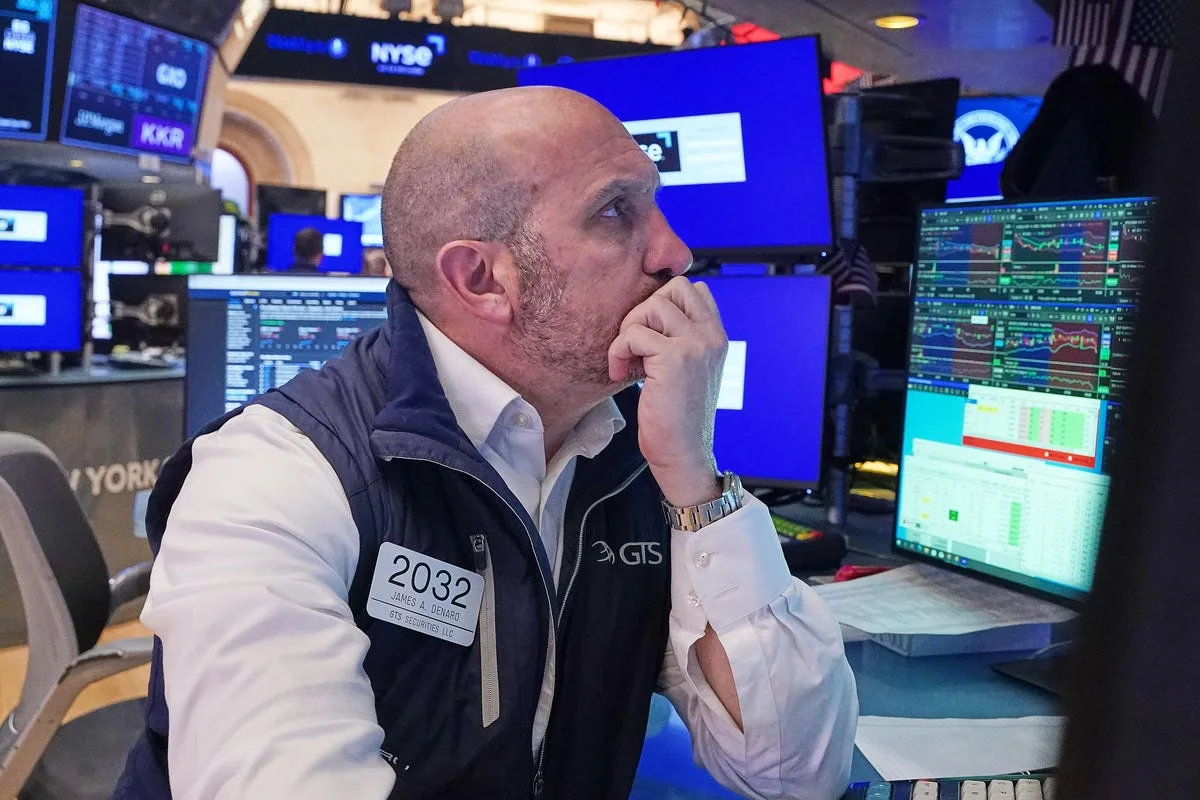
Asian Markets Exhibit Mixed Performance Amid Geopolitical Uncertainty
Asian benchmarks displayed a varied performance during cautious trading sessions on Wednesday, as market participants closely monitored developments in the ongoing US-Iran conflict. The uncertainty stems from ceasefire negotiations, with President Donald Trump extending a truce that was initially set to expire, prompting investors to adopt a watchful stance.
Regional Stock Indices Reflect Divergent Trends
In Japan, the benchmark Nikkei 225 index rose by 0.3%, closing at 59,530.64. Conversely, Australia's S&P/ASX 200 declined by 1.2% to 8,841.00. South Korea's Kospi added 0.4%, reaching 6,413.62. Hong Kong's Hang Seng index lost 1.3%, settling at 26,140.05, while the Shanghai Composite in China gained 0.3% to 4,096.59.
Wall Street Influence and Ceasefire Extension
On Wall Street, the S&P 500 erased early gains to fall by 0.6%, closing at 7,064.01. This decline followed the cancellation of a trip by US Vice President JD Vance to Pakistan, where he was expected to lead negotiations with Iran. The Dow Jones Industrial Average dropped 0.6% to 49,149.38, and the Nasdaq composite slipped 0.6% to 24,259.96. Shortly after US markets closed, Trump announced an extension of the ceasefire to allow Iran time to submit a proposal aimed at ending the conflict.
Oil Prices and Market Volatility
Oil prices experienced fluctuations, with benchmark US crude falling by 19 cents to $89.48 per barrel in Asian trading. Brent crude, the international standard, lost 12 cents to $98.36. These movements were milder compared to earlier volatile swings during the war, when Brent crude briefly exceeded $119 per barrel and the S&P 500 dropped nearly 10% below its previous all-time high. Despite this, US stock markets remain near recent record levels, indicating investor optimism that the US and Iran will avoid a worst-case economic scenario.
Geopolitical Risks and Financial Market Tensions
Much of the tension in financial markets has centered on the Strait of Hormuz, a critical narrow waterway off Iran's coast used by oil tankers to exit the Persian Gulf. Countries like Japan, which imports nearly all its oil—much of it previously through this strait—have responded by releasing oil reserves and exploring alternative routes. Tim Waterer, chief market analyst at KCM Trade, commented, "Trump's decision essentially extends the uneasy status quo rather than resolving the conflict. While the pause has reduced immediate tail risks, the absence of a genuine breakthrough means traders remain inclined to tiptoe rather than trade with real conviction."
Bond and Currency Market Movements
In the bond market, the yield on the 10-year Treasury climbed to 4.31% from 4.26% late Monday, with gains accelerating alongside oil prices later in the day. Currency trading saw the US dollar edge down to 159.33 Japanese yen from 159.38 yen, while the euro decreased to $1.1740 from $1.1744.
This report includes contributions from AP Business Writer Stan Choe, with Yuri Kageyama providing additional insights.






