Donald Trump has dramatically escalated his campaign to acquire Greenland, issuing a chilling warning to Norway's Prime Minister that he no longer feels an obligation to think "purely of peace" after being overlooked for the Nobel Peace Prize. The US President's extraordinary intervention has sent shockwaves through NATO, threatening the alliance's future and triggering emergency talks among European leaders.
A Chilling Message and Tariff Ultimatum
In a letter confirmed as genuine by Norwegian Prime Minister Jonas Gahr Støre, Trump explicitly linked his Nobel Prize disappointment to his aggressive stance on Greenland. "Considering your Country decided not to give me the Nobel Peace Prize for having stopped 8 Wars PLUS, I no longer feel an obligation to think purely of Peace," Trump wrote. He argued that Denmark's historical claim to the vast Arctic island was based solely on "a boat landing there hundreds of years ago," a claim he dismissed as insufficient.
The President's security rationale was clear: "Denmark cannot protect that land from Russia or China." He framed the potential acquisition as a debt owed by NATO, stating, "I have done more for NATO than any other person since its founding, and now, NATO should do something for the United States. The World is not secure unless we have Complete and Total Control of Greenland."
This rhetoric was followed by a concrete economic threat. On his Truth Social platform, Trump declared that from February 1, the US would impose a 10 per cent tariff on all exports from Denmark, Finland, France, Germany, the Netherlands, Norway, Sweden, and the UK. This would rise to 25 per cent in June. The condition for lifting the tariffs? "A deal is reached for the complete and total purchase of Greenland."
Transatlantic Crisis and Diplomatic Confrontation
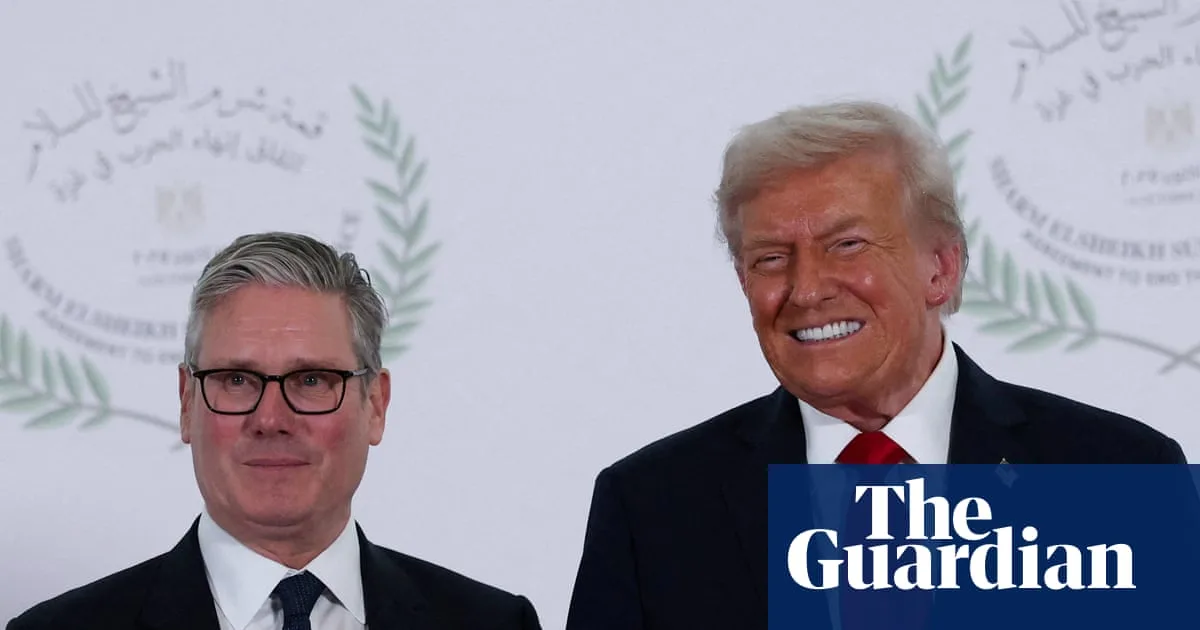
The move has plunged transatlantic relations into a deep crisis, described by a senior UK Government figure as heading towards a "disaster." In an unprecedented direct rebuke, Prime Minister Sir Keir Starmer confronted President Trump in a telephone call on Sunday afternoon. A Downing Street spokesman confirmed Starmer told the President that "applying tariffs on allies for pursuing the collective security of Nato allies is wrong."
Starmer also held urgent calls with Danish Prime Minister Mette Frederiksen, European Commission President Ursula von der Leyen, and NATO Secretary General Mark Rutte. The eight nations targeted by the tariffs issued a joint statement condemning the threats, defending a Danish-led military exercise in Greenland named Arctic Endurance as posing "no threat to anyone." They warned Trump's actions "undermine transatlantic relations and risk a dangerous downward spiral."
Frederiksen struck a defiant tone, stating, "Europe will not be blackmailed. We want to co-operate and we are not the ones seeking conflict." In response, US Treasury Secretary Scott Bessent claimed, "Europeans project weakness, US projects strength."
The Looming Threat to NATO and Potential Retaliation
The row has raised existential questions about the future of the NATO alliance. Former head of the diplomatic service Lord McDonald told the BBC, "If there were any kind of clash between the Americans and Europeans over Greenland, that would be the end of Nato." The prospect of the US imposing tariffs on, or even militarily confronting, a NATO ally like Denmark is seen as a fundamental breach of the alliance's principles.
In retaliation, European leaders are considering deploying a powerful economic weapon: the EU's anti-coercion instrument, dubbed the 'trade bazooka.' Adopted in 2023, this tool allows the EU to hit a coercive country with retaliatory measures, including restricting access to its single market. In this case, it could theoretically target the US with tariffs worth up to £81 billion.
The political fallout in the UK has been immediate. Tory MP Simon Hoare called for the cancellation of King Charles's planned state visit to the US in the spring, labelling Trump a "gangster pirate." However, Culture Secretary Lisa Nandy dismissed the idea as "childish," emphasising the need for continued dialogue.
As protests took place in Nuuk, Greenland, with banners reading 'Greenland Is Not For Sale,' and Danish soldiers reinforced the island's defences, the international community held its breath. With Sir Keir Starmer expected to lobby Trump in person at the Davos summit, the coming days will be critical in determining whether this crisis can be de-escalated or if it will indeed spell disaster for the Western alliance.






