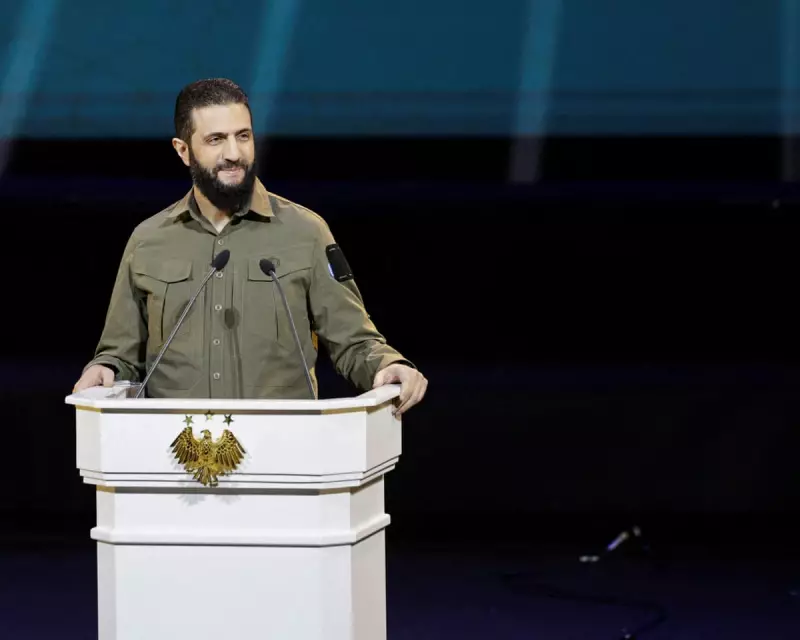
In a significant geopolitical shift, former US President Donald Trump has publicly endorsed Syrian President Ahmed al-Sharaa, describing him as "attractive" and "tough". This backing comes despite Mr Sharaa's controversial past as a former jihadist, who until late 2024 carried a substantial $10 million bounty on his head from the United States government.
A Swift Military Offensive Reshapes Northern Syria
This political development unfolds against the backdrop of a rapid and dramatic Syrian government military offensive. In a matter of just over two weeks, the assault appears to have dismantled more than a decade of Kurdish self-rule in the country's north-eastern regions. The offensive has significantly extended President al-Sharaa's control over territory and critical national resources.
The Kurdish-dominated Syrian Democratic Forces (SDF), which previously administered approximately a quarter of Syria, were forced into a swift retreat, losing control of vast swathes of land within days. While the SDF has notionally agreed to its dissolution in principle, practical implementation remains uncertain, casting a shadow over an already fragile ceasefire agreement. Analysts warn that any forcible integration by the Damascus regime risks sowing the seeds for a future insurgency.

The Erosion of a Key US Partnership
The United States had heavily relied on the SDF as a primary ground partner in the protracted battle against the Islamic State (IS) militant group. However, the Trump administration's growing frustration with the SDF's internal divisions and its failure to implement a previous spring agreement for integration into a new national army has led to a stark policy recalibration.
Tom Barrack, the US special envoy to Syria and ambassador to Turkey, articulated this shift in a recent communication, stating that the foundational rationale for the American partnership with the SDF had "largely expired". This assessment is predicated on the belief that Damascus is now prepared to assume full security responsibilities across these contested regions.
Abandoned Camps and a Growing International Threat
Beyond the abandonment of the SDF, a second critical failure looms large: the international community's neglect of the tens of thousands of suspected IS members and their families detained in camps like al-Hawl, which were previously managed by the SDF. The European Union has expressed "paramount concern" over reported breakout attempts from these facilities.
The situation presents immense risks for a nation already devastated by decades of dictatorship under the Assad family and a brutal civil war marked by severe sectarian violence. While the US is reportedly transferring up to 7,000 of the most hardened fighters to detention facilities in Iraq, fundamental human rights protections against torture and execution remain non-negotiable imperatives.
Disturbingly, reports indicate that some of the most fanatical inmates are women, who have raised their children under the extremist ideology of IS. Years of detention in dire conditions, coupled with a lack of investment in systematic deradicalisation programmes, have only amplified the threat these individuals pose. The case of individuals like Shamima Begum, who was stripped of her British citizenship after leaving the UK at age 15 to join IS, highlights the complex moral and legal dilemmas. Western governments, by hoping the detainee issue would remain an external problem, have inadvertently allowed the threat to fester and grow. A sustainable solution requires the repatriation and judicial processing of foreign nationals by their countries of origin.
The Need for a Political Horizon Beyond Security
Regardless of the Syrian state's current security capabilities—forces under Mr Sharaa initially targeted IS as rivals before confronting them as an insurgent group—the nation's long-term prospects remain bleak without a credible political vision. A brighter future hinges on genuine inclusivity, meaningful dialogue, a framework for transitional justice, and credible elections.
Although Damascus has recently reaffirmed the language and cultural rights of the Kurdish minority, it shows little appetite for tolerating political organisation among minorities that could challenge the highly centralised rule it seeks to reimpose.

A Third Abandonment: The Plight of Syrian Refugees
The volatility in Syria underscores a third, deeply shameful abandonment: the treatment of Syrian refugees who managed to escape the conflict. As the country's future hangs in the balance, nations like Austria are advocating for the repatriation of refugees to a homeland requiring an estimated $200 billion for reconstruction, where safety and basic rights are, at best, precarious. This stance demands urgent reconsideration by European governments, who must recognise the profound instability that still grips Syria.