Former US President Donald Trump has launched a scathing attack on one of his closest European allies, Italian Prime Minister Giorgia Meloni, accusing her of lacking courage for failing to join American military actions against Iran. The remarks were made in an interview with the Italian newspaper Corriere della Sera, where Trump expressed his shock at Meloni's position.
Diplomatic Tensions Escalate Over Iran Policy
"I'm shocked at her. I thought she had courage, but I was wrong," Trump stated bluntly. "Giorgia Meloni doesn't want to help us in the war. I'm shocked. Do people like the fact that your president isn't doing anything to get the oil [in Iran]? Does she like it? I can't imagine."
These comments come at a particularly sensitive diplomatic moment, as Meloni's far-right government announced it would suspend the automatic renewal of Italy's defence cooperation agreement with Israel. The Italian leader cited "the current situation" as justification for this significant policy shift, which marks a departure from Rome's traditionally strong alignment with both Washington and Tel Aviv.

Broader Rift Extends to Papal Criticism
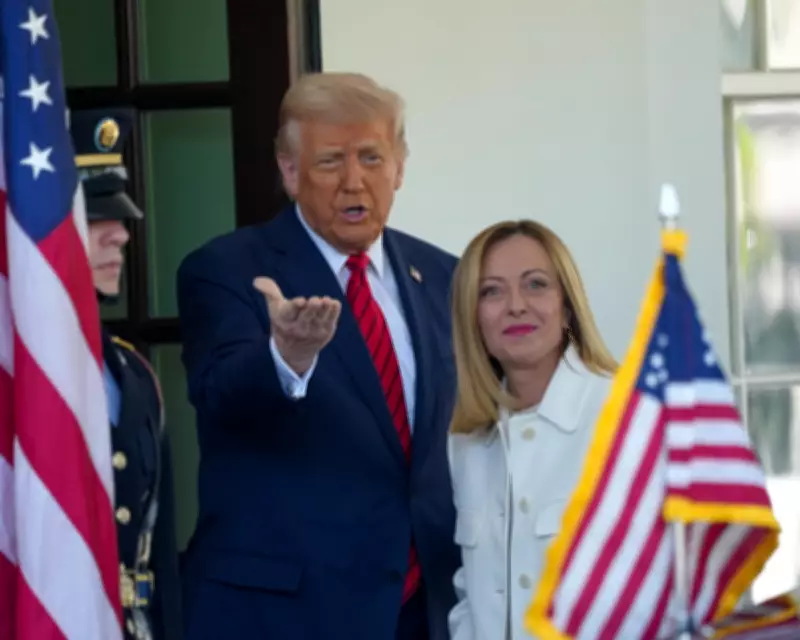
The tension between Trump and Meloni represents a dramatic reversal in their previously warm relationship. Just last April, Trump welcomed Meloni to the White House with apparent camaraderie, and earlier this year, the Italian leader had even expressed hope that Trump might one day receive the Nobel Peace Prize.
However, the rift has deepened following Trump's criticism of Pope Leo, whom the former president suggested should "stop catering to the radical left" and whom he accused of not "doing a very good job." Meloni responded forcefully to these remarks, calling them "unacceptable" and asserting that she would not feel comfortable in a society where religious leaders were expected to follow political direction.
Trump fired back: "She is the one who is unacceptable, because she doesn't care if Iran has a nuclear weapon and would blow up Italy in two minutes if it had the chance."
Italy's Domestic Political Pressures
Meloni's government is navigating turbulent domestic waters following its defeat in a justice referendum backed by Rome. Political analysts suggest the outcome represents less a rejection of the specific proposal than a broader vote of no confidence in Meloni's leadership.
The Italian prime minister faces mounting criticism from segments of her own electorate over her alignment with Trump and her perceived reluctance to openly condemn Israel's actions in the ongoing conflict. This backlash coincides with growing public unease about the economic implications of the Middle East tensions, particularly regarding disruptions to global energy supplies.
"It's a repositioning," explained Lorenzo Castellani, a political historian at Rome's Luiss University. "She's afraid that a sizeable portion of the electorate, even among the centre-right, will become highly critical of Trump and Netanyahu and of the effects of this war on Iran on the economy."
Defence Agreement Suspension Marks Policy Shift
Italy's decision to suspend its defence cooperation memorandum with Israel represents a significant policy departure. The agreement, formally signed in April 2016, had governed military exchanges, technological collaboration, and joint industrial projects between the two nations, with automatic renewal every five years.
This marks the first time Meloni's government has directly intervened to halt the agreement, despite months of mounting criticism over Israel's conduct and alleged violations of international law. Previously, the Italian prime minister had limited her response to condemning specific incidents while continuing to defend the broader framework of bilateral cooperation.
The diplomatic repercussions have been immediate. Italy's ambassador to Israel, Luca Ferrari, was summoned by Israel's foreign ministry after Italian Foreign Minister Antonio Tajani condemned Israeli air raids during a visit to Beirut. Just days earlier, Tajani had himself summoned the Israeli ambassador following an incident in southern Lebanon where Israeli forces fired warning shots near Italian UN peacekeepers.

Broader NATO Fractures Emerge
Trump's criticism of Meloni reflects wider fractures within NATO as the Iran conflict escalates. The former president has previously called the alliance a "paper tiger" after members ignored calls for military support in the Strait of Hormuz, and he has threatened consequences for countries such as Spain, including potential troop withdrawals.
Trump has also accused allies including the United Kingdom of not "stepping up" and "abandoning" the United States, suggesting that those unwilling to support Washington should "go get your own oil."
Despite the diplomatic strain, Meloni has described Washington as a "priority ally," though she emphasized that alliances require candour: "When you are friends, particularly strategic allies, you must also have the courage to say when you disagree."
The situation continues to evolve as Italy balances its international commitments with domestic political pressures and growing public concern about the economic and security implications of Middle East conflicts.