Trump Reportedly Contemplates Assassination of Iranian Leader's Heir Amid Escalating Tensions
President Donald Trump is allegedly considering the assassination of Mojtaba Khamenei, the 55-year-old son of Iran's Supreme Leader Ayatollah Ali Khamenei, according to US officials speaking to Axios. This drastic measure is being weighed as part of a broader strategy aimed at achieving wholesale regime change in Tehran.
Protests Reignite in Tehran as Crackdown Death Toll Mounts
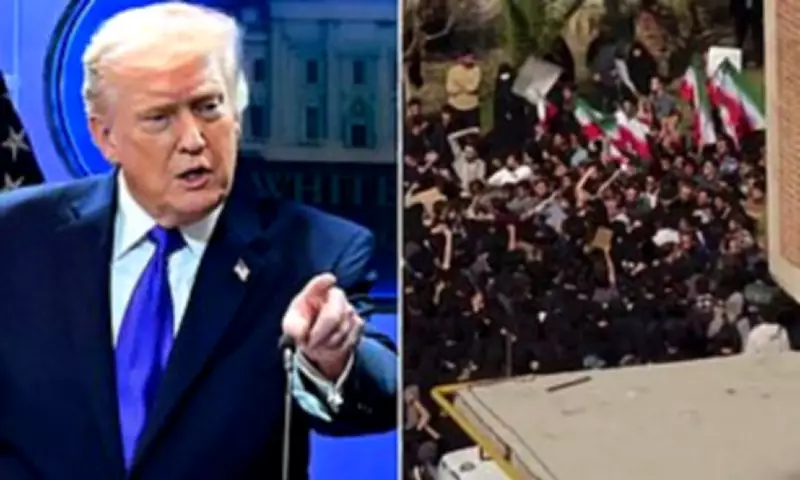
While Trump's reported assassination threat looms from above, brave protesters have returned to the streets of Tehran. Students at the prestigious Sharif University of Technology were documented chanting "Death to Khamenei" and "Shameless, shameless" during demonstrations last Saturday, as reported by the anti-government media outlet Iran International.
The protests, which initially erupted in December 2025 over severe economic grievances, were violently suppressed by pro-government security forces. Conservative estimates from the US-based Human Rights Activists News Agency indicate at least 6,876 people were killed, with approximately 50,000 arrests. Other estimates suggest the death toll could be as high as 30,000 demonstrators.

US Military Buildup and Failed Nuclear Negotiations
The geopolitical standoff is intensifying alongside the domestic unrest. The United States Navy has assembled a significant force in the Persian Gulf, with more than a third of its personnel now actively deployed in the region. President Trump publicly backed the Iranian protesters on January 22, declaring "Help is on its way."
This military posture supports a strategy of coercive diplomacy. The US has been considering launching "limited" military strikes since last Friday to compel Iran to negotiate and curb its nuclear programme. However, indirect talks in Geneva last week reportedly failed to reach a meaningful conclusion.
"They have something for every scenario. One scenario takes out the Ayatollah and his son and the mullahs," a senior US official told Axios, outlining the contingency plans.
Clashes and a Grim Humanitarian Toll
Footage from the weekend showed a large group of student protesters, dressed in black and wearing face coverings, marching against the supreme leader. The demonstrations quickly escalated into violent clashes with members of the Basij, a volunteer internal police force that operates as a branch of the Islamic Revolutionary Guards Corps (IRGC).
The IRGC, a powerful branch of Iran's armed forces designated a terrorist group by the US, is central to the regime's power. Mojtaba Khamenei is considered his father's most likely successor due to his close ties with this organization.
A chilling account from an Iranian doctor, a member of the Aida Health Alliance identified only as Dr. R, alleges that the regime has been executing wounded protesters in hospital beds by shooting them in the head. The doctor shared unverified images of bodies in black bags with head wounds, still connected to medical equipment.
Unprecedented Military Deployment and a Tight Deadline
The US has now assembled the largest concentration of airpower in the Middle East since the 2003 Iraq War. Satellite imagery reveals a significant military buildup:
- More than 60 attack aircraft were seen at a US base in Jordan—triple the usual number.
- A noticeable increase in aircraft at the Al Udeid Air Base in Qatar, where hundreds of personnel have been relocated ahead of potential strikes.
- The deployment includes the USS Gerald Ford—the world's largest aircraft carrier—now in the Mediterranean and within range, the USS Abraham Lincoln strike group, over 100 cargo planes, and fighter jets.
Analysts note that more than two-thirds of available E-3 Sentry reconnaissance planes have been deployed to the region, a strong indicator of preparation for military action. Approximately 35,000 US troops are now stationed in the Middle East.
President Trump has given the Iranian regime an ultimatum of "10 to 15 days" to agree to a deal. The White House has expressed openness to a compromise allowing a scaled-back uranium enrichment programme under strict regulations to avoid war.

"If the Iranians want to prevent an attack, they should give us an offer we can't refuse," a US official stated. "The Iranians keep missing the windows. If they play games, there won't be a lot of patience."
The situation remains perilously poised, with the threat of assassination, military strikes, and continued violent repression of protesters creating a volatile crisis with global implications.