Trump Administration Weighed High-Risk Military Option Against Iran
Former President Donald Trump reportedly considered authorising a daring special operations ground mission into Iran to seize the country's stockpile of highly enriched uranium, according to diplomatic sources. This high-risk military option was evaluated by the White House as fears grew that the sensitive nuclear material may have been moved from its known storage facilities, potentially beyond the reach of international monitors.
Intelligence Blind Spot Spurs Urgent Deliberations
The deliberations among senior administration officials were described by three diplomatic sources briefed on the restricted talks, who spoke anonymously to Bloomberg. The urgency stems from a significant intelligence gap that has developed for both US and Israeli agencies. While both nations targeted key Iranian nuclear facilities during a twelve-day conflict last June, nearly nine months have passed since international inspectors last confirmed the precise location of Iran's most sensitive uranium cache.
"They haven't been able to get to it and at some point, maybe we will," Trump stated during a briefing aboard Air Force One late on a Saturday. "We haven't gone after it, but it's something we can do later on. We wouldn't do it now." The former president acknowledged the potential for a future seizure operation while indicating it was not an immediate step.

Complications from Previous Strikes and Relocation Concerns
One of the primary objectives of last year's military strikes was to prevent Iran from developing a nuclear weapon. However, those very attacks have ironically complicated efforts to track the location of approximately 441 kilograms (972 pounds) of highly enriched uranium—material sufficient for about a dozen nuclear warheads if further refined. US intelligence estimates suggest this quantity could yield around eleven bombs.
Before the conflict, inspectors from the Vienna-based International Atomic Energy Agency (IAEA) observed sustained activity near underground tunnel systems carved into a hillside outside Isfahan, where the uranium was last officially documented. Diplomats familiar with the agency's assessments indicate this activity raises serious concerns that at least part of the stockpile has been relocated to an unknown location.
Contingency Planning and Military Options Under Review
American and Israeli officials are actively searching for the highly enriched stockpile and have prepared detailed contingency plans that include potential special operations deployments if its location can be confirmed, according to one official familiar with the discussions. A senior Trump administration official stated in early March that Washington had identified two potential pathways to neutralise the uranium if located.
The first option involves sending specialist teams to dilute the material on-site for safe disposal if US forces control the territory. The second, more complex alternative would involve physically removing the uranium from Iran for handling at a secure external facility. Earlier reporting by Semafor indicated a special operations raid to seize the stockpile was under active consideration, while Axios reported that the US and Israel were evaluating potential ground missions to secure it.
Historical Precedents and Operational Challenges
The US military has drafted detailed incursion plans for Iran before. Decades ago, following the American embassy hostage crisis, planners developed Project Honey Badger—a concept that envisioned airlifting roughly 2,400 special operations troops aboard more than 100 aircraft into Iranian territory. That ambitious plan even included heavy excavation equipment, such as a bulldozer, in case forces needed to retrieve buried nuclear material.
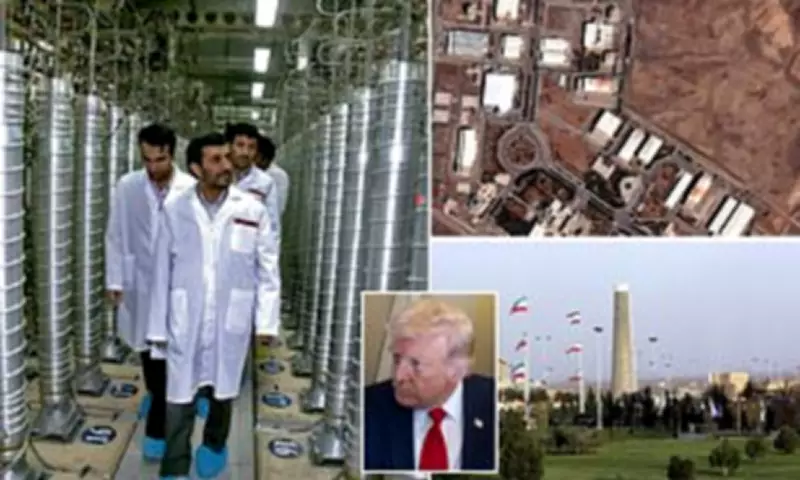
However, locating the uranium presents a formidable challenge. US estimates suggest the material could fit inside approximately sixteen cylinders, each about thirty-six inches tall and comparable in size to large scuba tanks. Each cylinder would weigh around twenty-five kilograms, making them light enough for transportation by vehicle or potentially even by hand, enabling easy concealment.

Diplomatic Collapse and Shifting Geopolitical Landscape
Before the war, Iran's nuclear program was the most heavily inspected in the world, with IAEA monitors averaging more than one visit per day to declared facilities. That unprecedented access ended abruptly after strikes hit major enrichment sites at Fordow and Natanz, along with the uranium processing centre in Isfahan. Iran had previously indicated openness to reducing or exporting its highly enriched uranium as part of a broader diplomatic agreement, but that pathway collapsed when the latest round of fighting halted all negotiations.
With diplomacy stalled, Washington and Jerusalem have intensified reviews of military contingencies, including the possibility of inserting ground forces to retrieve nuclear material, according to a European official familiar with the planning. The death of Supreme Leader Ayatollah Ali Khamenei in the opening hours of the war has triggered a complex succession process that could fundamentally reshape Tehran's nuclear position, as Khamenei had issued a religious decree opposing nuclear weapons development that a successor might revise.
Analytical Assessments and Continuing Risks
Most analysts, including those within US intelligence agencies, assess that Iran has not made a definitive decision to build a nuclear weapon, and the IAEA has not detected a structured weapons program. The Institute for Science and International Security estimates the probability that Iran chooses to develop a weapon remains below fifty percent. Nevertheless, the existence of weapons-grade material outside monitored sites presents a continuing proliferation risk, regardless of Iran's current intentions.
Iran, recently joined by China and Russia, has stated that "a sustainable diplomatic solution" remains possible, according to remarks delivered at the IAEA. However, recent comments from Trump indicate his administration was prepared to pursue its objectives through military means if deemed necessary. Meanwhile, the human toll continues to rise, with United States Central Command announcing that a US service member died from injuries sustained during the opening days of the conflict, bringing the American death toll to seven.