Trump Appeals for International Naval Support in Strait of Hormuz Crisis
US President Donald Trump has issued a direct plea for the United Kingdom and other allied nations to dispatch warships to the Strait of Hormuz, aiming to counter Iran's blockade of this critical global oil shipping lane. In a move that intensifies pressure on Prime Minister Sir Keir Starmer, Trump urged Britain, alongside France, China, Japan, and South Korea, to bolster naval presence in the region to safeguard oil tankers from Iranian aggression.
Escalating Conflict Threatens Global Oil Supply
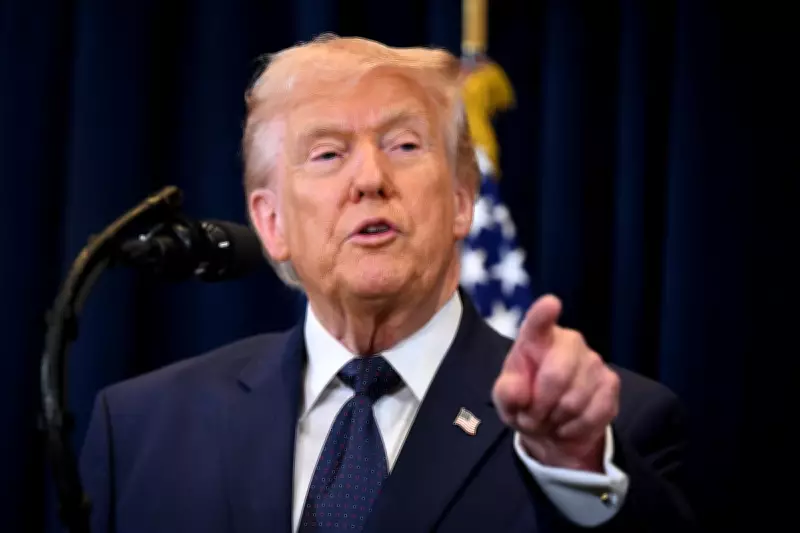
The narrow waterway, through which approximately one-fifth of the world's oil transits, has become a focal point of conflict after Iran's Islamic Revolutionary Guard Corps declared "complete control" over the passage. This effective closure has halted oil flows from the Middle East, disrupted regional trade, and driven up energy prices worldwide. Trump emphasized the urgency in a post on his Truth Social platform, stating, "Many countries, especially those affected by Iran's attempted closure of the Hormuz Strait, will be sending war ships, in conjunction with the United States of America, to keep the strait open and safe."
He further warned, "We have already destroyed 100 per cent of Iran's military capability, but it's easy for them to send a drone or two, drop a mine, or deliver a close-range missile somewhere along, or in, this waterway, no matter how badly defeated they are." In an apparent appeal to international partners, Trump added, "Hopefully China, France, Japan, South Korea, the UK, and others, that are affected by this artificial constraint will send ships to the area so that the Hormuz Strait will no longer be a threat by a nation that has been totally decapitated."
Fractious US-UK Relations Under Strain
This appeal marks a shift in Trump's tone, contrasting with earlier criticisms this month where he accused Starmer of joining the conflict belatedly after US victories. In March, Trump remarked, "The United Kingdom, our once Great Ally, maybe the Greatest of them all, is finally giving serious thought to sending two aircraft carriers to the Middle East. That's OK, Prime Minister Starmer, we don't need them any longer – But we will remember. We don't need people that join Wars after we've already won!"
The relationship between Trump and Starmer has grown increasingly strained in recent months, stemming from disagreements over the UK's deal to transfer the Chagos Islands to Mauritius and Trump's threats to annex Greenland. Tensions have escalated since the outbreak of war with Iran, particularly after Starmer initially denied US requests to use UK bases for targeting Iranian missile launchers. Although the Prime Minister later permitted defensive strikes from joint bases, Trump expressed disappointment, saying he is "very sad" to see the alliance "obviously not what it was."
Further discord emerged this week when Britain declined to follow the US in lifting sanctions on Russian oil, with Starmer cautioning that such a move could aid Vladimir Putin's "war machine." Number 10 instead urged allies to maintain pressure on Moscow and avoid funding the Ukraine conflict through Russian oil purchases.
Regional Violence and Economic Impacts Intensify
In his latest statements, Trump vowed to continue "bombing the hell out of the shoreline" until the shipping lane reopens, asserting that the US would be "continually shooting Iranian boats and ships out of the water." He concluded, "One way or the other, we will soon get the Hormuz Strait OPEN, SAFE, and FREE!"
The conflict has severely impacted maritime traffic, with around 3,000 ships typically traversing the strait monthly now facing attacks. Iran's new supreme leader, Motjaba Khamenei, vowed in his first public statement to sustain the blockade as leverage against the US. The situation worsened on Saturday when a fire erupted at Fujairah port in the UAE, a major oil storage hub, following an Iranian drone strike. The blaze, caused by intercepted drone debris, forced partial operations suspension, exacerbating concerns over surging oil prices.
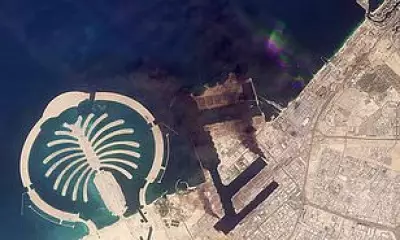
Tehran subsequently warned residents near UAE ports—Jebel Ali in Dubai, Khalifa in Abu Dhabi, and Fujairah—to evacuate, citing potential targeting due to US military use. Iranian forces threatened expanded strikes on US allies after US attacks on Kharg Island, which handles 90% of Iran's oil exports. Trump claimed the US had "totally obliterated every military target in Iran's crown jewel," describing it as "one of the most powerful bombing raids in the history of the Middle East."
In retaliation, Iran's military warned that attacks on its energy infrastructure would prompt strikes on regional oil facilities cooperating with the US. Additionally, the US embassy in Baghdad was hit by a missile, damaging a helipad, while drones struck the building and killed three Iran-backed fighters in Baghdad strikes. As Iran escalates its efforts in the Strait of Hormuz, the US is deploying thousands of troops and additional warships to the region, underscoring the deepening crisis.