
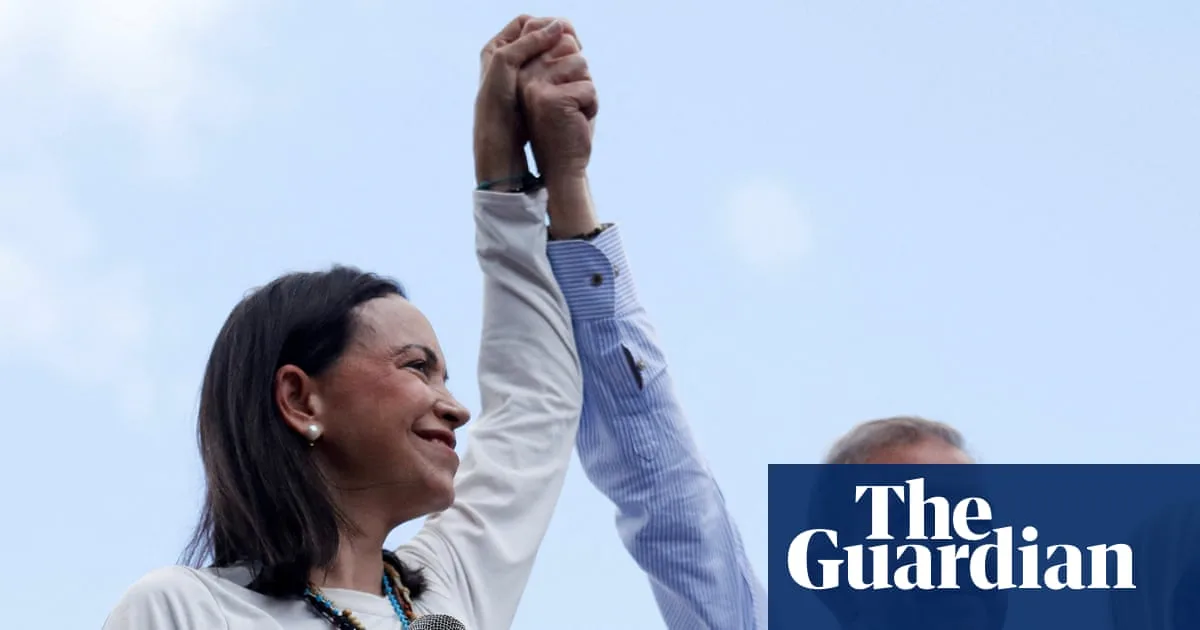
Venezuela’s opposition experienced a rollercoaster of emotions on Saturday as news broke that Nicolás Maduro had been captured by US forces. Opposition supporters expressed initial elation, with former minister Ricardo Hausmann praising the military operation as “brilliant”. However, their joy was short-lived after US President Donald Trump refused to back opposition leader María Corina Machado.
Speaking at Mar-a-Lago, Trump said it would be “very tough” for Machado to be Venezuela’s leader, claiming she lacked sufficient “respect” within the country. Instead, he signalled recognition of Maduro’s vice-president, Delcy Rodríguez, and warned her to open Venezuela’s oil reserves to American companies or face “a very high price”. Rodríguez was later sworn in as interim president.
The opposition expressed confusion and frustration at the White House’s unexpected stance. Hausmann described the political strategy as “truly bizarre”, warning that Venezuela was now in “a legal and a political vacuum” under “illegitimate leaders”. A US official, however, said Rodríguez was someone they could work with “at a much more professional level” than Maduro.
Machado, widely believed to have won Venezuela’s 2024 presidential election, tried to remain positive, hailing Trump’s “courageous vision” and offering to share her Nobel peace prize with him. Analysts, however, said opposition leaders were bitterly disappointed. Christopher Sabatini of Chatham House said Machado would feel “abandoned”, while David Smilde of Tulane University dismissed hopes for a democratic transition as “magical realism”.
Despite the setback, some opposition figures insisted Trump remained committed to restoring democracy. Pedro Burelli, a close ally of Machado, said Trump was “200%” behind her and González, arguing that “you eat a whale a bite at a time”. Pedro Antonio de Mendonça, a coordinator for Machado’s Vente Venezuela movement, also insisted that a political transition was under way that would ultimately fulfil the opposition’s democratic mandate.




