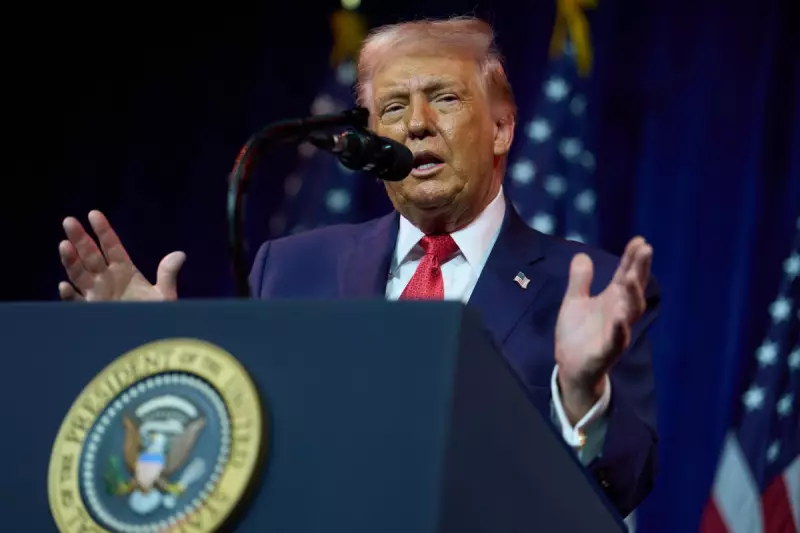
In a significant shift of US policy, President Donald Trump has given his approval for a major new sanctions bill aimed at punishing countries that purchase cheap Russian oil, a move described as targeting the financial fuel for Vladimir Putin's war machine.
Sanctions Bill Gets Presidential Green Light
Republican Senator Lindsey Graham announced on Wednesday, 8 January 2026, that President Trump had "green-lit" the bipartisan legislation during a meeting the previous day. The bill, in development for months, would impose so-called "secondary sanctions" on nations conducting business with Russia, specifically targeting buyers of its energy exports like oil.
Senator Graham explicitly named China, India, and Brazil as the primary targets, stating the legislation is designed to allow President Trump to "punish those countries who buy cheap Russian oil fueling Putin’s war machine." He indicated the bill could be put to a vote in Congress as early as the following week.

Zelensky's Hopeful Timeline for Peace
The development on sanctions comes alongside a cautiously optimistic assessment from Ukrainian President Volodymyr Zelensky. Speaking at a ceremony in Cyprus marking the start of its six-month presidency of the Council of the European Union, Zelensky said he "sincerely believe[s] that this war can be ended" during that presidency, which concludes at the end of June 2026.
He cited negotiations this week in Paris, involving European partners and the United States, as reaching a "new milestone." However, Zelensky also expressed lingering concerns, revealing he has not received a clear, unequivocal answer from allies on how they would defend Ukraine if Russia attacked again after a potential peace deal.
UK Commits to Parliamentary Vote on Troops
On the British front, Prime Minister Sir Keir Starmer has confirmed that MPs will get a vote in the House of Commons before the UK deploys any peacekeeping troops to Ukrainian soil. This follows a historic agreement signed on Tuesday by Britain and France, committing to place boots on the ground to enforce any future ceasefire.
The Prime Minister's official spokesperson declined to specify the potential number of personnel or guarantee the vote would be binding, stating it was premature to discuss such details. The commitment underscores the UK's deepening involvement in post-conflict planning, reportedly undertaken with the blessing of the Trump administration, which has focused its public efforts on pushing for peace.
War's Toll Continues Amid Diplomatic Moves
Even as diplomatic efforts intensify, the brutal reality of the war continues. Late on Wednesday, Russian strikes caused near-total blackouts in southeastern Ukraine's Dnipropetrovsk and Zaporizhzhia regions, forcing critical infrastructure onto reserve power. Meanwhile, Ukrainian forces continue training near the frontlines, as seen in recent exercises with Javelin anti-tank systems in the Zaporizhzhia region.
The confluence of events—from aggressive new US sanctions targeting Russia's economic lifeline to Zelensky's hopeful timeline and concrete UK planning for a peacekeeping role—paints a picture of a conflict potentially entering a decisive, if fraught, diplomatic phase in early 2026.