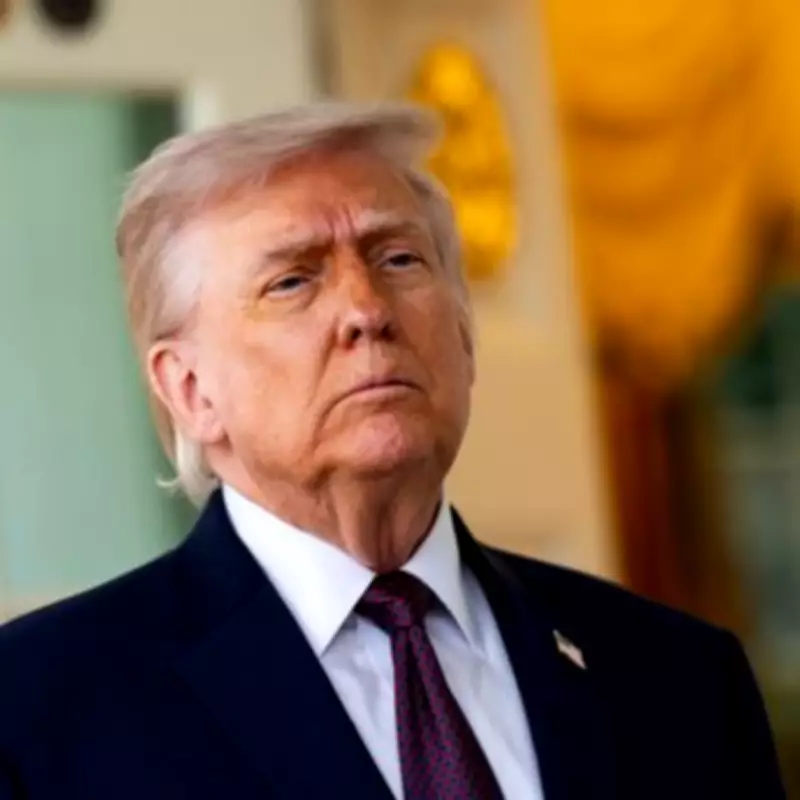
US President Donald Trump has publicly declared that a ten-day ceasefire agreement has been reached between Israel and Lebanon, with hostilities set to pause starting at 5 P.M. Eastern Time tonight, which translates to 10 P.M. London time. Trump made the announcement via social media, stating he had "excellent conversations" with Lebanese President Joseph Aoun and Israeli Prime Minister Bibi Netanyahu, who he said agreed to the ceasefire to pursue peace.
Lack of Confirmation from Key Parties
Despite Trump's bold claims, there has been no official confirmation of the ceasefire from the governments of Israel or Lebanon, nor from Hezbollah, the militant group actually engaged in combat with Israel. This omission raises significant questions about the deal's validity and implementation, as Hezbollah has been the primary force fighting Israel in recent conflicts.
Broader Regional Context and US Diplomacy
Trump's announcement comes amid broader US efforts to mediate conflicts in the Middle East. The US is reportedly working on arranging a second round of talks with Iran to end the ongoing war, which has lasted nearly seven weeks and escalated tensions in the region. Pakistan's army chief met with Iranian officials in Tehran to facilitate these negotiations, aiming to ease the crisis in the Strait of Hormuz, where the US has enforced a naval blockade.

As many as 20 ships have been turned back to Iranian ports due to the blockade, with only Chinese vessels reportedly slipping through. The White House indicated that further talks with Iran would likely occur in Islamabad, Pakistan's capital. Over 10,000 American troops are assisting in enforcing the blockade, though no ships have been boarded yet.
Humanitarian Toll and Military Escalation
The conflict has taken a severe humanitarian toll, with more than 2,000 people killed in Lebanon and over one million displaced since fighting began on March 2. Lebanon's Health Ministry reports that among the dead are 260 women and 172 children, with another 7,185 wounded. The latest escalation started after Hezbollah fired rockets into northern Israel in solidarity with Iran, its key ally.
Criticism and Negotiation Challenges
Abdul Malik al-Houthi, leader of the Iran-backed Yemeni Houthi rebel group, criticized the US for making "impossible demands" in negotiations with Iran. He suggested that the current two-week ceasefire between the US and Iran, which began on April 8 and ends on April 22, resulted from failures by the US and Israel to achieve their war objectives. Al-Houthi noted that successful negotiations could lead to longer stability or an end to aggression.
US Defence Secretary Pete Hegseth emphasized that Iran needs to come to the table for a deal, warning that the US prefers a diplomatic solution but is prepared to take a harder approach if necessary. Iran maintains that its nuclear program is for peaceful purposes and does not seek nuclear weapons. Discussions involve a potential 10 to 15-year delay in Iran's nuclear capability, similar to the Joint Comprehensive Plan of Action (JCPOA) under President Obama, which Trump previously terminated.
This development follows the first meeting between Israel and Lebanon in 34 years, held in Washington DC with US Secretary of State Marco Rubio, highlighting the complex diplomatic landscape as the US navigates multiple fronts in Middle Eastern conflicts.