Trump Advisers Reportedly Prefer Israel to Strike Iran First for Political Advantage
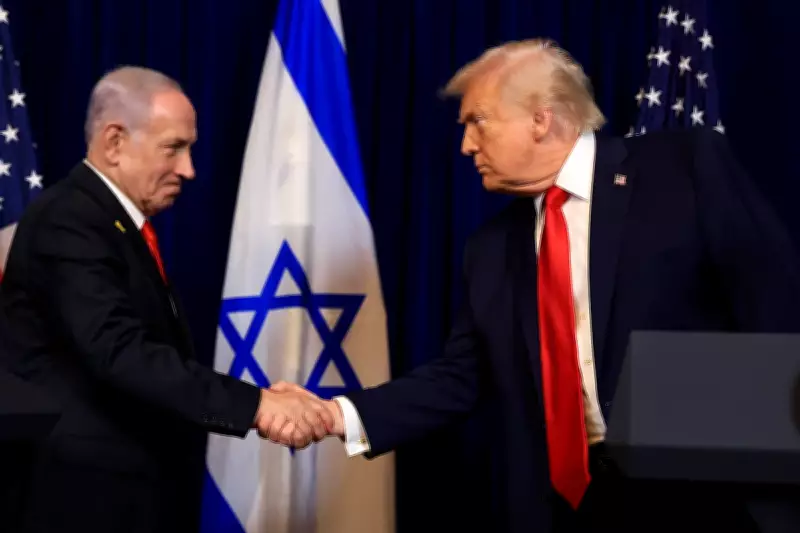
Senior advisers to former President Donald Trump have privately expressed a preference for Israel to initiate military strikes against Iran, according to a new report. The reasoning behind this stance is rooted in political strategy, with insiders suggesting that a sharp retaliation from Tehran would make it significantly easier to justify subsequent US intervention in the conflict.
Public Opinion and Strategic Calculations
Two individuals familiar with high-level discussions on the matter informed Politico that there is a prevailing assessment within Trump's circle. This assessment holds that the American public would be far more likely to support the United States coming to the aid of a key ally like Israel, rather than backing a scenario where the US appears to pick a fight with Iran without clear and direct provocation.
This strategic thinking is underscored by recent polling data. A survey indicates that 56 percent of Americans have little to no trust in Donald Trump's judgment concerning the use of military force overseas. Furthermore, his disapproval rating on this specific issue has risen by four percentage points in just the last month alone.

"There's thinking in and around the administration that the politics are a lot better if the Israelis go first and alone and the Iranians retaliate against us, and give us more reason to take action," one anonymous source told Politico.
Military Preparations and Likely Scenarios
Both sources indicated that if Trump were to ultimately opt for a military campaign, the most probable course of action would involve bilateral US-Israeli operations. This would mirror the coordinated strikes on Iranian nuclear infrastructure that occurred last summer, which were conducted with Israeli support.
In a significant escalation of military posture, a US official confirmed to Reuters that the United States has already dispatched a dozen F-22 Raptor fighter jets to Israel. This marks the first time Washington has deployed combat aircraft to the country specifically for potential wartime operations, a deployment the Trump administration has not formally announced.
While Trump has publicly stated a preference for a diplomatic resolution to the ongoing crisis, he has deliberately kept military options on the table. As a show of force, his administration has moved two aircraft carriers and their accompanying destroyer groups into the region.
The USS Gerald R. Ford, the largest aircraft carrier in the US fleet, departed from a port near Crete on Thursday. It is currently en route to waters near Haifa in northern Israel, where it is expected to arrive by Friday.
Regional Tensions and Diplomatic Stalemate
This substantial US military buildup has inevitably stoked fears of a wider regional conflict erupting. Recall that in June of last year, the United States joined forces with Israel to conduct strikes on Iranian nuclear sites. Iran has since issued stern warnings, threatening fierce retaliation if it is attacked again.
Diplomatically, Washington continues to pressure Tehran to agree to a deal that would limit its nuclear programme. The US claims the programme is aimed at developing a nuclear weapon, an allegation Iran vehemently denies. Iranian officials have stated they will approach ongoing talks in Geneva with "seriousness and flexibility."
Tensions were further heightened last Thursday when Trump declared that Iran would have to reach an agreement within 10 to 15 days or face "really bad things." In response, Iranian Foreign Minister Abbas Araqchi reiterated on Tuesday that Iran seeks a fair and swift deal but will not relinquish its right to peaceful nuclear technology. Washington, however, views any nuclear enrichment activity inside Iran as a potential pathway to weaponization.