

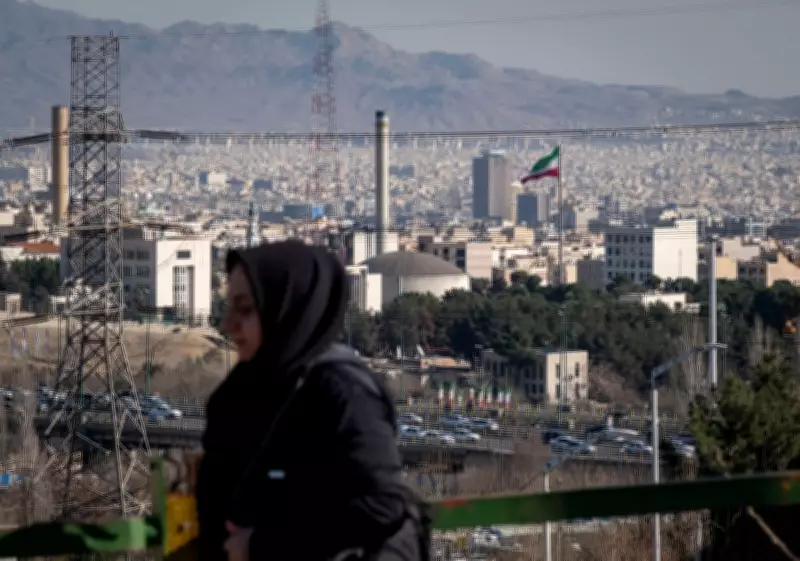
In a high-stakes diplomatic climate, advisers to former President Donald Trump are scrambling to justify a potential US military intervention in Iran, marking what could be the largest American engagement since the Iraq war. This push is fraught with contradictions, as the White House's claims about Iran's capabilities clash with intelligence assessments and expert analyses.
Contradictions in Trump's Casus Belli
During his recent State of the Union address, Trump alleged that Iran poses a direct threat to the United States, asserting the country is "working to build missiles that will soon reach the United States of America." However, this statement lacks backing from the White House or the Pentagon, with US intelligence reports from last year indicating it would take Iran approximately 10 years to develop an intercontinental ballistic missile (ICBM) capable of reaching US soil.
A public defense intelligence agency assessment from 2025 suggests Iran could use space-launch vehicles to "develop a militarily-viable ICBM by 2035 should Tehran decide to pursue the capability." Yet, this potential threat is considered minor compared to existing dangers from Russia, China, and North Korea. Notably, a separate annual threat assessment released in March did not address any direct military threat from Iran's ballistic missile programme to the US homeland.

Advisers Hedge Trump's Remarks
In an attempt to reconcile these discrepancies, US Secretary of State and National Security Adviser Marco Rubio addressed the press, hedging Trump's claims without direct contradiction. "They are trying to achieve intercontinental ballistic missiles," Rubio stated, adding that he wouldn't speculate on timelines. He pointed to Iran's satellite launches and increasing missile ranges as indicators of a pathway toward eventually developing weapons that could reach the continental US.
Trump's insistence on negotiating an end to Iran's ballistic missile programme, which Tehran has labeled a "red line," may be a key stumbling block in ongoing talks aimed at averting war. The Iranian foreign minister has dismissed Trump's remarks as "big lies," particularly regarding Iran's ballistic missiles and its nuclear programme.
Nuclear Programme Claims and White House Backpedaling
Further contradictions arise from claims about Iran's nuclear ambitions. Middle East envoy Steve Witkoff, a real-estate developer and longtime friend of Trump, asserted in an interview that Iran was "probably a week away from having industrial-grade bomb-making material." This came less than a year after Trump claimed to have "obliterated" the Iranian nuclear programme through US bombing runs last summer.
The White House has had to backpedal, with Press Secretary Karoline Leavitt stating, "Operation Midnight Hammer was an overwhelmingly successful mission that did, in fact, obliterate Iran's nuclear facilities. However, this does not mean Iran may never try again to establish a nuclear programme that could directly threaten the United States and our allies abroad; that is what the president wants to ensure can never happen again."
Regional Threats and Military Considerations
Iran's stockpile of missiles, the largest in the region according to US intelligence estimates, poses a significant threat to Israel and US bases, such as Al Udeid airbase in Qatar. During a recent 12-day conflict, Iran fired over 550 ballistic missiles and 1,000 one-way attack drones, testing defense systems, with about 43 penetrating to hit targets.
In an all-out war, Iran could dramatically increase these numbers, potentially exploiting shortages of US anti-air missiles to strike targets in Israel and throughout the region. General Dan Caine, chair of the joint chiefs of staff, has warned Trump that a new conflict with Iran could deplete US stockpiles of interceptor missiles needed for future threats, including from China.
Estimates of Iranian missile stockpiles vary, with Israeli officials recently suggesting Iran had 1,500 ballistic missiles and 200 launchers post-war, a number likely increased as Iran replenishes supplies. Crucially, Iranian leadership views these weapons as essential for deterrence against US or Israeli attacks.

Benjamin Jensen, director of the Futures Lab and a senior fellow at the Center for Strategic and International Studies, noted, "Iran sees its ballistic missiles as a key bargaining chip and essential for deterrence, implying a need to preserve the force for future standoffs." This perspective underscores the complex dynamics at play as Trump's advisers continue to navigate the fraught justification for military intervention.





