

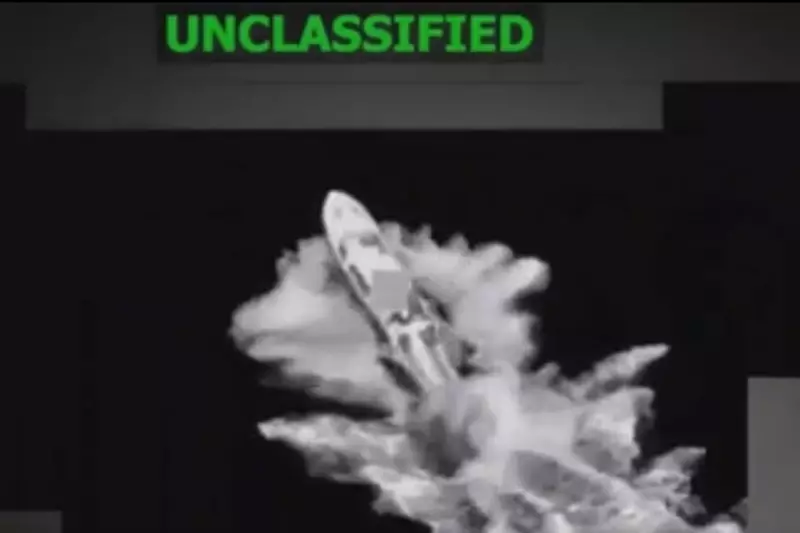
The Trump administration faces a significant legal challenge as families of two men killed in a US missile strike against a suspected drug vessel near Venezuela have filed a wrongful death lawsuit. The case, lodged in Boston's federal court on Tuesday, represents the first judicial confrontation concerning one of 36 such strikes authorised by President Donald Trump's administration in the Caribbean Sea and Pacific Ocean.
Allegations of 'Lawless Killings' in Maritime Campaign
Civil rights lawyers representing the families have branded the deaths as "lawless killings in cold blood; killings for sport and killings for theatre." The lawsuit centres on the deaths of Chad Joseph and Rishi Samaroo, two Trinidadian nationals among six individuals killed during an October 14 strike. According to the filing, the men were engaged in fishing and farm work in Venezuela and were returning to their homes in Las Cuevas, Trinidad when the attack occurred.
Legal Grounds and Plaintiff Statements
The novel lawsuit has been filed under the Death on the High Seas Act, a maritime statute permitting family members to sue for wrongful deaths on the high seas, and the Alien Tort Statute, an eighteenth-century law enabling foreign citizens to seek redress in US courts for violations of international law. Baher Azmy, a lawyer for the plaintiffs at the Center for Constitutional Rights, emphasised the necessity for judicial oversight, stating, "We need a court of law to proclaim what is true and constrain what is lawless."

The plaintiffs, Lenore Burnley (Joseph's mother) and Sallycar Korasingh (Samaroo's sister), are seeking damages from the US government for the two deaths, rather than an injunction to halt further strikes. However, the case could establish a legal precedent for assessing the legality of the October 14 strike. Korasingh asserted, "If the US government believed Rishi had done anything wrong, it should have arrested, charged, and detained him, not murdered him. They must be held accountable."
Administration Defence and Congressional Scrutiny
The Trump administration has consistently framed these attacks, directed by US Defense Secretary Pete Hegseth, as part of a war against drug cartels, alleging targeted vessels belong to armed groups. Officials maintain that the strikes comply with international rules, specifically the law of war or the law of armed conflict. Nevertheless, the campaign has attracted considerable scrutiny from Democrats and some Republicans in Congress, which has not authorised attacks on drug cartels, alongside condemnation from human rights organisations.
International Law and Expert Analysis
Legal experts have previously contended that drug cartels do not meet the accepted international definition of an armed group, casting doubt on the legal basis for the strikes. Tuesday's lawsuit argues that the killing of Joseph and Samaroo, occurring outside a recognised armed conflict and without their participation in military hostilities against the US, constitutes murder. It should therefore be deemed a wrongful death on the high seas and an extrajudicial killing under international law.
The Pentagon has not provided an immediate response to requests for comment regarding the lawsuit. Since September, the authorised strikes have resulted in over 120 fatalities, intensifying debates over the administration's maritime strategy and its adherence to legal and humanitarian standards.






