Tehran Residents Describe 'Worst Night of Strikes' Amid Intensified Bombardment
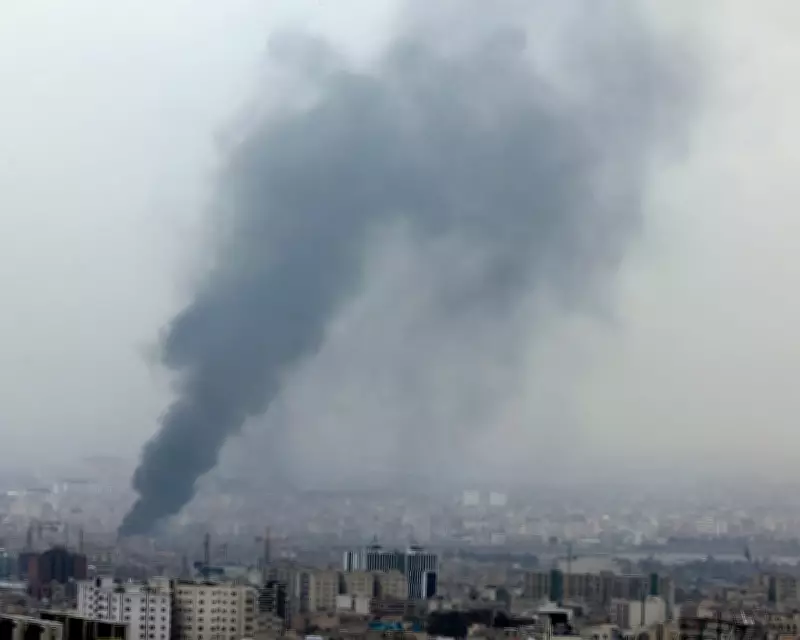
Residents of Tehran have reported enduring what they describe as the most severe night of aerial bombardment since the conflict began, with back-to-back explosions shaking buildings and creating hazardous environmental conditions. The Iranian capital faced relentless attacks early Tuesday, prompting urgent warnings from health authorities about toxic air quality.
Contradictory Messages from US Leadership
As jets bombed Tehran, US officials issued starkly contradictory statements about the war's trajectory. Former President Donald Trump declared on Monday that "the war is very complete", suggesting a swift conclusion. However, hours later, Defense Secretary Pete Hegseth delivered a more aggressive stance, vowing that the United States would not cease operations until Iran was "totally and decisively defeated".
Hegseth promised that Tuesday would witness the most intense strikes yet, emphasizing that the timeline for ending the conflict rested solely with US leadership. "It's not for me to posit whether it's the beginning, the middle, or the end, that's [Trump's decision] and he'll continue to communicate that," Hegseth stated, highlighting the mixed signals emanating from Washington.

Mounting Civilian Casualties and Environmental Hazards
The human cost of the conflict continues to rise dramatically. According to the US-based Human Rights Activists in Iran group, at least 1,245 civilians have been killed, including 194 children, since the US-Israeli military campaign against Iran commenced. In Lebanon, Israeli bombing has claimed at least 486 lives, while 11 fatalities have been recorded in Israel, alongside seven confirmed US troop deaths.
Environmental dangers have escalated alongside the military offensive. The World Health Organization has urgently advised Iranians to remain indoors, warning that "black rain" falling after strikes on oil facilities poses severe respiratory risks. A WHO spokesperson, Christian Lindmeier, confirmed in Geneva that "the black rain and the acidic rain coming with it is indeed a danger for the population, respiratory mainly."
Tehran residents described skies grey with smoke and air filled with the burning smell of gunpowder, with many reporting shattered windows from distant explosions. One resident, speaking under the pseudonym Niloufar for security reasons, recounted: "We are under heavy bombardment and I can hear back-to-back explosions. The place they hit has caught fire. It's not clear where it exploded, but the buildings are shaking. They are destroying Iran."
Regional Escalation and Economic Implications
The conflict has rapidly expanded beyond Iran's borders, with Tehran targeting Gulf states and Israel as part of a strategy to inflict economic pain and raise the global cost of the war. In Bahrain, an Iranian attack on a residential building in Manama killed one woman and wounded eight others. The United Arab Emirates faced drone strikes near petrochemical plants, while Saudi Arabia and Kuwait reported intercepting drones over their territories.
Economic repercussions are becoming increasingly severe. Disruptions to Gulf oil production and shipping through the Strait of Hormuz—a vital choke point for one-fifth of global oil transit—have caused fuel prices to skyrocket. Economists warn that continued instability could plunge the world into an energy crisis reminiscent of the 1970s, with US consumers already feeling the pinch at petrol pumps.
Despite the bombardment, life in some Gulf cities continues with surprising normality. In Dubai, residents still frequent beaches, malls, and rooftop bars, although tourist numbers have dwindled. Commercial flights have tentatively resumed as airspace partially reopened. Nader Farid, a 30-year-old Egyptian real estate worker in Dubai, observed: "They say it's a war but it's caused no problem for us, we don't really see it at all. The first day was scary when they warned about incoming missiles. But now it's been more than a week and life here just goes on."

Military Objectives and Iranian Defiance
General Dan Caine, chair of the US joint chiefs of staff, revealed that US forces have struck over 5,000 sites in Iran, targeting the nation's ballistic missile and drone capabilities, degrading its naval capacity to reopen the Strait of Hormuz, and hitting deeper into military and industrial bases.
Iranian officials remain defiant in the face of the onslaught. Ali Larijani, head of Iran's national security council, asserted in a social media post that the "nation of Iran does not fear your empty threats," implicitly warning that even Trump could face retaliation. "Even those bigger than you could not eliminate the Iranian nation. Be careful not to get eliminated yourself," Larijani wrote, responding to Trump's threat of intensified strikes if Iran obstructed oil shipments.
Meanwhile, Israel confirmed hitting a weapons development facility in Tuesday's wave of strikes, continuing the air campaign launched jointly with the US on February 28. In Lebanon, Israeli attacks targeted Hezbollah positions in Beirut's southern suburbs and other regions, prompting retaliatory rocket salvos and drone swarms against northern Israel. The Lebanese Red Cross condemned an Israeli strike on one of its ambulances that injured two emergency workers.
As the conflict enters a dangerous new phase, with Tehran residents fleeing to rural areas and vulnerable populations trapped in the capital, the international community watches anxiously for signs of de-escalation amid the contradictory rhetoric and relentless military action.