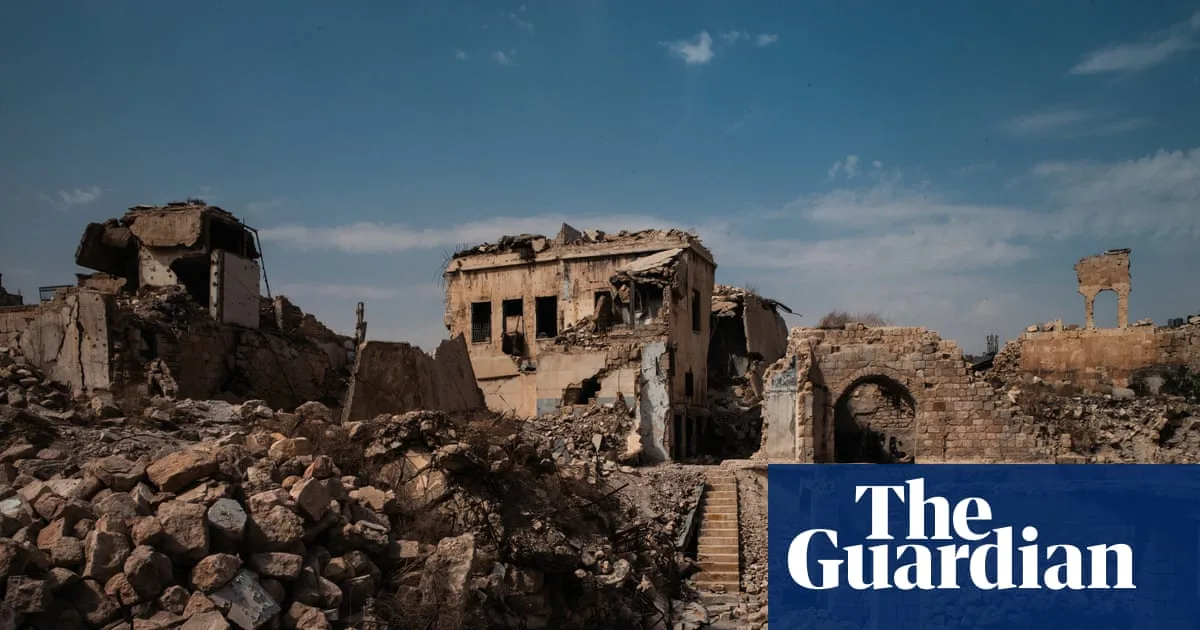
In the shattered suburb of Amiriya on the outskirts of Aleppo, a kebab stall operates in the shadow of a building whose upper floors have been sheared clean off. This scene of fragile commerce amidst ruins is being repeated across Syria, as its people return to pick up the pieces after years of devastating civil war.
The Slow, Dangerous Work of Rebuilding
A year after President Bashar al-Assad fled the country and his regime collapsed, close to 3 million Syrians have returned from abroad and northern refugee camps. Many find themselves drifting back into ghost neighbourhoods devoid of water and electricity, where darkness consumes entire city blocks. With housing scarce and rents soaring, countless families have no choice but to seek shelter in the wreckage of their former homes.
The scale of the destruction is almost incomprehensible. A local politician in Aleppo, who wished to remain anonymous, revealed that nearly two-thirds of the city lies in ruins. He warned that it will take years just to clear the rubble, let alone commence meaningful reconstruction. All current efforts are local and individual, with people like Abu Arab attempting to restore their own properties. This unorganised restoration is perilous, the politician stressed, because most buildings are structurally unsound. "But what can people do?" he asked. "They can't afford rents and don't want to live in tents any more."
Confronting the Past, Brick by Brick
Abu Arab embodies this determined, piecemeal recovery. He recently moved back into his family's roofless corner building in Amiriya after 13 years away. The house, built by his medic father in the early 1980s with high-quality concrete, is now a skeleton of its former self, its columns and flooring slabs exposed and scarred. Signs of recent work are visible: a new cinder-block wall and freshly fitted metal shutters.
He now sleeps in a dark corridor to guard bags of cement from thieves. Leading a visitor up precarious, partially recast stairs, he warns, "Don't lean on the wall, it's buckling." His old bedroom on the third floor is open to the sky. The walls are black with soot and punctured with large holes. One, he explains proudly, was a sniper's position used by his cousin, overlooking the whole area.
Abu Arab's story is intertwined with the brutal urban warfare that ravaged Aleppo. The district's architecture—narrow streets, close balconies, and cuboid buildings—created ideal terrain for snipers. Rebels burrowed tunnels that were later packed with explosives, collapsing entire structures. When fighting reached his neighbourhood, Abu Arab's family fled, joining the exodus. He still grieves the belongings left behind, including a ton and a half of tomato paste his mother had laid out to dry.
His attempts to return were fraught. After the rebels retreated in 2017, he found his home occupied by government soldiers. They did not believe it was his family home, detained him, tortured him, and conscripted him into the army for two years. During service, he was wounded in the leg, an injury that left him with a permanent limp.
A Historic City's Fractured Soul
For over 5,000 years, Aleppo was a great metropolis, a hub of trade and manufacturing renowned for its distinctive architecture, cuisine, and multi-ethnic social fabric, centred on the historic al-Madina Souk. The war and a devastating 2023 earthquake inflicted severe damage on this ancient heart.
In the maze of the old souk's covered alleyways, Annas, a former garment factory owner, sits in the ruined courtyard of his khan. Radicalised after a humiliating arrest by Assad's police in the souk in 2012, he formed a small rebel group before eventually fleeing to Turkey. There, he rebuilt his business, but the pain of exile never left. "I had no one left to tell these stories to except my youngest grandchild," he said.
Now back, he faces a new economic threat: a flood of cheap Chinese imports since the fall of the regime, which is crippling Aleppo's remaining industries. "If they don't stop the imports, I won't be able to reopen my workshops," Annas lamented, explaining that making a single bra could employ 35 people.
While nine of the souk's 54 specialised markets have been renovated and buzz with life, many remain in ruins. Grass grows on caved-in stalls, and domes have collapsed. Yet, even in the darkest, most abandoned lanes, men return to sit on plastic chairs outside their ruined shops, waiting and watching.
The conflict's shadow lingers. Recent weeks have seen violence flare in two Kurdish enclaves in Aleppo, with reports of over 300 Kurds detained and columns of smoke rising as civilians flee. A local politician involved in negotiations said the scenes were "like the early days of the war," stemming from a stalemate where the government cannot accept armed Kurdish formations and the Kurds refuse to disarm.
Walking through Aleppo's ruins, the war feels unnervingly present. Yet the response, for many, is not to erase the past but to confront it gradually. It is Abu Arab's way: fixing a frame, fitting a door, patching a wall, conquering the ruins brick by brick. Before a visitor left, he retrieved the old regime's flag from behind a paint canister in his trashed living room. Asked why he kept it, he replied quietly, "I don't know. You never know what might happen in this country. We have seen a lot … and been burned many times."