
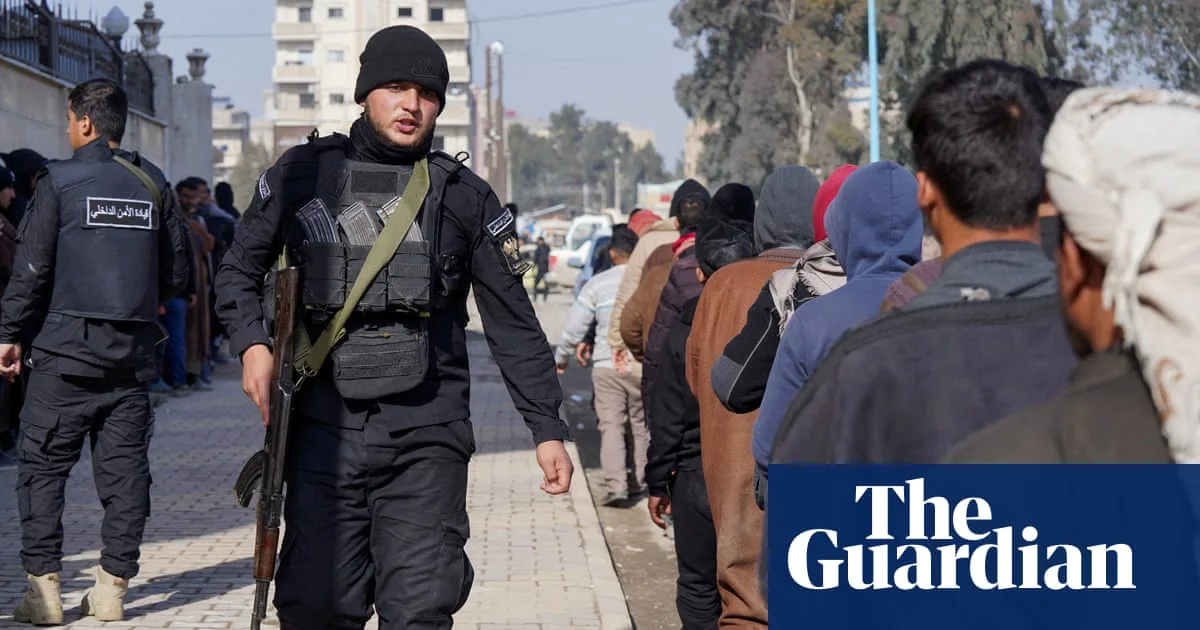
The Syrian government and Kurdish-led forces have reached an agreement to extend a fragile ceasefire into a permanent truce, laying a framework for integrating Kurdish forces into the state and ending nearly a month of fighting.
The agreement on Friday appeared to resolve escalating tensions between the two sides over the question of Kurdish autonomy in north-east Syria and paved a way for the Kurdish-led Syrian Democratic Forces (SDF) to join Syria’s new army through negotiations, rather than battle.
Under the agreement, both sides would pull their fighters back from frontlines in north-east Syria and government security forces would enter the cities of Hasakah and Qamishli, the strongholds of the Kurdish authority. The SDF would integrate into the army, and the Syrian state would absorb the civilian institutions of the Kurdish authority.
A new military brigade in the Syrian army would be formed, which would include three SDF brigades, as well as placing SDF fighters under government command in Aleppo. The deal also included civil and educational rights for the Kurdish people, and guaranteeing the return of the displaced to their areas.
The agreement was praised by Tom Barrack, the US special envoy to Syria, who called it a “profound and historic milestone”. The deal spells a virtual end to the Kurdish-autonomous project of north-east Syria, but with relatively little bloodshed.




