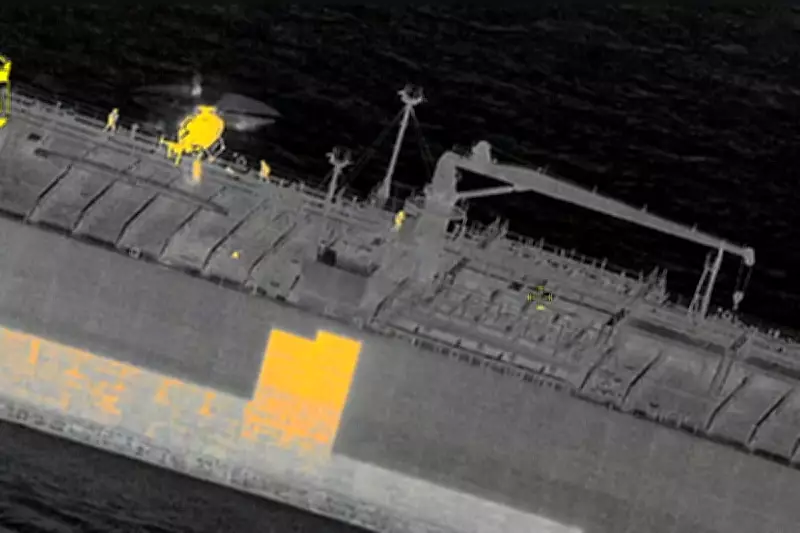
Swedish authorities have launched a significant investigation into a tanker accused of operating under a false flag while navigating the Baltic Sea. The probe centres on the vessel "Sea Owl I," which was boarded by the Swedish Coast Guard on Thursday near Trelleborg, Sweden.
Details of the False Flag Allegation
The tanker was reportedly sailing under the flag of the Comoros islands, located off the coast of East Africa. However, coast guard investigators strongly suspect that this registration was not the vessel's legitimate flag. This incident marks the second such case in Swedish territorial waters within just one week, highlighting a growing pattern of maritime deception.
Sanctions and Suspicious Journey
Adding to the seriousness of the situation, the "Sea Owl I" appears on the European Union's sanctions list. According to official statements from the Swedish Coast Guard, the tanker had been traveling from Brazil to Russia. While it was historically used to transport oil between these two nations, investigators noted that the vessel appeared to be carrying no cargo during Thursday's inspection.

Authorities have confirmed that investigators will conduct a thorough search of the ship and interview crew members to assess the vessel's seaworthiness and verify its true origins.
Broader Context of Maritime Investigations
This investigation occurs alongside another ongoing case involving the cargo ship "Caffa," which is also under Swedish Coast Guard scrutiny. The "Caffa" is accused of transporting stolen grain while appearing on Ukraine's sanctions list and operates with a predominantly Russian crew.
Sweden's Crackdown on Shadow Fleets
These investigations form part of Sweden's intensified efforts to monitor and control what authorities describe as Russia's "shadow fleet" - aging vessels used to transport oil, gas, and allegedly stolen Ukrainian grain. The Swedish government last year announced enhanced measures to tighten controls on these operations.
Stockholm has specifically tasked the Coast Guard and Swedish Maritime Administration with collecting comprehensive insurance information from all vessels operating in Swedish waters. This policy applies not only to ships docking at Swedish ports but extends to those merely passing through the country's territorial waters and exclusive economic zone.
The average age of vessels in these shadow fleets is approximately 18 years, placing them near the end of their operational lifespan. Maritime experts warn that such aging ships become increasingly vulnerable to accidents, particularly when maintenance standards are questionable or deliberately neglected.
Sweden's proactive stance represents a determined effort to enhance maritime security and enforce international sanctions in the strategically important Baltic Sea region.