
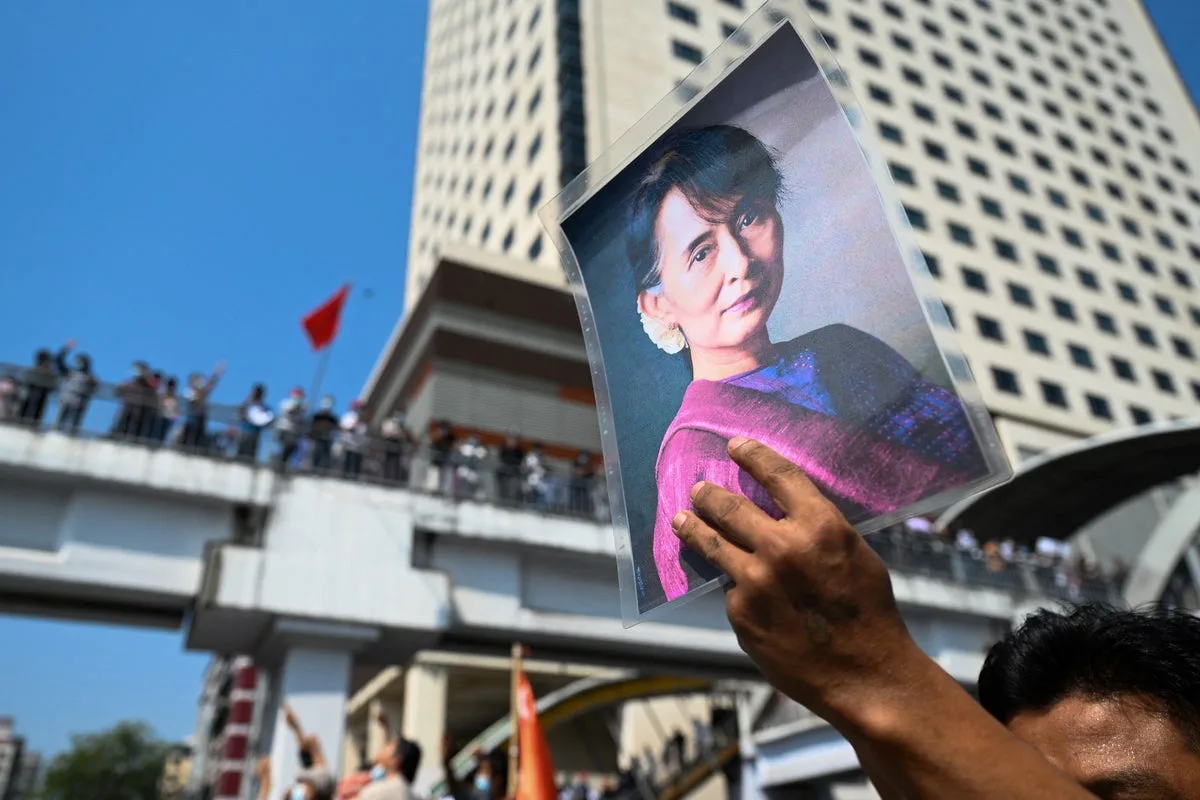
Aung San Suu Kyi has now spent a cumulative 20 years in military detention, marking a grim milestone in her decades-long struggle for democracy in Myanmar. The 80-year-old Nobel laureate was first arrested by the military government in 1989, just a year after returning to the country to care for her dying mother, and has since endured repeated cycles of imprisonment, house arrest and release.
Her son, Kim Aris, issued a statement calling for her release, describing her as being “buried alive in a system devoid of transparency and justice”. He added: “Guided by her philosophy of peace and practical steps towards reconciliation, she’s the only figure with the moral authority and popular mandate to bridge the nation’s divides.” The military junta, he said, must free her as a first step to restoring peace.
Suu Kyi first gained global prominence during her initial detention, when she was awarded the Nobel Peace Prize in 1991 for her non-violent struggle for human rights. Despite her isolation, her National League for Democracy won a landslide victory in the 1990 general election, a result the military refused to honour. She was released in 1995 but faced further arrests and restrictions on her movements in the years that followed.
Her most recent detention began in February 2021, when the military overthrew her elected government in a coup, sparking a deadly civil war. She has not been heard from in public since. The same generals are now holding elections that analysts say are designed to entrench military rule through proxy parties, after purging the NLD from the political arena.
Suu Kyi’s reputation suffered a severe blow in 2017 when she failed to condemn the military’s brutal crackdown on the Rohingya Muslims in Rakhine state and even defended the army against genocide charges at the International Court of Justice in 2019. The court is now hearing a landmark case brought by The Gambia alleging deliberate military violence against the Rohingya.




