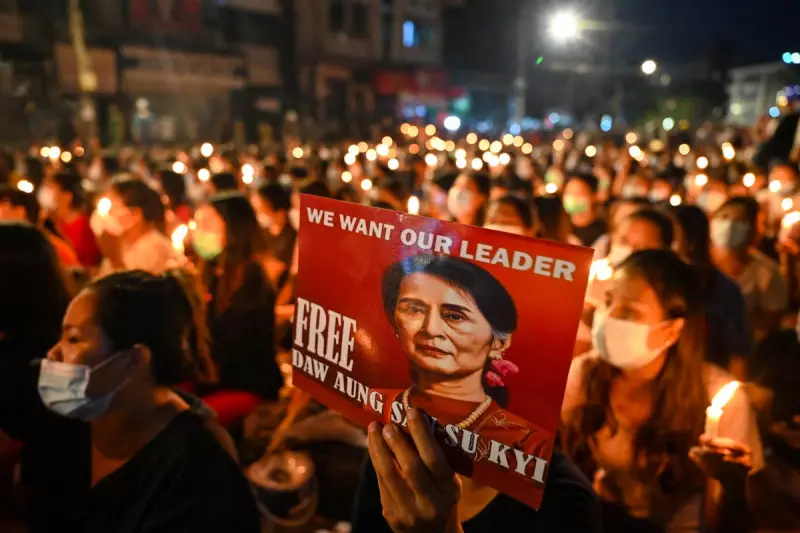
Myanmar's deposed democratic leader, Aung San Suu Kyi, has now spent a staggering cumulative total of two decades in detention. As she faces her final years imprisoned by the illegal military junta, her son has issued a desperate plea for her release, raising the grave question: will the 81-year-old Nobel laureate die behind bars?
A Life Interrupted: From Icon to Prisoner
Aung San Suu Kyi first entered detention 38 years ago, after returning to Yangon in 1988 to care for her dying mother. The daughter of independence hero General Aung San, she was swiftly adopted as the symbol of the nation's burgeoning pro-democracy movement. Her initial house arrest began in 1989 at her mother's home on University Avenue.
Her detention has not been one continuous stretch but a series of cruel sentences. After six years, she was released in 1995, only to be arrested again in 2000 for two more years. A third detention lasted from 2003 to 2010. Throughout this time, she was separated from her two sons, Kim and Alexander, and denied the chance to say goodbye to her husband, academic Michael Aris, who died of cancer in 1999 after being refused a visa.

A Flawed Transition and a Shattered Legacy
A period of fragile hope emerged after 2010. Suu Kyi was released, her National League for Democracy (NLD) won seats in parliament, and in 2015 she secured a landslide election victory. Assuming the role of State Counsellor, she entered a precarious power-sharing deal with the still-powerful military.
Her international reputation, however, was left in tatters by the military's genocidal campaign against the Rohingya people and other ethnic groups, atrocities committed on her watch. Her controversial decision to defend Myanmar at the International Court of Justice in The Hague against genocide charges alienated many former supporters.
Despite this contested legacy, the NLD won a second decisive election in November 2020. Democracy was not upheld. On 1 February 2021, the military staged a coup, arresting Suu Kyi and charging her with a litany of fabricated offences.
A Grave Injustice in a Bleak Prison Cell
Today, Suu Kyi is serving a 27-year sentence in prison, not the relative comfort of house arrest. Reports suggest she has little access to books, her piano, consistent legal counsel, or adequate medical care, and her health is declining.
She is not alone. Almost Myanmar's entire democratic opposition is now imprisoned, exiled, or fighting the junta. The regime's planned elections are a sham conducted amid widespread brutality.
While her political record is complex and rightly scrutinised, her current imprisonment represents a profound injustice. As a democratically elected leader, she should be held to account by parliamentary and international institutions, not languishing in a jail cell on bogus charges.
Given Britain's colonial history in Burma and Suu Kyi's own family ties to the UK, there is a particular responsibility for the British government to lead international efforts to secure her release and that of over 22,000 other political prisoners. The world must not stand by as a Nobel Peace Prize laureate, however flawed, is allowed to perish in detention, cementing a tragic finale to a decades-long struggle for freedom.