Barbra Streisand Faces Intense Online Criticism Following Controversial Instagram Tribute
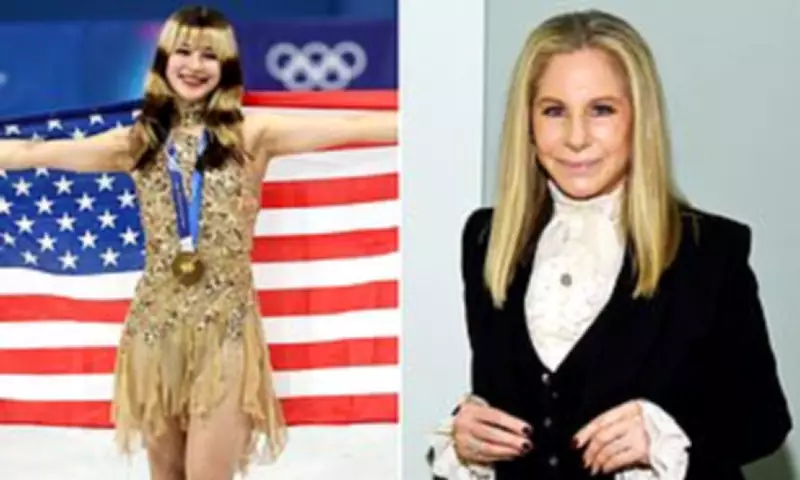
Legendary entertainer Barbra Streisand is confronting significant backlash across social media platforms after posting what appears to have been intended as a heartfelt tribute to Olympic figure skating champion Alysa Liu. The EGOT-winning icon took to Instagram on February 21 to congratulate the twenty-year-old athlete on securing gold at the Winter Olympics in Milan, but her message quickly ignited fierce debate among followers and critics alike.
The Controversial Post That Sparked Widespread Debate
In her now-contentious Instagram caption, Streisand expressed pride in Liu's achievement while revealing a personal connection she felt upon learning more about the celebrated skater. 'We were so happy to see Alysa Liu win the gold medal in Milan yesterday,' Streisand wrote. 'My husband just showed me that in 2019 she skated to my song Don't Rain on My Parade. I'm so proud of her. I heard that she is half Chinese.'
The post then took an unexpected turn as Streisand launched into an extensive anecdote about a Chinese family who resided above her childhood home in Brooklyn. She recounted working in their restaurant, babysitting their children, and described the family matriarch as 'like a second mother' to her during her formative years.

Social Media Reacts With Mixed and Often Critical Responses
While many fans initially celebrated Liu's Olympic triumph, Streisand's caption rapidly became the focal point of intense online discussion. Critics argued that the post veered into unnecessary and awkward territory, with numerous commenters expressing frustration and disbelief.
One particularly viral reaction captured the sentiment of many detractors: 'How do I make her gold medal winning accomplishment by an Asian woman about me?' - Barbra probably.' Another commenter wrote bluntly, 'Girl, this caption was a wild ride,' while a separate user added, 'This is such a stupid post. "Oh, I heard Alysa Liu is half Chinese so let me tell you about this Chinese family I know" WTH?'
Additional critical responses included: 'I heard she is half Chinese took me out,' and 'Heard she's Chinese, posts pic of Chinese people she knows - incredible.' Many critics accused the eighty-three-year-old performer of inadvertently making Liu's historic achievement about herself rather than focusing on the skater's remarkable accomplishment.
Defenders Cite Generational Differences and Genuine Intentions
Not all responses were negative, however. Some social media users adopted a more forgiving perspective, attributing the awkward moment to generational differences rather than malicious intent. In a Reddit thread discussing the controversy, one person observed, 'Every boomer posts on Facebook like this.'
Another user shared a personal anecdote about their elderly mother responding similarly when attempting to be supportive, launching into stories about every queer person she had ever known upon learning her daughter had come out. 'I love when old people try and be supportive lmao,' one commenter added, while another noted, 'This is exactly how my mom texts.'
Several defenders pointed out that Streisand has previously discussed the same Chinese family at length in her autobiography, suggesting her intentions were genuine rather than calculated. 'For what it's worth she does wax poetically about the Choys in her autobiography for a while and it's just as random and funny when she does it there,' one user wrote.
Another commenter, who identified as Asian, expressed that they found the post endearing rather than offensive: 'As an Asian person, it is clear she meant well. She is 83 and just wants to relate and share a heartwarming story from her own childhood. I found her caption endearing.'
The Ongoing Debate About Intent Versus Impact
Despite these defenses, the controversy continues to rage across digital platforms. Some critics maintained that Streisand could have avoided the entire situation with more careful wording. 'She could've just stopped at "I'm so proud of her," and that would've been great,' one person noted succinctly.

Others insisted that good intentions do not necessarily excuse problematic impact, with one user asking pointedly: 'Why would you think this caption is okay?' This perspective highlights the broader cultural conversation about how public figures navigate issues of representation and personal storytelling in an increasingly scrutinized digital landscape.
The incident underscores the challenges celebrities face when attempting to celebrate others' achievements on social media, particularly when generational communication styles collide with contemporary expectations of cultural sensitivity. As the debate continues, it remains unclear whether Streisand will address the controversy directly or allow the online discussion to run its course naturally.