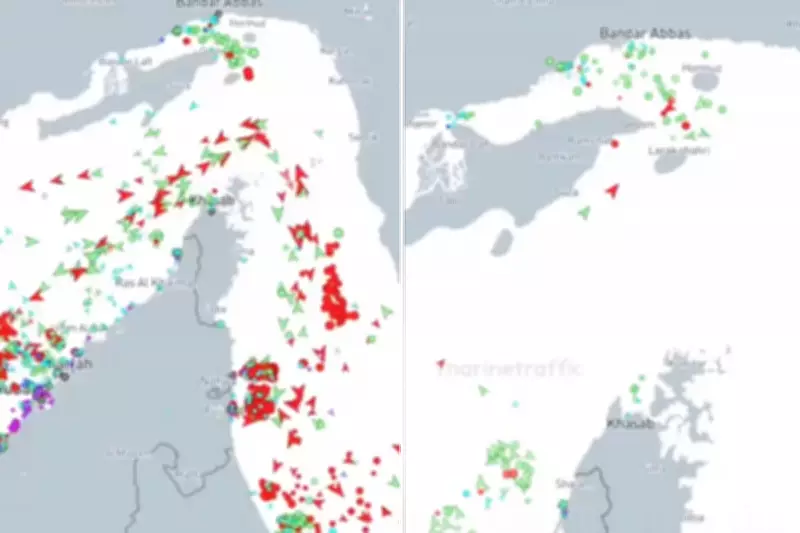
Strait of Hormuz Traffic Shifts: Before War, After Ceasefire, and Under US Blockade
Live tracking footage from MarineTraffic illustrates significant changes in vessel traffic through the Strait of Hormuz, comparing three distinct periods: before the Iran war, after a ceasefire, and following a US-enforced maritime blockade.
US Military Imposes Blockade on Critical Chokepoint
The US military imposed a blockade on the Strait of Hormuz on Monday, 13 April 2026, issuing stern warnings that any vessels attempting passage would face "interception, diversion and capture". This strategic move has dramatically altered maritime operations in one of the world's most vital shipping lanes.
First Successful Navigation Since Blockade
A Chinese-owned tanker became the first vessel to successfully navigate the Strait of Hormuz since the blockade began, completing its passage on Tuesday, 14 April 2026. This development highlights the ongoing challenges and risks faced by international shipping in the region.

Critical Global Energy Corridor
The Strait of Hormuz serves as a critical global chokepoint, through which approximately 20 per cent of the world's oil and liquefied natural gas supplies are transported. Its strategic importance cannot be overstated, making any disruption to traffic a matter of global economic concern.
Iran's Response and Historical Context
Iran has previously utilised the Strait to disrupt global supply chains during periods of tension. In response to the US blockade, Iran has threatened ports belonging to American allies in the Persian Gulf and Gulf of Oman, escalating regional tensions further.
The visual data from MarineTraffic provides clear evidence of how geopolitical events directly impact maritime commerce. The comparison shows:
- Before the Iran war: Regular, dense traffic patterns indicative of normal commercial operations
- After ceasefire: A gradual return of vessels, though with noticeable caution and reduced numbers
- During US blockade: Drastically reduced traffic with only occasional, high-risk passages attempted
This situation underscores the fragile balance between global energy security and geopolitical conflict, with the Strait of Hormuz remaining a flashpoint in international relations.