Jon Stewart Criticises Trump's AI Jesus Depiction and Vatican Feud
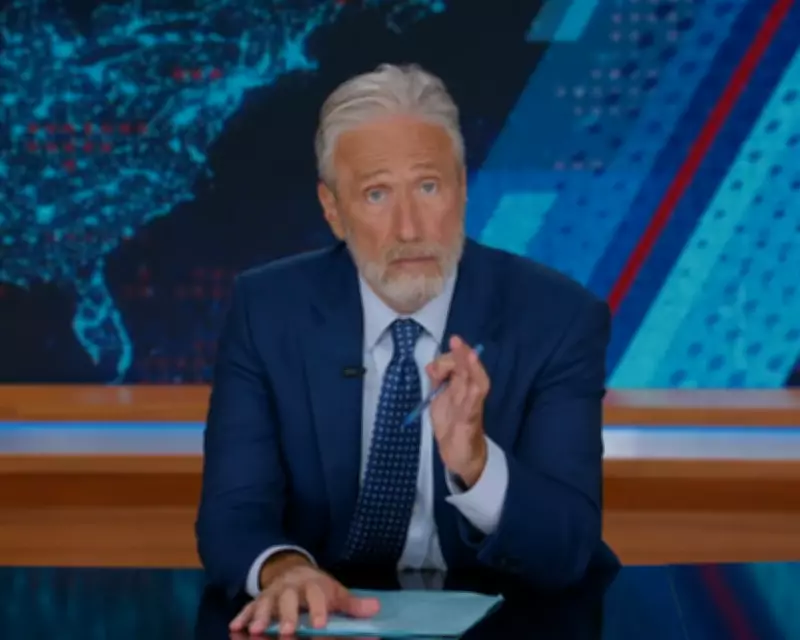
In a recent episode of The Daily Show, Jon Stewart returned to dissect the escalating public disputes between former President Donald Trump and Pope Leo XIV. The conflict ignited when the Pope issued a heartfelt Easter message advocating for global peace, which Trump disparaged on Truth Social as "weak" and a "loser." Stewart expressed bewilderment, noting that the Pope's call for harmony should be universally welcomed, yet Trump's reaction was predictably contentious.
Stewart's Scathing Commentary on Shared Scandals
Stewart quipped, "I am really starting to sour on this president," before delivering a biting remark: "Look, President Trump, I know the Vatican's been critical of your policies, but you gotta remember that at the end of the day you and the Catholic church both historically care deeply about the same thing – covering up sex scandals." This jab underscored the host's critique of Trump's hypocrisy and the ongoing controversies surrounding both figures.
AI-Generated Image Sparks Outrage and Denial
The situation worsened when Trump posted an AI-generated image depicting himself as Jesus Christ, miraculously healing a sick man surrounded by disciples. Stewart humorously noted that the ailing figure bore a resemblance to himself, joking about his aging appearance. The image faced immediate backlash, even from conservative commentators, prompting Trump to delete it and later claim it represented him as a doctor, not Jesus.

Stewart retorted sharply, "Do you even care about lying to us any more? Is it over? Has this relationship gone still? Your lies used to have a real spark... And now the best you've got is: 'Oh, it wasn't Jesus. I'm a doctor.' You need to find your happy place, and fast. We expect better lies, sir." This highlighted Trump's evolving and increasingly transparent falsehoods.
Stephen Colbert on Failed Peace Talks and Trump's Distractions
On The Late Show, Stephen Colbert addressed the collapse of US-Iran peace talks in Islamabad, as reported by negotiator JD Vance. Colbert mocked Vance's attempt to deflect blame by praising Pakistanis, drawing a humorous analogy to personal failures. He then shifted focus to Trump's absence during the talks, noting the former president was attending a UFC fight in Miami, which Colbert sarcastically dubbed "U gotta be Fucking Cidding me."
When Trump learned of the diplomatic failure, he threatened a naval blockade of the Strait of Hormuz on Truth Social. Colbert quipped, "Wait so we're blockading Iran's blockade? That's actually genius. It's like a plumber saying 'you know, some guys would unclog this toilet. But I'm going to play some 12-dimensional chess and double clog it.'" This satirised Trump's impulsive and contradictory foreign policy moves.
Colbert also touched on Trump's attacks on the Pope, referencing an Italian historian's claim that not even Hitler or Mussolini had been so publicly disrespectful. He added wryly, "It's never great when someone says, 'You should really be more discreet and respectful. You know, like Hitler.'"
Jimmy Kimmel's Take on Trump's Cowardice and Deception
Jimmy Kimmel opened his monologue by likening the Trump-Pope feud to an episode of South Park, emphasising its absurdity. He mocked the AI Jesus image, pointing out the unrealistic normal-sized hands, and noted the Christian community's disapproval, which led Trump to delete the post—a rare action for his account.
Kimmel fumed, "This is why, on top of being reckless and a liar and just ridiculous in general, Trump is also a coward. I don't know which is more offensive, how dumb he is, or how dumb he thinks we are." This condemnation highlighted Trump's pattern of denial and evasion when faced with criticism.
Broader Implications and Late-Night Satire
The collective responses from Stewart, Colbert, and Kimmel illustrate how late-night comedy continues to serve as a critical lens on political absurdities. Their segments not only entertain but also provoke reflection on truth, leadership, and public discourse in contemporary politics. The AI image incident and Vatican feud exemplify the blurred lines between reality and fabrication in the digital age, with hosts leveraging humour to underscore serious concerns about integrity and accountability.