Starmer's China Visit: Navigating Peril and Promise in UK-China Relations
Starmer's China Visit: Peril and Promise for UK

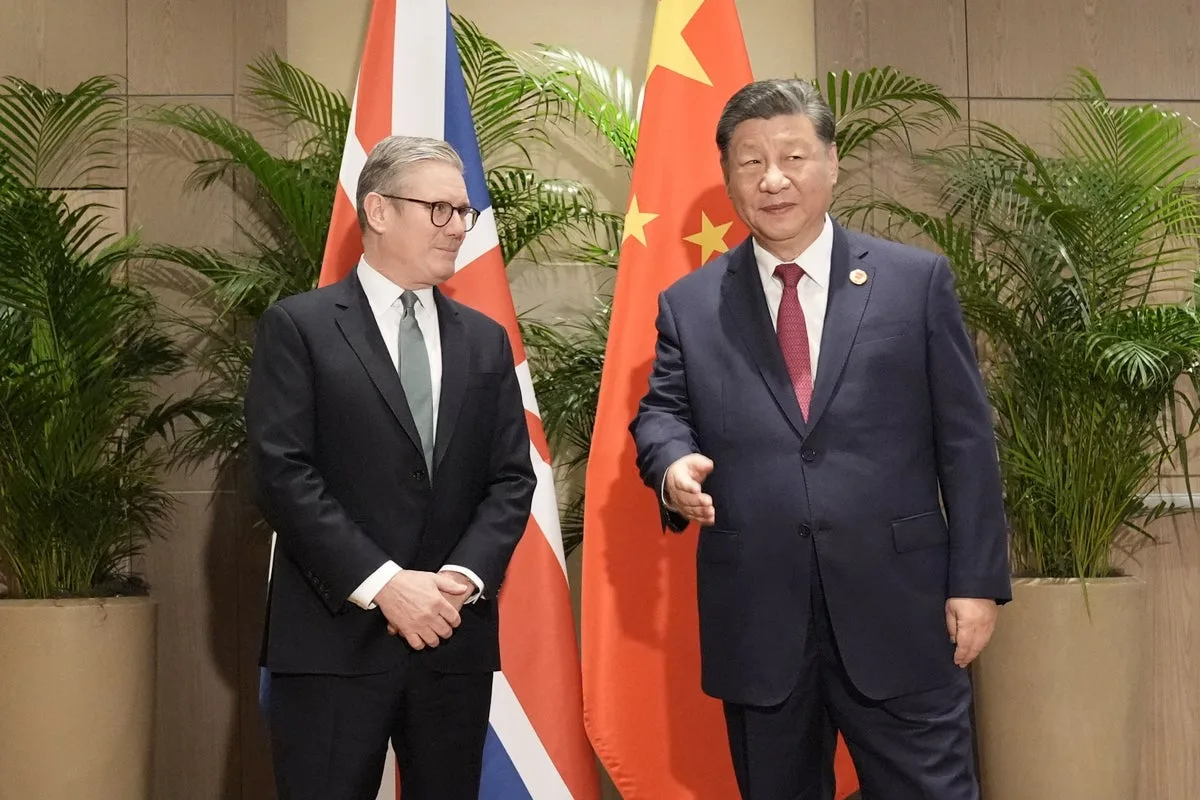
In an era of profound global instability, the United Kingdom finds itself at a critical diplomatic crossroads. Prime Minister Sir Keir Starmer's upcoming visit to China represents both significant peril and considerable promise for a nation grappling with its post-Brexit international standing. This high-stakes mission underscores the uncomfortable reality that Britain, as an unusually open economy dependent on trade, cannot afford to shun closer links with one of the world's pre-eminent and fastest-growing economies.

The Context of Relative Isolation

Sir Keir's discussions with President Xi Jinping will never constitute a meeting of equals, given China's status as the world's largest economy by some measures and its undisputed position as the global industrial powerhouse. However, Britain's negotiating position has been substantially weakened by a combination of Brexit and the unpredictable nature of the Atlantic alliance under former President Donald Trump. These developments have eroded the longstanding foundations of British influence abroad, creating a context of relative economic and diplomatic isolation that makes this mission both essential and exceptionally challenging.

A Legacy of Engagement and Disappointment

The prime minister will be accompanied by a formidable delegation of officials and dozens of business leaders, evoking memories of the similarly ambitious trade mission led by then-Prime Minister David Cameron in 2013. That earlier initiative aimed to further integrate China into the rules-based international system, with optimistic talk of a new "golden age" in bilateral relations despite acknowledged differences over human rights.

Wide Pickt banner — collaborative shopping lists app for Telegram, phone mockup with grocery list

Since those hopeful days, the landscape has deteriorated markedly. China has grown more assertive in its regional territorial ambitions and forged what it describes as a "limitless friendship" with Vladimir Putin's Russia, providing crucial support to Moscow's war machine. The treatment of Hong Kong has grown increasingly harsh, highlighted by the case of Jimmy Lai, which demonstrates how China has reneged on international obligations to that supposedly special administrative region.

Persistent Points of Contention

Numerous serious concerns continue to strain relations. There has been no meaningful improvement in the treatment of Uyghur Muslims or Tibetan people. China's Belt and Road Initiative operates as thinly disguised neocolonialism in many regions. The scale of Chinese intelligence gathering in the UK appears entirely disproportionate to any realistic threat Britain might pose, while the trading relationship remains decidedly lopsided in China's favour.

The most recent allegations suggest Chinese operatives hacked the phones of British officials in Downing Street for years, raising the disturbing possibility that the Politburo of the Chinese Communist Party knew more about Partygate than the British public. Given this pattern of unfriendly behaviour, it's unsurprising that eight years have passed since a British prime minister last visited China.

The Economic Imperative

Despite these substantial challenges, Britain faces little practical choice but to engage. Sir Keir has demonstrated commendable diplomatic skill during his premiership, successfully limiting damage from President Trump's tariff wars, resetting relations with the European Union, signing a trade treaty with India, and securing membership in the trans-Pacific partnership. Yet China represents the single largest overseas opportunity to boost Britain's economic growth.

As the prime minister himself has noted with characteristic understatement, "sticking your head in the sand and ignoring China ... wouldn't be sensible." Indeed, for a trading nation like Britain, such avoidance would border on impossible. The economic imperative is simply too powerful to ignore.

Finding a New Balance

This visit will feature no silky talk of a new "golden age," but there must be—and indeed has to be—a way to balance the genuine need for economic cooperation with the protection of British interests. Sir Keir has shown a particular flair for foreign affairs in an otherwise underwhelming premiership, and he will need to deploy all his diplomatic skills to place relations on a more productive footing.

Pickt after-article banner — collaborative shopping lists app with family illustration

At least one positive gesture will be available: the prime minister can metaphorically present President Xi with the keys to the new Chinese "super embassy" in the grand surroundings of the former Royal Mint in London. The reciprocal prize would be permission for a new British embassy in Beijing, potentially setting relations off to a constructive start.

Managing Multiple Challenges

While working through numerous areas of disagreement, the prime minister should emphasise that Britain represents no threat to China's strategic interests—and reasonably expect the same assurance in return. This understanding should come with expectations: that espionage activities will be scaled back, political prisoners released, and trade volumes increased to mutual benefit.

The reality, though rarely acknowledged publicly, is that many nations engage in espionage against each other. The responsibility falls on each government to take appropriate precautions—including ensuring British parliamentary staff avoid obvious traps and preventing UK universities from becoming propaganda outlets for the Chinese Communist Party.

The American Dimension

Yet China represents only one aspect of the prime minister's diplomatic challenges. Any agreement emerging from this visit will likely provoke the usual fire and fury from Donald Trump, who remains jealous of allies he frequently treats with callous disdain. The threat of sudden tariff increases with devastating consequences for UK jobs—or even the tearing up of the US-UK "prosperity agreement"—remains perpetually just one Truth Social post away.

British officials negotiating with their serious-minded Chinese counterparts might well reflect on the paradox that Beijing, despite its espionage and authoritarianism, has become a more reliable, respectful, and predictable partner than Washington in recent years. The Chinese may or may not share the US State Department's view that Britain faces "civilisational erasure," but they consider such assessments none of their business.

During the inevitable state banquet, perhaps Sir Keir's hosts will offer some piece of Confucian wisdom to explain this peculiar diplomatic reality. For now, the prime minister must navigate between peril and promise, recognising that in today's turbulent world, Britain must engage with China while never compromising its fundamental values or national security.