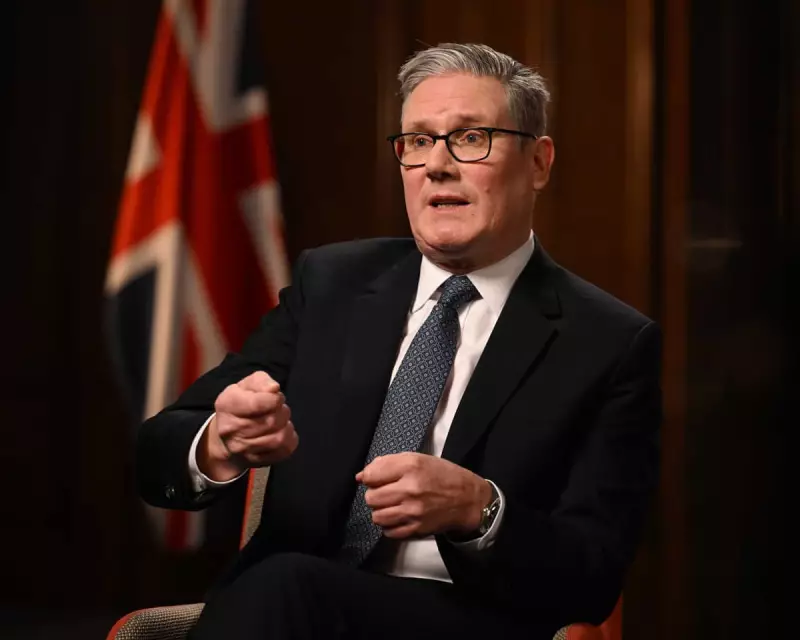
Prime Minister Keir Starmer's government is navigating a delicate diplomatic balancing act, demonstrating extreme caution in its response to a dramatic US-led military operation in Venezuela. The incident, which saw President Donald Trump authorise a raid to seize the country's leader, Nicolás Maduro, has tested the UK's new administration and its approach to its most crucial ally.
A Masterclass in Diplomatic Hedging
The US operation, confirmed by President Trump as a CIA-led action against alleged "narco-terrorism", involved a late-night raid that extracted Maduro from Venezuela. The UK's public response was notably measured and delayed. Prime Minister Starmer took 16 hours to issue a statement, which ultimately served as a lesson in political equivocation.
In his remarks, Starmer acknowledged the UK's longstanding position that Maduro was an illegitimate leader, stating "we shed no tears about the end of his regime." However, the former human rights lawyer was careful to reiterate his government's commitment to international law, a subtle nod to the controversial nature of the US action without issuing a direct condemnation.

This cautious tone has defined the government's position since. The strategy, as described by insiders, is to say as little as possible that might offend the Trump administration, to leave the legal justifications to Washington, and to privately recognise that "it's not our fight."
Internal Disquiet and External Pressure
This fence-sitting has not been universally popular, even within government circles. Senior officials in the Foreign Office and among the political ranks have privately expressed discomfort. They worry that by not challenging the precedent of effectively kidnapping a head of state for regime change, the UK is endorsing a dangerous path that could be exploited by other global powers or used by the US elsewhere.
"If we let this happen without condemning it then where does it stop? Colombia? Cuba? Even Greenland?" one government minister questioned anonymously. This concern was echoed by Reform UK leader Nigel Farage, who suggested Trump had violated international law, though he added the action "may be a good thing" as a deterrent to Russia and China.
Pressure has also mounted from Labour's progressive rivals. The Liberal Democrats and the Greens have demanded a stronger condemnation of the US action. Within Starmer's own party, figures like Emily Thornberry, chair of the foreign affairs committee, have warned that a lack of Western criticism could embolden adversaries in Moscow and Beijing.
Downing Street has forcefully rejected this comparison, with a spokesperson stating that drawing parallels between the Venezuela raid and "the full scale invasion of a sovereign, democratic state is a bad comparison."
The Realpolitik of the 'Special Relationship'
The root of Starmer's hesitation appears to be a cold calculation of national interest. With critical issues like a potential multibillion-pound UK-US trade deal and collaborative efforts to secure peace in Ukraine on the line, the government is choosing pragmatism over principle. "We're taking the realpolitik route," one Whitehall insider admitted.
Starmer has assured colleagues that there may come a time to take a tougher stance against the US president, but that this is not that moment. In private discussions, he has framed the decision as a choice, asking: "Are we willing to risk damaging our most important economic and national security partnerships as a result? We need to weigh up the cost to our own interests."
The Prime Minister has attempted to draw a line by publicly backing the Danish Prime Minister over US threats towards Greenland, with Foreign Secretary Yvette Cooper telling MPs that its future is a matter solely for Greenlanders and Danes. This suggests a red line exists closer to home, with the UK pledging a more robust approach if a European ally were threatened.
Starmer is finally due to speak directly with President Trump after a meeting of allied nations in Paris. The tone of that conversation, delayed since the Friday night raid, is expected to be emollient, underscoring the government's priority: to maintain the vital transatlantic partnership, even when its actions cause profound diplomatic unease in London.