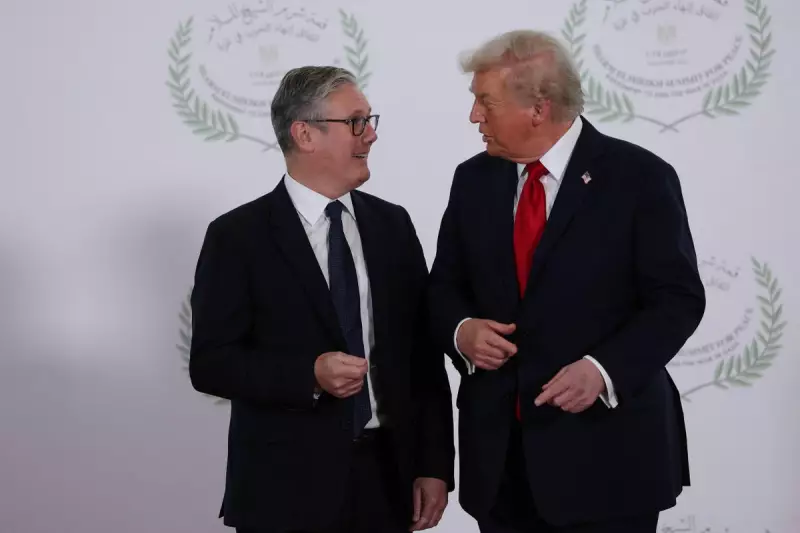
Prime Minister Keir Starmer has positioned himself as an immovable object in global politics, refusing to be drawn into a tit-for-tat confrontation with former US President Donald Trump. Faced with Trump's inflammatory threats of military action in Greenland and punitive trade tariffs, Starmer's response has been one of calculated, steady restraint.
The Art of the Understated Response
Addressing the nation in an emergency press conference on Monday 19 January 2026, Starmer delivered a masterclass in British understatement. Describing Trump's aggressive rhetoric as having been "badly received", the Prime Minister spoke for a nation united in its shock and disapproval. His stern demeanour conveyed a gravity that his carefully chosen words only hinted at.
Behind the diplomatic language and talk of "pragmatism" and "partnership", Starmer's core message to the White House was unambiguous: Trump is "wrong" about both tariffs and the proposed action against Greenland, which would contravene international law and the wishes of the Greenlandic people. Yet, Starmer's primary objective was not escalation, but de-escalation, acting as an informal "Trump whisperer" to calm the irascible former president.

Prioritising the National Interest
Starmer's strategy is firmly rooted in cold, hard national interest. He explicitly rejected calls for retaliatory measures, such as launching a trade war or cancelling the King's forthcoming state visit to the United States to mark 250 years of American independence. The Prime Minister argued that such "performative" grandstanding—a subtle dig at political rivals—might feel good but would be counterproductive.
The reasoning is starkly practical. The UK's defence, intelligence-sharing capabilities, and even its nuclear deterrent are inextricably linked to the US alliance. "When push comes to shove," Starmer implied, these fundamental security needs matter more than Greenland. He also pointed out that a trade war with the world's largest economy would hurt British workers and consumers, exacerbating the ongoing cost of living crisis.
The 'Bollardian' Doctrine in Action
Embracing a label once used as an insult by Boris Johnson, Starmer has become geopolitics' essential "human bollard". His doctrine is one of words over actions, of being an immovable object in the path of volatile forces. During a recent 40-minute phone call, he reportedly spent much of the time reassuring Trump about a new European defence force, persuading him it was not a challenge to American power.
Starmer expressed gratitude for the support of senior figures like Kemi Badenoch, highlighting a cross-party consensus on this cautious approach. His ultimate goal, as with managing post-Brexit realities, is to "find a way forward" and make the best of a difficult situation with a famously unpredictable transatlantic partner.
In refusing to choose between America and Europe, and in prioritising quiet, vigilant pragmatism over dramatic gestures, Keir Starmer has defined his foreign policy. It is a Bollardian stance: you can push against it, but it will not get out of the way. For a nation navigating turbulent global waters, that steadfast presence may prove to be precisely what is needed.