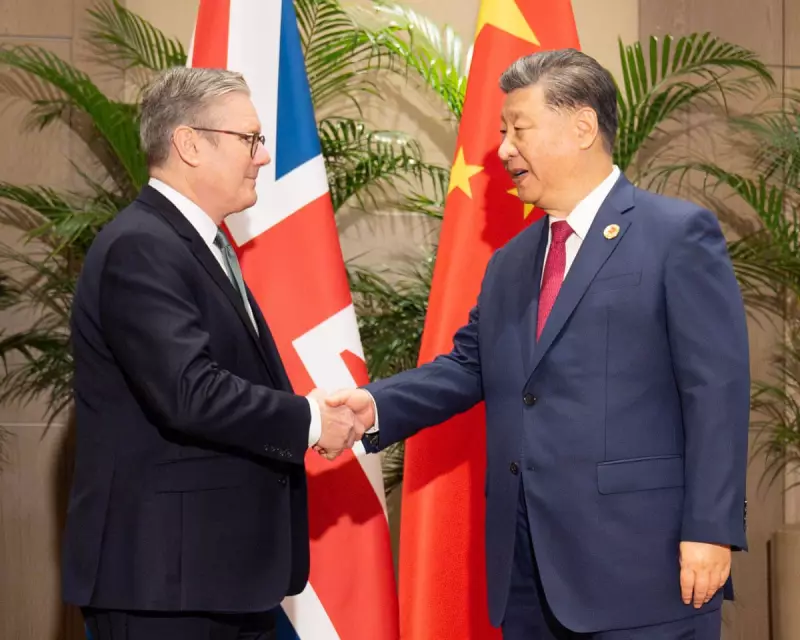
Starmer Embarks on Historic China Visit with Security and Economic Agenda
Prime Minister Keir Starmer has embarked on a significant diplomatic mission to Beijing, marking the first visit by a UK leader to China in eight years. The trip represents a deliberate effort to recalibrate Britain's relationship with the world's second-largest economy, promising a new era of "stability and clarity" after what Starmer describes as years of "inconsistency" under previous Conservative governments.
A Clear-Eyed Approach to Complex Relations
Speaking ahead of his departure, Starmer emphasised that his government would remain "clear-eyed and realistic" about the national security challenges posed by China while actively pursuing economic opportunities. This balanced approach comes at a time when Western powers are increasingly looking to diversify their economic partnerships amid concerns about the reliability of traditional allies.
"For years, our approach to China has been dogged by inconsistency, blowing hot and cold, from golden age to ice age," Starmer stated. "But like it or not, China matters for the UK. As one of the world's biggest economic players, a strategic and consistent relationship with them is firmly in our national interest."

Maintaining Security Guardrails
Downing Street has been explicit about maintaining robust "guardrails" on national security throughout the engagement with Chinese leadership. The Prime Minister's office confirmed that Starmer would not trade security concerns for economic benefits and would raise areas of disagreement directly with President Xi Jinping and Premier Li Qiang during their meetings in Beijing.
This security-first approach comes amid ongoing concerns about China's activities in the UK, including allegations of attempted recruitment of parliamentary informants, harassment of Hong Kong activists on British soil, suppression of academic criticism, and persistent cyber-attacks. The recent approval of a new Chinese mega-embassy in London has further heightened tensions with opposition politicians.
Economic Imperatives and Pragmatic Engagement
Despite these security concerns, the economic rationale for engagement remains compelling. China represents the UK's third-largest trading partner, supporting approximately 370,000 British jobs across various sectors. Starmer is accompanied by a substantial delegation of about 60 British businesses and cultural organisations, including major players like HSBC, GSK, Jaguar Land Rover, and the National Theatre.
Business Secretary Peter Kyle, who is joining the Prime Minister on the three-day visit to Beijing and Shanghai, emphasised the opportunity cost of previous disengagement. "For a decade, there has been a lack of serious engagement needed to capitalise on the opportunity of a better relationship with China," Kyle noted. "We want to see trade flourish between us."
Domestic Criticism and International Context
The visit has attracted significant criticism from Conservative opponents, with Shadow Foreign Secretary Priti Patel accusing Starmer of lacking leverage and "bending over backwards to appease Beijing." Patel highlighted concerns about the new Chinese embassy and the Chagos Islands deal as evidence of excessive concession.
However, Downing Street sources countered that disengagement would represent "a staggering dereliction of duty" that would make Britain less safe and economically isolated. They pointed to the regular engagement by other Western leaders, noting that since 2018, French President Emmanuel Macron has visited China three times and German leaders four times, while no British prime minister had made the journey until now.
Strategic Positioning in a Changing World
The China visit forms part of a broader diplomatic strategy that will see Starmer travel directly to Tokyo for meetings with Japanese Prime Minister Sanae Takaichi. This sequencing underscores the government's attempt to position Britain strategically within evolving global power dynamics, particularly as traditional alliances face uncertainty.

As global instability increases and international events increasingly impact domestic concerns, Starmer's team insists that active, pragmatic engagement represents the most effective way to protect British interests. "The first duty of government is security," Kyle asserted, "and we protect ourselves best through active engagement and pragmatic cooperation, not by shutting the door."
The success of this delicate balancing act—maintaining security vigilance while pursuing economic opportunity—will likely define the early phase of Starmer's foreign policy and set the tone for UK-China relations for years to come.